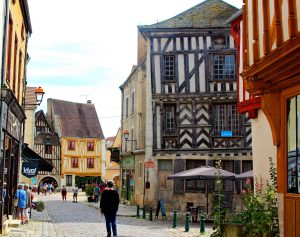
Noyers-sur-Serain – Montréal – Vézelay
Noyers-sur-Serein, Montréal and Vézelay: a journey to the heart of Burgundy's most beautiful medieval villages This day out in Burgundy offers a…
Fill up on discoveries
We organize your transport by coach, train or plane
Passez de surprise en surprise au fil de votre journée
Go alone or in a group to discover these places
You won't miss a single detail - they know their subject inside out.
Between a visit to the Musée de la nacre et de la tabletterie in Méru and a tour of the Château de Boury-en-Vexin, this day combines culture, know-how and elegance.
Designed for groups, it offers a balanced program of discovery, education and conviviality.
Located in the Oise department, Méru has long been a major center for the production of mother-of-pearl objects. From the 19th century onwards, the town experienced a major industrial boom, notably thanks to the manufacture of buttons for Parisian and international fashion.
This know-how has earned the town the nickname of “the world’s mother-of-pearl capital”, symbolizing a craft industry that has become an industry.
Today, this heritage is preserved and promoted through a museum that is unique in France.
Housed in a former 19th-century factory, the Musée de la nacre et de la tabletterie retraces the history of a trade that has now disappeared: that of the table makers.
Opened in 1999 and awarded the Musée de France label, it features :
Tablet-making refers to the manufacture of objects from natural materials such as mother-of-pearl, bone or wood, an activity that was highly developed in Méru as early as the 16th century, before its industrialization in the 19th century.
The museum offers a guided tour with demonstrations, providing a practical understanding of manufacturing techniques.
Visitors can :
This lively approach transforms the visit into a true sensory experience, combining the noise of machines, materials and technical gestures.
The museum plays an essential role in passing on an industrial and craft heritage that has now disappeared.
It allows you to :
This educational dimension makes for a particularly rewarding visit.
After the industrial discovery, the day continues in a totally different setting with a visit to the Château de Boury-en-Vexin.
Located in the French Vexin region, this 17th-century château boasts classical architecture inspired by the work of Jules Hardouin-Mansart.
The estate seduces with :
The château offers a refined vision of the French art of living, between architectural harmony and controlled nature.
The tour includes :
This stage adds an aesthetic and contemplative dimension to the day.
Combining the Musée de la Nacre with the Château de Boury-en-Vexin offers a particularly rich and contrasting experience.
This course offers :
This complementarity makes for a dynamic and captivating day.
This outing is perfectly suited to groups, with a structured and accessible program.
It offers :
The diversity of our sites caters for all tastes.
Choosing this getaway means discovering two complementary facets of France’s heritage.
It enables :
Between industrial memory and art of living, this outing offers a complete and enriching immersion.
The Musée de la nacre et de la tabletterie (mother-of-pearl and tablet-making museum) showcases a unique craft that was once highly developed in the region. It retraces the history of the manufacture of mother-of-pearl objects, in particular buttons, and features demonstrations of vintage machines in operation. It's an immersive visit that showcases industrial heritage and craftsmanship.
Tablet-making is a craft that involves making objects from natural materials such as mother-of-pearl, bone, wood or horn. Widely practiced in Méru since the 16th century, it became industrialized in the 19th century before gradually disappearing. Today, the museum provides an insight into this activity and its techniques.
Château de Boury-en-Vexin is a remarkable example of 17th-century classical architecture. It is distinguished by its elegance, harmony and formal gardens. A visit to Boury-en-Vexin reveals another aspect of French heritage, centered on the art of living and aesthetics.
Noyers-sur-Serein, Montréal and Vézelay: a journey to the heart of Burgundy's most beautiful medieval villages This day out in Burgundy offers a…
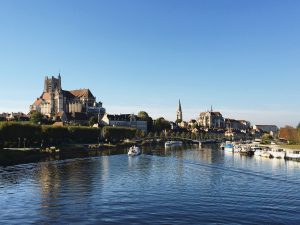
Saint-Germain Abbey, Saint-Etienne Cathedral and Vézelay: an exceptional immersion in Burgundy's spiritual and artistic heritage. This cultural getaway in Burgundy offers a…

An escapade combining gastronomy, city discovery and the gentle flow of the river In the heart of the Yonne, between Paris and…
Would you like to plan a similar experience? Request your personalized itinerary.