Discover the Gulf of Morbihan
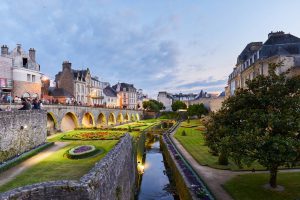
Discover the Gulf of Morbihan and the major sites of southern Brittany This South Brittany getaway offers groups a complete, immersive experience,…
Fill up on discoveries
We organize your transport by coach, train or plane
Passez de surprise en surprise au fil de votre journée
Go alone or in a group to discover these places
You won't miss a single detail - they know their subject inside out.
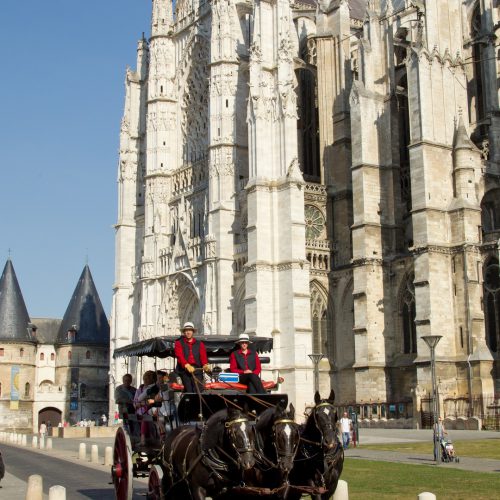
Even in a country of great cathedrals, Beauvais stands apart. Step into Saint‑Pierre Cathedral and the space rises almost impossibly: the world’s tallest Gothic choir, around 48 meters high, draws the eye upward in a single, breath‑catching sweep. In the same vast interior, time is measured on an extraordinary scale by Auguste‑Lucien Vérité’s 12‑meter astronomical clock, a 19th‑century marvel bristling with dials and animated figures. Between audacious height and intricate mechanics, Beauvais turns a day of cultural discovery into a study in human imagination — and the resilience of a city shaped by ambition, setbacks, and renewal in northern France’s Picardy heartland.
Some cathedrals impress with completeness; Beauvais compels with daring. Its choir set a benchmark for vertical ambition in Gothic architecture, while the cathedral’s incompleteness — a missing nave and a history marked by collapses — makes the surviving structure all the more eloquent. Inside, stained glass carries centuries of artistry, and an enormous clock translates the motions of time into dials and automata. In a single day, visitors encounter a city and a monument that continually test the limits of stone, light, and craft, anchored by a sense of Picard identity that places Beauvais firmly within the cultural geography of northern France.
The present Gothic project at Beauvais begins after 1225, when an earlier church was destroyed and rebuilding commenced under Bishop Milon de Nanteuil. The result, after decades of work, was a choir so slender and tall that it reached a height unparalleled among Gothic churches. In November 1284, that first attempt at such extraordinary elevation met its limit when the choir vault collapsed. The event did not end the cathedral’s story; it prompted a measured rethinking. The choir was rebuilt with additional supports and narrower bays, reinforcing the structure while preserving its essence — that breathtaking vertical reach that still defines the experience today.
Stand beneath the crossing, and the logic of the architecture reveals itself. Columns ascend, ribs converge, and the vaults press upward into that world‑record canopy of stone and light, hovering at roughly 48 to 48.5 meters. It is the kind of space that changes how visitors experience scale: the eye scales the elevation again and again, finding order in lines and profiles designed to draw attention heavenward. The choir at Beauvais offers not just size, but a distilled version of Gothic intent — a place where structural necessity and lofty aspiration meet.
At Beauvais, the story of height continues into the flamboyant Gothic transept, whose construction began in 1500 and rises to vaults comparable in height to the choir. It speaks a later Gothic language, consistent with the period, set within a building that had already proved both the promise and the risk of unprecedented elevation.
The cathedral’s layout also confounds expectations. There is no nave. A lantern tower and spire, completed in 1569, soared to about 150 meters before collapsing in 1573. The cathedral remains unfinished to this day, and it is precisely this incompleteness that makes the visit so compelling. The missing western body means that the choir and transept come to the foreground, offering an unusually concentrated encounter with the very parts of a Gothic church that often lie deep within a full‑length basilica. The result is a unique reading of space — a cathedral where the core is exposed, and where ambition and fragility are part of the same architectural biography.
Beauvais is not only about height; it is also about light. The cathedral preserves stained glass spanning seven centuries. In the choir, significant windows from the 13th century frame the vertical stonework, reminding visitors that the building’s earliest ambitions were always meant to be seen through colored light. In the south transept, notable 16th‑century glazing adds a later chapter to this story. Together they compose an anthology of techniques and aesthetics, each pane a fragment of time, forming a visual through‑line from the high medieval period to the early modern era. Standing in this interior, one experiences how Gothic architecture and stained glass were conceived in dialogue — structure making space for light, and light, in turn, animating structure.
Saint‑Pierre Cathedral is home to not one but two remarkable timekeepers. The older is a 14th‑century astronomical clock known as the “Chanoine Musique,” a testament to Beauvais’ long engagement with the science and symbolism of time within a sacred setting.
In the 19th century, clockmaker Auguste‑Lucien Vérité added a technological and artistic landmark that still commands attention today. Constructed between 1865 and 1868, Vérité’s astronomical clock rises to around 12 meters. Its statistics alone are astonishing: roughly 90,000 parts, 52 dials, and 68 automata. Together they translate celestial and calendrical information into a vast, ordered display, a universe of brass, enamel, and motion conceived within the grandeur of a Gothic transept. Encountering the clock is a reminder that Beauvais’ cathedral tells more than one story. It is a church of vertical aspiration and fragile persistence, yes — but it is also a stage for 19th‑century ingenuity, where the measurement of time becomes a spectacle of human craft.
Beauvais’ history is marked by profound disruption, including the heavy bombing of 1940 during the Second World War, which destroyed much of the city center. The cathedral, by contrast, suffered comparatively less damage, a fortunate divergence that preserved its historic fabric and the narratives encoded in its stone and glass. Walking through the historic center today, visitors engage with a city that has repeatedly rebuilt itself, and with a monument that has withstood both medieval structural crises and the violence of modern war.
This is a day set to the rhythm of discovery and reflection. Guided visits bring Beauvais’ layers to life: the historic center, the soaring volumes of Saint‑Pierre Cathedral, and the remarkable astronomical clock within it. Conversations situate the cathedral in its documented timeline — the post‑1225 rebuild, the 1284 choir collapse and reconstruction, the flamboyant transept from 1500, the spectacular but short‑lived 16th‑century spire, and the enduring incompleteness that makes Beauvais so distinctive. In the cathedral, the focus turns to the experience of scale, to stained glass that spans seven centuries, and to the Vérité clock’s orchestration of moving parts and displays. Throughout, there is space to contemplate — an approach that suits a building whose power lies as much in its atmosphere and endurance as in its records.
Design your own day around Saint‑Pierre Cathedral, its astronomical clock, and the character of Picardy with Suite Voyage Discovery’s bespoke approach.
Beauvais invites a different way of looking. In many Gothic churches, visitors progress from a west front into a long nave before reaching the crossing and choir. Here, the nave is absent, and the core unfolds immediately. The effect is both aesthetic and didactic: the structural solutions and stylistic shifts are close at hand, allowing even a first‑time visitor to trace how ambition met experience.
The choir’s reconstructed bays, supported more deliberately after 1284, offer a lesson in how medieval builders responded to the challenges of height. The late Gothic transept extends that lesson into another era, achieving comparable vault heights while speaking with a later accent. The cathedral as a whole becomes a readable document. Even the 16th‑century spire’s story — rising to about 150 meters and disappearing four years later — remains present in the narrative thread of what we see today: an unfinished monument that privileges clarity over completion.
Because Beauvais conserves glass from different centuries in situ, its windows can be approached as a sequence. The 13th‑century choir glazing carries the visual language of the high medieval period; the 16th‑century south transept offers another chapter of artistic sensibility. While techniques and iconography evolve across the centuries, the core idea persists: that light itself is a medium for meaning. Taken together, the cathedral’s windows — spread over seven centuries — provide an uncommon continuity for understanding how ecclesiastical art adapts while remaining anchored in place.
Vérité’s clock does more than record hours. With its dense constellation of dials and figures, it turns abstract celestial cycles into visible information. That ambition resonates with the surrounding architecture: just as the choir translates aspiration into height, the clock translates time into form. Nearby, the 14th‑century “Chanoine Musique” speaks to a much earlier chapter in Beauvais’ long relationship to astronomical and liturgical timekeeping.
For today’s visitor, the clocks also underscore Beauvais’ breadth. This is not only a place for medieval architecture enthusiasts; it also rewards those fascinated by 19th‑century engineering and the careful choreography of complex mechanisms. Within a single venue, the arc from Gothic stonework to precision horology is unusually complete.
Beauvais belongs to the cultural landscape of Picardy in the Hauts‑de‑France region. That setting matters. The cathedral’s history of ambition and adaptation mirrors a regional identity that balances tradition with reinvention. During your day in Beauvais, the city’s story unfolds not just in individual masterpieces — the choir, the transept, the clock — but in how those elements converse with the broader character of northern France. The result is a portrait of place as much as a sequence of highlights.
The experience is designed to be generous with time. Height and light reward lingering; the clock’s complexity invites close looking. Guided educational visits keep the narrative clear without rushing, connecting the major chapters — the 13th‑century rebuilding, the 1284 collapse and response, the ambitious 16th‑century transept and spire — while leaving space for quiet attention. That balance is intentional: Beauvais is not a site to be rushed. Its most memorable impressions often arrive in the still moments between facts, when the immensity of the choir or the elegance of a dial settles into view.
One of Beauvais’ strengths is how well its durable facts hold together. The cathedral’s record‑setting choir height; the precise dating of key episodes (post‑1225 construction, the 1284 collapse, the 1500 transept, the 1569‑1573 spire); the survival of stained glass across seven centuries; the 19th‑century clock by a known maker, Vérité — these are anchors. They make it possible to appreciate the monument’s drama without blurring into legend. Even the city’s 20th‑century history is part of that clarity: the 1940 bombing and the cathedral’s comparatively lesser damage form a documented contrast that gives weight to Beauvais’ resilience.
Beauvais rewards those who arrive with a passion for Gothic engineering, but it is just as powerful for visitors encountering such heights for the first time. The unfinished plan strips away distraction, the stained glass offers a tangible chronology of craftsmanship, and the astronomical clock provides a bridge between sacred space and scientific imagination. Whether you come to parse architectural details or to experience an atmosphere unlike any other, Beauvais meets you where you are — with facts that fascinate and spaces that inspire.
A day devoted to Beauvais fits naturally into a broader exploration of Hauts‑de‑France and the Picardy landscape. The region’s towns and countryside frame the cathedral’s story with their own layers of history, from medieval roots to modern reinventions. Whether you are shaping a short cultural escape or weaving Beauvais into a longer French itinerary, the city’s combination of Gothic audacity, stained‑glass heritage, and monumental timekeeping provides a memorable axis for travel in northern France.
Beauvais is a study in extremes refined into harmony. Its choir reaches a record‑setting height yet stands today as a testament to careful rebuilding. Its transept maintains that elevation while speaking with a later Gothic voice. Its stained glass carries a continuous thread through seven centuries. And inside this medieval envelope, a 19th‑century clock translates celestial motions into an architecture of time. To visit is to experience a city and a cathedral that accept both risk and resilience as part of their identity — and to find, in that acceptance, a particularly moving version of French heritage.
Ready to weave Saint‑Pierre Cathedral and its astronomical clock into a tailor‑made journey in northern France? Suite Voyage Discovery can help you design a day — or more — that reflects how you like to travel.
Saint‑Pierre Cathedral in Beauvais is renowned for its exceptional verticality: the choir rises to about 48–48.5 meters, generally considered the tallest in Gothic architecture. The cathedral is also unusual in that it remains unfinished, lacking a nave, which brings the choir and transept into immediate focus. Its flamboyant Gothic transept, begun in 1500, reaches heights comparable to the choir. Inside, stained glass spanning seven centuries and two notable astronomical clocks — including Auguste‑Lucien Vérité’s monumental 19th‑century timekeeper — add rare depth to the visit.
The Vérité astronomical clock is a 19th‑century masterpiece constructed between 1865 and 1868 by clockmaker Auguste‑Lucien Vérité. Standing about 12 meters high, it contains roughly 90,000 parts, 52 dials, and 68 automata that display celestial and calendrical information. Housed within Saint‑Pierre Cathedral, it complements the Gothic architecture with an extraordinary example of 19th‑century engineering and craftsmanship.
Yes. Saint‑Pierre Cathedral remains without a nave and is therefore considered unfinished. A lantern tower and spire completed in 1569 rose to about 150 meters but collapsed in 1573. The cathedral’s current form — focused on the choir and transept — reflects this history, giving today’s visitor a distinctive and concentrated encounter with Gothic space.
Discover the Gulf of Morbihan and the major sites of southern Brittany This South Brittany getaway offers groups a complete, immersive experience,…
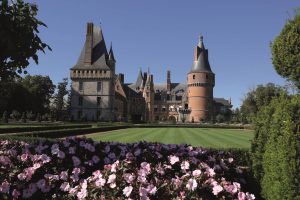
This escapade offers groups a richly contrasting day, combining geological discovery and historical heritage. Between a visit to the Grottes du Foulon…
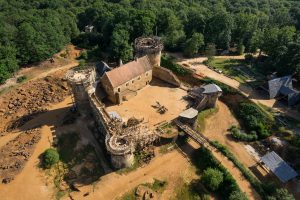
Visit Guédelon castle, a medieval construction site unique in France In the heart of Burgundy, the fortified castle of Guédelon is a…
Would you like to plan a similar experience? Request your personalized itinerary.