The underground passages and medieval city of Laon
Fascinating immersion in underground mysteries and historical heritage Perched on its famous hill, Laon, nicknamed the "crowned mountain", offers a unique experience…
Fill up on discoveries
We organize your transport by coach, train or plane
Explore a neighborhood, town, village, or region through a thoughtfully designed itinerary tailored to your interests.
Go alone or in a group to discover these places
You won't miss a single detail - they know their subject inside out.
Our guides are fluent in the language(s) indicated
From the Caverne du Dragon to the Chemin des Dames, from the Butte de Vauquois to Verdun and theDouaumont ossuary, this one-day tour allows you to understand the scale of the First World War, while exploring a territory deeply marked by the conflict.
This immersion continues with a visit to the Pommery champagne house, offering a transition to a living heritage and world-renowned expertise.
The First World War (1914-1918) had a profound impact on the landscapes and memories of many French territories. This tour allows you to discover emblematic places where particularly violent fighting took place, and to understand the living conditions of the soldiers.
Located in the Aisne department, the Chemin des Dames is one of the most striking sites of the war. Before the war, this plateau overlooking the valley was a peaceful place, named after Louis XV’s daughters, Adélaïde and Victoire.
But from 1914, this territory became a major strategic challenge. German forces occupied the heights and took up residence in the underground quarries, notably in the Hurtebise creuse, which was quickly transformed into a veritable military base.
This gallery, converted into an underground barracks, includes :
Called the “Dragon’s Cave” (Drachenhöhle) by the Germans, in reference to the flamethrowers used during the fighting, it became a strategically contested location for the duration of the conflict.
On April 16, 1917, General Nivelle’s offensive marked a tragic turning point. The assault was a failure, resulting in the deaths of tens of thousands of soldiers in just a few days. Subsequently, the French regained partial control of the site, before the front stabilized.
Today, a visit to the Caverne du Dragon (Dragon’s Cave) allows visitors to discover this underground world and better understand the reality of the fighting. A timeline also retraces the reconstruction of the destroyed villages.
The Butte de Vauquois is another major site of the 14-18 war. This village, located on a strategic point, was totally destroyed by the fighting.
Between 1914 and 1918, the French and German armies fought an underground war, digging galleries and using mines to try and destroy opposing positions.
Today, the site still features :
The visit allows visitors to appreciate the violence of the confrontations and to understand the techniques of mine warfare.
The tour continues to Verdun, symbol of the First World War. The battle of 1916 remains one of the longest and deadliest of the conflict.
The Verdun Memorial provides an insight into the fighting and living conditions of the soldiers, thanks to modern, immersive displays.
Nearby, theDouaumont ossuary is a major place of remembrance. This impressive monument houses the remains of over 130,000 unknown soldiers.
Opposite the ossuary, the military cemetery contains over 16,000 graves, a reminder of the scale of human losses.
These places offer a deeply moving experience, combining history, emotion and the duty of remembrance.
After this immersion in history, the day continues with the discovery of Champagne, bringing a more convivial and cultural dimension to the excursion.
In Reims, a visit to a major champagne house, such as Vranken-Pommery, is an opportunity to discover world-renowned expertise.
The history of the company is closely linked to Jeanne-Alexandrine Pommery, who took over the family business after the death of her husband and contributed to its development.
In 1874, she created brut champagne, a major innovation that met with international success.
Over the years, she expanded the estate to more than 65 hectares of vineyards, laying the foundations for a sustainable heritage.
The tour includes :
This immersion in the world of champagne gives a better understanding of the work in the vineyard and the production of this emblematic product.
It also offers a convivial moment to round off a day rich in discoveries.
This day combines two complementary dimensions:
This alternation makes for a well-balanced tour that’s rewarding, moving and enjoyable.
This tour takes in several emblematic sites of the First World War, including the Caverne du Dragon on the Chemin des Dames, the Butte de Vauquois, the Mémorial de Verdun and the Ossuaire de Douaumont. These sites bear witness to the violence of the fighting, military strategies and soldiers' living conditions. They offer a complete immersion in the history of the conflict through authentic relics and places of memory.
Visiting memorial sites as a group is a powerful way of sharing the experience of remembrance. On-site explanations make it easier to understand historical events and the issues at stake in the conflict. This collective approach fosters exchanges and enables a more concrete approach to history, by discovering the very places where the fighting took place.
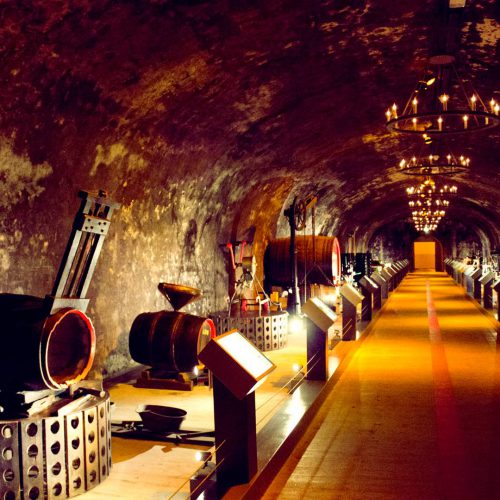
A visit to a champagne house like Vranken-Pommery reveals the chalk-cut cellars, ornate galleries and different stages of champagne production. Visitors learn about the work of the vines, the elaboration of the cuvées and the history of this emblematic house. The experience offers a glimpse of Champagne's world-renowned expertise.
Fascinating immersion in underground mysteries and historical heritage Perched on its famous hill, Laon, nicknamed the "crowned mountain", offers a unique experience…
This 7-day, 6-night tour invites you to discover an exceptional region, with its medieval villages, castles, troglodytic sites, chasms, remarkable gardens and…
This tour takes you on a surprising journey to the heart of the Île-de-France region, where aviation history meets beekeeping know-how. Between…
Would you like to plan a similar experience? Request your personalized itinerary.