
Organized Tour of La Monnaie de Paris
Step into a world where art, history, and prestige converge along the banks of the Seine. As you cross the elegant Pont…
Fill up on discoveries
Discover the most beautiful historical monuments of our heritage
Go alone or in a group to discover these places
You won't miss a single detail - they know their subject inside out.
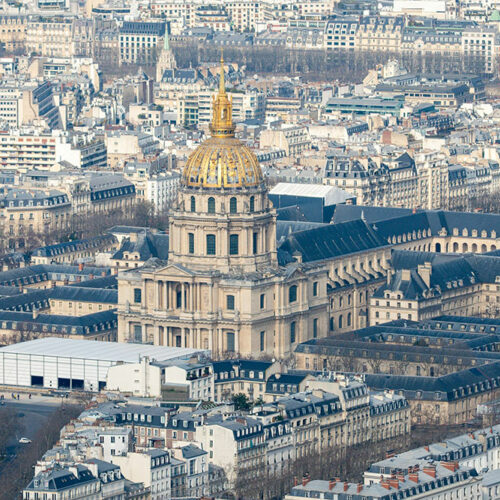
Founded by Louis XIV in 1670 as a home for wounded and aging soldiers, Les Invalides later became the resting place of Napoleon I beneath one of Paris’s most recognizable domes. Few Parisian sites gather so many layers of power, ritual and remembrance in one architectural ensemble. This guided visit reads the façades and courtyards, enters the Soldiers’ Church conceived for everyday worship, then crosses to the royal chapel crowned by the Dôme—transformed in the 19th century into a military pantheon where Napoleon’s tomb anchors a carefully staged narrative of battles and civil achievements.
Click a photo to enlarge
Les Invalides embodies two defining stories of France: state care for those who served and the public staging of national memory. Conceived by Louis XIV as a model of royal responsibility toward soldiers, the complex welcomed its first pensioners in 1674 while construction was still underway. Over time, ceremonies, museums and burials layered new meanings onto the site. When Napoleon’s remains were brought back to Paris in 1840 and interred beneath the Dôme in 1861, the royal chapel was reimagined as a space where military glory and civil order could be narrated in stone and sculpture. This guided exploration helps you read those layers with clarity—architecture as argument, and memory as something both solemn and constructed.
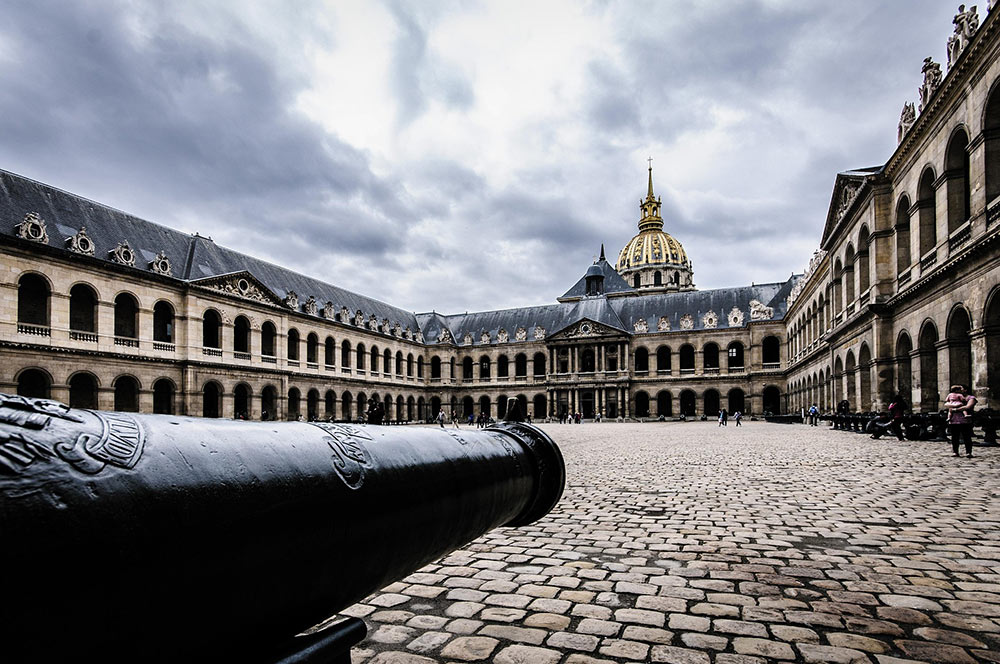
Designed first by Libéral Bruant and then reshaped and completed under Jules Hardouin‑Mansart, Les Invalides was laid out with the legibility and dignity expected of a royal foundation. A sequence of façades and courts leads to the Cour d’honneur, the Main Courtyard at the heart of the ensemble. Today, museum collections of artillery and monumental sculpture are displayed around and under its arcades, underscoring how the space still frames France’s military narrative. Your guide uses this setting to introduce the site’s original mission and the later reframing of its symbolism, setting the stage for the twin churches that make Les Invalides unique.
The religious heart of Les Invalides was conceived in two parts. The Cathedral of Saint‑Louis—often called the Soldiers’ Church—served the daily spiritual life of the residents. The Église du Dôme, a royal chapel crowned by the great dome, offered a more ceremonial counterpart. In the 19th century, changes further differentiated these spaces, with distinct altars and later a glass partition formalizing their separation. Taken together, they show how architecture can balance intimacy and display, service and spectacle.
Stepping into Saint‑Louis connects you to a long tradition of military remembrance. Museum resources identify the cathedral with a distinctive memorial display of flags and trophies suspended under the vaults, evoking France’s campaigns and the communities bound to them. The space invites quiet attention rather than grand rhetoric—an essential counterpoint to the dynastic statement across the way.
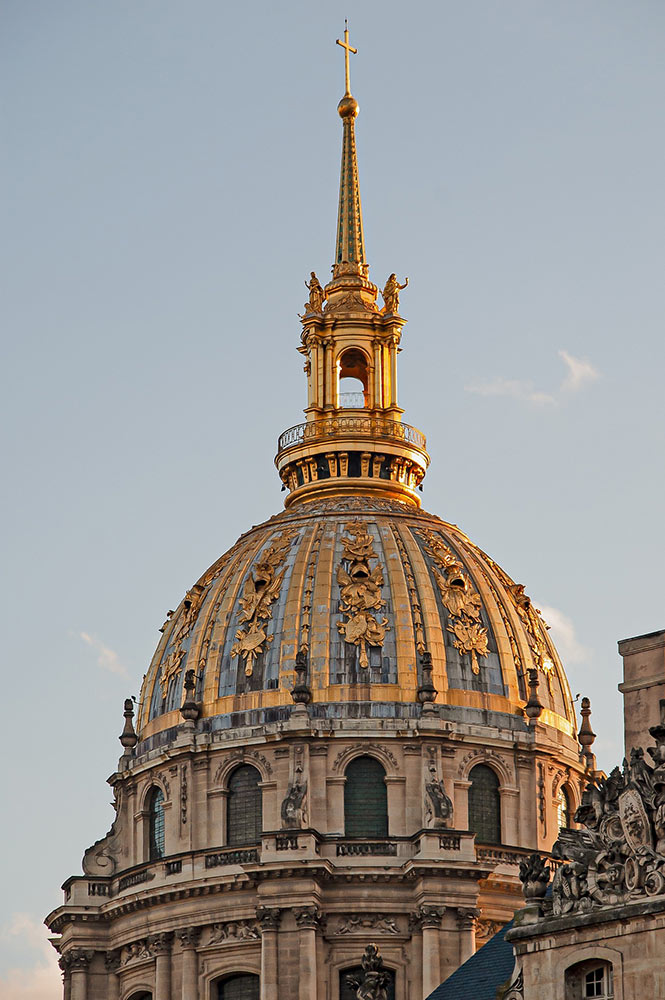
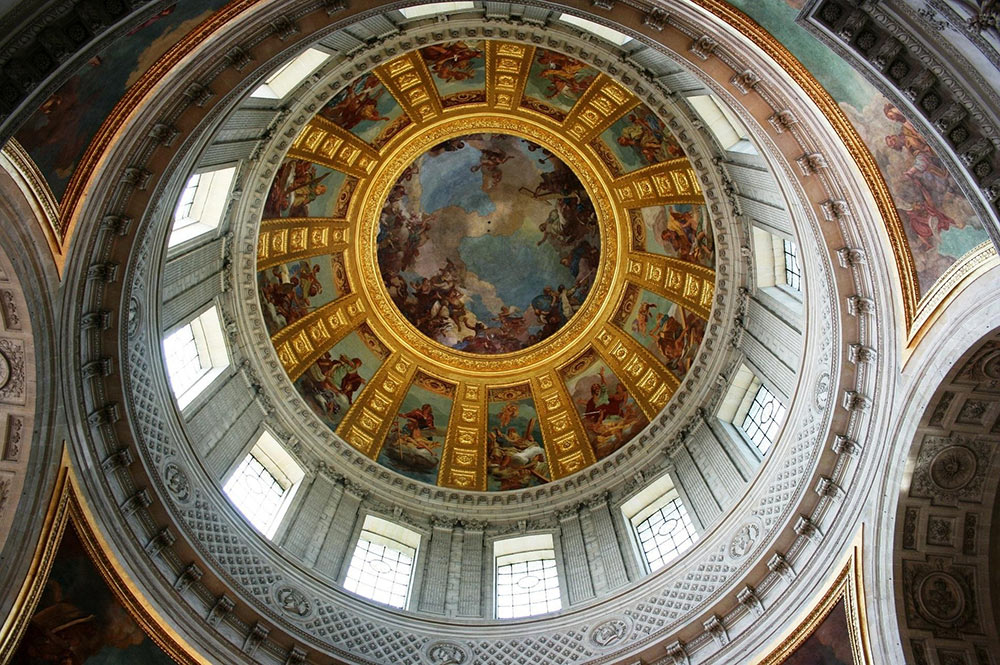
Built between 1677 and 1706, the Église du Dôme is among the great works associated with Jules Hardouin‑Mansart. Its measured proportions, sculptural décor and orchestration of light embody the language of late‑17th‑century monarchy. In the 19th century, the chapel took on a new vocation as a military pantheon. This change was not just functional but interpretive: it aligned dynastic architecture with modern myth‑making around the figure of Napoleon and, by extension, around national narratives of sacrifice and order.
After his death in 1821 on Saint Helena, the memory of Napoleon remained a point of fascination and debate. In 1840, King Louis‑Philippe ordered the Retour des Cendres, transferring the Emperor’s remains to Paris amid a national funeral. The interment beneath the Dôme took place on April 2, 1861, following excavations and the completion of the monumental tomb. What you encounter there is a carefully composed program that pairs military remembrance with civil achievement:
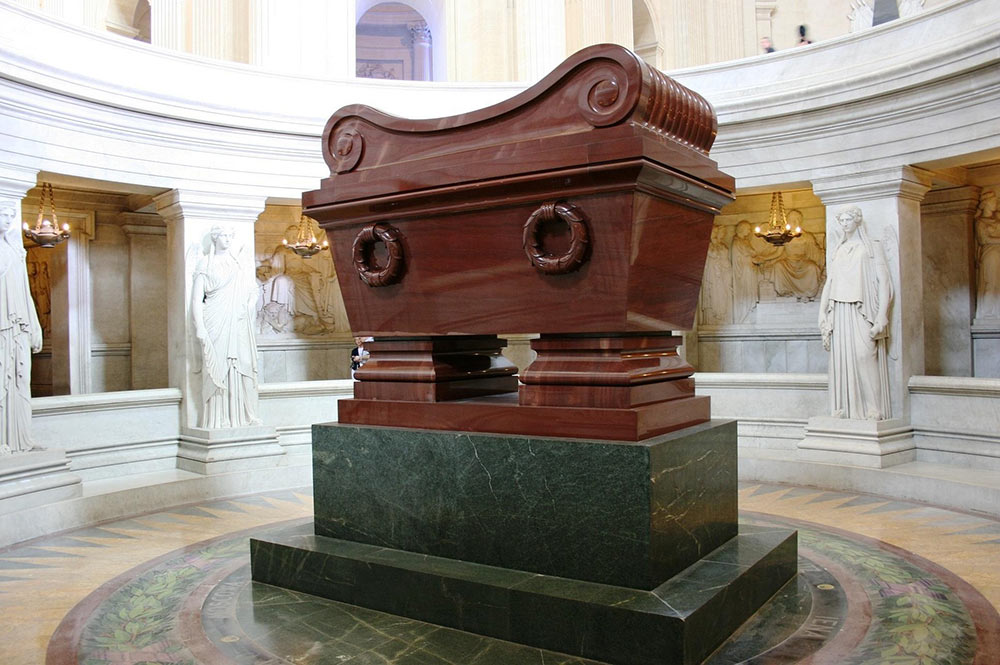
The sarcophagus—constructed from red quartzite blocks set upon a base of green Vosges granite—occupies the circular crypt. Around it stand twelve Victory statues by James Pradier, while the surrounding ambulatory displays ten large white‑marble bas‑reliefs by Pierre‑Charles Simart. Read left to right, they highlight signature elements of Napoleonic state building, including the Code civil and the creation of the Légion d’honneur. The names of major battles ring the composition. Taken together, these features suggest how 19th‑century Paris sought to frame the Emperor’s legacy—through law and institutions as much as through conquest.
The Dôme’s crypt is not solely Napoleon’s stage. The complex also houses Vauban’s mausoleum and the graves of Napoleon II (the “Eaglet”), Joseph and Jérôme Bonaparte, Generals Bertrand and Duroc, and 20th‑century marshals including Ferdinand Foch and Hubert Lyautey. This breadth of burials makes the Dôme a condensed history of French command and commemoration across three centuries.
Design a custom exploration of Les Invalides—focusing on Louis XIV’s vision, the Revolution and Empire, or 20th‑century legacies—then continue across Paris with SVD’s cultural know‑how.
Les Invalides is more than a historic shell. The Institution nationale des Invalides continues to serve veterans and severely injured persons through specialized medical care and rehabilitation—an unbroken link to the site’s founding mission. The complex also remains a place of national remembrance, where official and military ceremonies may take place in the cathedral or courtyards. These institutional rhythms are distinct from visitor itineraries, yet they deepen the meaning of what you see: architecture still in dialogue with public duty.
Les Invalides also figures in the opening act of the French Revolution. On the morning of July 14, 1789, Parisians seized roughly 30,000 muskets and a dozen cannons from the complex before turning to the Bastille. The movement of arms across the city that day imprinted the Invalides with a revolutionary memory alongside its royal and imperial identities.
Les Invalides houses three public museums: the Musée de l’Armée (France’s national military museum), the Musée de l’Ordre de la Libération, and the Musée des Plans‑Reliefs. Depending on available time and interests, SVD can enrich the experience with selected spaces of the Musée de l’Armée—such as sections on Louis XIV, the Revolution and the First Empire, or the two World Wars. These institutional collections operate on their own schedules; any inclusion is tailored and discussed case by case.
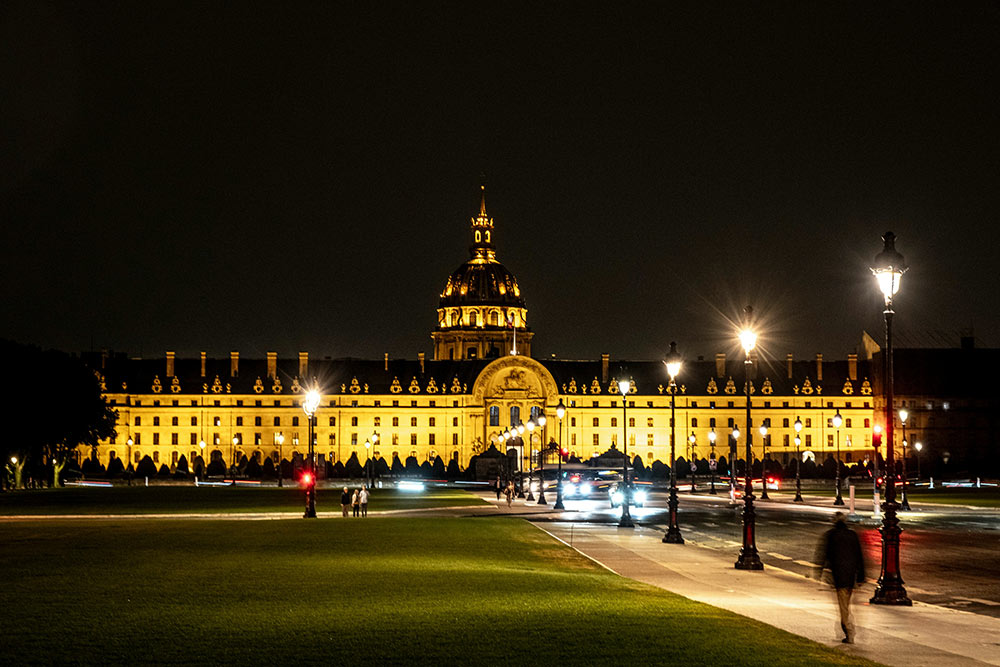
This is a guided visit focused on architecture, history and memory. The exploration typically includes an exterior reading of the façades and layout—highlighting how the Dôme commands the Parisian skyline—before taking in the memorial atmosphere of Saint‑Louis with its flags and trophies. At the Église du Dôme, your guide unpacks proportions, décor and light to show how a royal chapel became a military necropolis. In the crypt, you take in the monumental sarcophagus of Napoleon I, the sculpted Victories, the names of battles and Simart’s bas‑reliefs of civil achievements—framed by commentary that connects the 1840 Retour des Cendres and the later construction of Napoleonic myth. Depending on your interests, emphasis can be placed on Louis XIV’s project, Revolutionary and Imperial transformations, or the legacies of 20th‑century conflicts.
Les Invalides is a lens onto how France builds memory—through care, ceremony and crafted narratives. It pairs naturally with other layers of Parisian history, from royal urbanism to modern commemoration. On site, public museums deepen the context with collections that range from early modern campaigns to the World Wars. Beyond the esplanade, Paris offers countless vantage points for understanding how cities stage their past in the present.
SVD designs tailor‑made cultural journeys that connect architecture with story. Whether you’re drawn to the reign of Louis XIV, the drama of the Revolution and Empire, or the seismic shifts of the 20th century, we shape your day around the questions that matter to you.
Tell us how you’d like to experience the courtyards, Saint‑Louis Cathedral, the Dôme and Napoleon’s tomb—then build a Paris day that fits your curiosity.
Note: Les Invalides remains an active institutional site. Official ceremonies and the operations of its museums and medical establishment are distinct from any SVD visit schedule.
Les Invalides combines a royal hospital founded by Louis XIV in 1670 with spaces of national memory, including the Soldiers’ Church (Saint‑Louis) and the royal chapel under the Dôme, where Napoleon I was interred in 1861. The Main Courtyard also displays a significant portion of the Musée de l’Armée’s artillery and monumental sculpture collections. Few sites in Paris bring together care, ceremony and commemoration at this scale.
The circular crypt centers on a red‑quartzite sarcophagus set on a green Vosges‑granite base. It is encircled by twelve Victory statues by James Pradier, and the surrounding ambulatory features ten large white‑marble bas‑reliefs by Pierre‑Charles Simart that highlight civil achievements such as the Code civil and the Légion d’honneur. The names of major battles frame the ensemble. Your guide connects this program to the 1840 transfer of Napoleon’s remains and the shaping of his legend.
Yes. The Dôme houses Vauban’s mausoleum and the graves of Napoleon II (the “Eaglet”), Joseph and Jérôme Bonaparte, Generals Bertrand and Duroc, and Marshals Ferdinand Foch and Hubert Lyautey. Together they illustrate how the royal chapel evolved into a broader military necropolis.
Step into a world where art, history, and prestige converge along the banks of the Seine. As you cross the elegant Pont…

An immersive, unusual experience combining enchantment, heritage and live entertainment Located in the former Pavillons de Bercy, the Musée des Arts Forains…

This tour offers groups a complete discovery of the village of Montmartre, one of Paris's most emblematic districts. Perched high above the…
Would you like to plan a similar experience? Request your personalized itinerary.