Organized Tour of La Monnaie de Paris
Step into a world where art, history, and prestige converge along the banks of the Seine. As you cross the elegant Pont…
Fill up on discoveries
We organize your transport by coach, train or plane
Châteaux, grottes, parcs, jardins, villages, monuments historiques...
Go alone or in a group to discover these places
You won't miss a single detail - they know their subject inside out.
Thirty kilometers north of Paris, the village of Auvers‑sur‑Oise holds some of the most resonant places in Vincent van Gogh’s life. Here, between May and July 1890, he created a body of work that would mark art history—then died on 29 July 1890. In Auvers, you can still step into spaces and landscapes directly linked to those closing weeks: Room No. 5 in the Auberge Ravoux, preserved as a site of memory; the church he famously painted (today in the Musée d’Orsay); the wheat fields and river valley that frame the village; and, on the hill, the communal cemetery where Vincent and his brother Theo rest side by side.
This guided cultural walk through Auvers‑sur‑Oise connects those places with clarity and care. It is less about ticking off addresses and more about understanding how a real village—and the horizons around it—became part of one artist’s final language. Along the way, you encounter an open‑air trail marked with in‑situ reproductions, the 17th‑century Château d’Auvers with its immersive “Vision Impressionniste,” the Maison du docteur Gachet (a recognized heritage house), and the municipal Musée Daubigny devoted to pre‑Impressionism. Together, they situate Van Gogh’s last months within a broader story of the Oise valley and the painters who were drawn to it.
Auvers is where Van Gogh chose to spend the final chapter of his life. He arrived on 20 May 1890 and died on 29 July 1890. Those few weeks have become one of art’s most closely studied periods, not only because of the paintings themselves but because the places they depict remain present and legible. That continuity between canvas and setting is unusually strong here. It gives Auvers a particular gravity: you are not only looking at masterworks on museum walls; you are also standing in front of the church they show, or at the edge of the fields that ripple through them.
The village and its surroundings help articulate how a specific geography can catalyze creativity. There is no single explanatory key—no neat formula—but there is a vivid constellation of sites: a preserved attic room at the Auberge Ravoux; an outdoor interpretive trail with in‑situ reproductions; a château that uses large‑scale projections to immerse visitors in Impressionism’s world; a heritage house linked to a notable figure in Auvers; and a municipal museum honoring a forerunner of Impressionism. The result is not a reconstruction so much as a carefully curated encounter with real places that formed the backdrop to Van Gogh’s last months.
Set about 30 kilometers north of Paris, Auvers‑sur‑Oise occupies a fold of river valley where village streets meet open country. The geography matters. The Oise is a working river corridor, while the surrounding land opens quickly into farmland and wheat fields. That combination—village fabric, church silhouette, treelines and long low horizons—creates the visual grammar you recognize as you walk: windows onto sky, tracks curving past tilled earth, hedges giving way to big fields. These are not abstract notions but the actual rhythms of the place, still palpable as you move between the sites.
On this guided walk, the landscape is part of the story rather than a backdrop. The approach respects the village’s scale, linking key points on foot and leaving time for comparison: an outdoor panel here, a familiar profile there, and the real, present‑tense atmosphere of a place that continues to be lived in.
Among the views that have traveled farthest is the village church. Van Gogh painted it in 1890; the canvas is now held at the Musée d’Orsay in Paris. Seeing the church in situ is a simple yet powerful experience: the angles and masses you know from reproductions resolve into the building itself, with light and weather shifting around it. The point is not to “match” every detail, but to feel how a vernacular place—a local parish church—entered a larger visual conversation through painting.
Because the original work is conserved in Paris, the dialogue between Auvers and the Musée d’Orsay is unusually direct. Travelers often find that moving between the museum and the village (in either order) enriches both visits: the gallery context frames the work’s place in art history; the encounter on site anchors it in a specific geography.
The Auberge Ravoux—also known as the Maison de Van Gogh—preserves Room No. 5, a modest 7 m² attic room that has been kept untouched since 1890. It is a rare kind of site: not a reconstruction, but a preserved space closely tied to an artist’s life. According to the site, visits to the room follow a specific on‑site format: a guided room visit is typically followed by a brief audiovisual segment, for a total of about 30 minutes. That format describes the site’s operation, not a schedule for this guided walk, but it helps frame what the experience of the room is like today.
In a village full of outdoor comparisons between artworks and landscapes, the stillness of this interior makes a different impression. It is intentionally spare—“a lieu de mémoire,” a place of remembrance—inviting a quiet, concentrated encounter rather than a display dense with objects.
Auvers’ Chemin des Peintres is a marked outdoor trail that links viewpoints and reproductions to the settings that inspired them. Panels across the village and its surroundings act as waypoints, turning Auvers into a kind of open‑air museum. The effect is to slow you down: instead of flipping pages or scrolling images, you are outdoors, looking up and outward. The path emphasizes in‑situ comparison, inviting you to consider how painters translated a real scene into line, color and composition.
Because the trail is outdoors, access naturally follows local conditions and municipal arrangements. That flexibility is part of its character: you experience it in weather and light as they are, and those variables often sharpen the sense of place.
Beyond the village edge, the landscape opens into wheat fields and riverine vistas along the Oise. In the late spring and summer months, the contrast between built fabric and open country becomes especially legible: the lanes lose themselves into tracks; hedgerows frame agricultural plots; and the sky seems to expand. The guided walk includes segments in and around these landscapes, not as a hiking challenge but as a way to ground the art‑historical narrative. When the path emerges at a viewpoint and an outdoor panel sets a reproduction against the horizon, the conversation between painting and place becomes immediate.
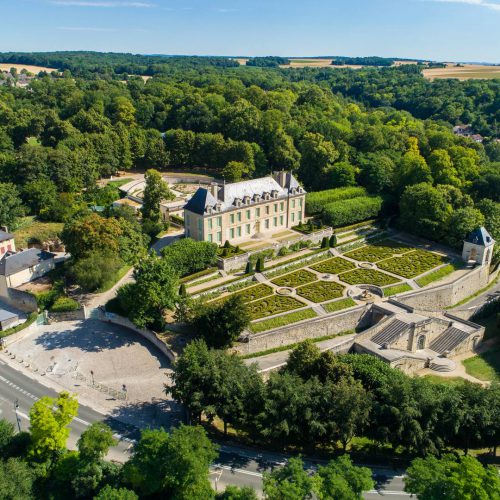
The 17th‑century Château d’Auvers is a striking counterpoint to the village grain. Inside, the château hosts Vision Impressionniste, an immersive parcours that uses large‑scale projections to orient visitors to Impressionism’s world. Rather than asking you to draw inferences unaided, the installation stages connections at scale, surrounding you with images and sound to illuminate a movement that continues to shape how we see modern painting.
Set within historic architecture and surrounded by park and gardens, the château reframes the Auvers story in a broader narrative. It is not a museum of Van Gogh alone; it positions him within a lineage of artists who looked outward to real places—rivers, towns, fields—and inward to subjective perception. Additional cultural programming follows the château’s own calendar.
The Maison du docteur Gachet is both a house and garden recognized for its cultural significance. Officially listed in 1991, it was acquired by the Val‑d’Oise departmental council in 1996, opened to the public in 2003, and in 2017 received the national Maison des Illustres label from the Ministry of Culture. Managed by the département, the house is part of a network of sites supported by cultural programming and educational resources. Within this guided walk, it adds a domestic, human‑scale dimension to the Auvers narrative—an address where history and everyday life intersect.
Auvers’ municipal museum, the Musée Daubigny, centers on the work of Charles‑François Daubigny and related movements that paved the way toward Impressionism. The city notes that the museum has held the national “Musée de France” designation since 15 December 2020. Including this stop in the Auvers experience positions Van Gogh’s last months within a longer continuum: the painters who preceded him here, the evolution of landscape as a serious subject, and the local environment that drew artists to the Oise valley.
On the ridge above the village, Vincent and Theo van Gogh are buried side by side in Auvers’ communal cemetery. It is a place of quiet reflection within the walk—a moment to register that the story does not end with canvases. The simplicity of the setting, under open sky, strengthens the sense that Auvers is not only a chapter in art history but a small French village where life and loss were—and are—part of the same landscape that artists observed.
Considering a day devoted to Auvers or a broader itinerary that weaves the village into your time in France? Speak with Suite Voyage Discovery to shape a custom trip around the places that matter to you—Van Gogh’s room, the church, the open‑air trail, and the château’s immersive interpretation among them.
This is a guided cultural walking tour, designed to connect places and ideas at a human pace. Rather than prescribing a rigid order, the route brings together the sites that define Auvers’ significance for Van Gogh’s final months and for the story of modern painting more broadly. You move along an accessible pedestrian route, pausing where the dialogue between artwork and setting is clearest. That often includes:
The village fabric and church. In the lanes near the parish church, you encounter the familiar forms of the building in real life before—or after—seeing the painting at the Musée d’Orsay. The focus is on perception: how light and vantage point inflect what you see; how a local landmark achieved international recognition through art.
The Auberge Ravoux (Maison de Van Gogh). Room No. 5, a 7 m² attic space kept untouched since 1890, is preserved as a place of memory. The site’s own format typically consists of a guided room visit followed by a short audiovisual segment (around 30 minutes total), framing a concentrated encounter with a space closely associated with the artist.
The Chemin des Peintres. This marked trail, presented by local institutions as an open‑air museum, uses in‑situ reproductions to connect you directly to views that shaped the art. Because it is outdoors, local conditions apply—yet that variability often enhances the experience of comparing canvas and horizon.
Fields and river valley. Stepping to the village edge and into the country around Auvers allows the landscape itself to take the lead: wheat fields, treelines, paths and the Oise valley give spatial context to what you have seen in reproductions.
Château d’Auvers. Within its 17th‑century architecture, the château’s Vision Impressionniste uses large‑scale projections to immerse visitors in the movement’s themes. It broadens the lens beyond a single painter to a wider current in European art, while remaining rooted in the Oise region’s lived geography.
Maison du docteur Gachet and the Musée Daubigny. The heritage house recognized as a Maison des Illustres and the municipal museum dedicated to Daubigny situate Auvers in a network of local addresses that matter to the area’s cultural story. They extend the narrative before and beyond Van Gogh, from pre‑Impressionism to later reception.
The communal cemetery. The walk typically includes a moment of quiet at the graves of Vincent and Theo, side by side in the town’s cemetery—an encounter that returns the narrative to its human core.
Each site in Auvers operates according to its own calendar and format. The Maison de Van Gogh (Auberge Ravoux) generally opens seasonally (spring–autumn) and presents Room No. 5 through an on‑site guided visit followed by a short audiovisual segment (about 30 minutes total). The Château d’Auvers hosts an immersive parcours and additional cultural programming according to the château’s calendar. The Chemin des Peintres is an outdoor trail with in‑situ reproductions; access is subject to local conditions and municipal arrangements. The communal cemetery is managed by the municipality and public access follows municipal regulations. These rhythms inform what you encounter on site; they are not a fixed visitor timetable for this guided walk and may change.
One of the rewards of this walk is learning to see ordinary places as an artist might. The effect does not depend on specialized vocabulary. It comes from paying attention to scale and proportion, to how a building sits within its site, to the way a hedgerow creates a line against the sky. When an outdoor reproduction meets your direct view of the landscape, small choices in a painting—where a path bends, how a roofline is cropped—come into focus. The comparison is never pedantic. It is simply a way to become a more attentive traveler, attuned to how place and perception work together.
That attentiveness applies indoors as well. At the château, large‑scale projections unfold around you, setting Impressionism in motion. The point is not to substitute for original canvases, but to provide immersion and orientation that make subsequent encounters—whether in Auvers, Paris, or elsewhere—more legible. Together, the indoor and outdoor components of Auvers complement each other: one rooted in the textures of real streets and fields, the other in curated sequences that clarify a movement’s ideas.
Auvers’ proximity to Paris strengthens the dialogue between village and museum. The Musée d’Orsay holds The Church at Auvers, and its broader collections set the painting within 19th‑century art. Whether you begin in the galleries or in the village, moving between the two often deepens both experiences: you recognize the church in a frame on the wall and then step into the village where it stands; or you walk the lanes of Auvers and later see the canvas in a museum context that traces influences and contemporaries. Either way, the conversation is real and immediate.
After Auvers, many travelers choose to continue exploring France through lenses that matter to them: more time with Impressionism in Paris museums, additional days in the Oise valley’s landscapes, or other cultural threads that echo the themes encountered here. Suite Voyage Discovery can help you sequence those ideas into a coherent itinerary—Auvers as a focal point, with the freedom to expand according to your interests.
Auvers‑sur‑Oise is a rare place where a world‑famous art story and a living French village occupy the same ground. The preserved attic room at the Auberge Ravoux, the church held in a masterwork at the Musée d’Orsay, the open‑air trail that sets reproductions against real horizons, a château that immerses you in Impressionism, a heritage house and a municipal museum that expand the narrative, and a quiet cemetery where two brothers lie side by side—taken together, they form an experience that is grounded, humane and exactingly local. This guided walk does not try to explain everything; it simply brings you to the places where the story is clearest, and lets the village, the fields and the river do the rest.
Bring Auvers into a tailor‑made journey shaped around your interests in art, landscape and culture. Suite Voyage Discovery will help you weave Van Gogh’s last chapter into a France itinerary that feels personal and unhurried.
The Auberge Ravoux preserves Room No. 5, a 7 m² attic room kept untouched since 1890—a rare place of memory closely tied to Van Gogh’s life in Auvers. According to the site, the on‑site format typically includes a guided visit to the room followed by a short audiovisual segment (about 30 minutes total). This describes the site’s operation and may change; it is not a fixed visitor timetable for this guided walk.
Auvers is a crossroads for several strands of 19th‑century art. The walk can include the Château d’Auvers and its immersive “Vision Impressionniste,” the Maison du docteur Gachet (a heritage house with the national Maison des Illustres label), and the municipal Musée Daubigny, which focuses on Daubigny and pre‑Impressionism (designated a “Musée de France”). The Chemin des Peintres adds an open‑air interpretive layer with in‑situ reproductions across the village.
Calendars and formats are set by each site. The Maison de Van Gogh generally operates seasonally from spring to autumn, and the Chemin des Peintres is outdoors and subject to local conditions. The Château d’Auvers hosts its immersive parcours and additional cultural programming according to the château’s own schedule, and the communal cemetery’s access follows municipal regulations. For current details, consult the official sites of each venue.
Step into a world where art, history, and prestige converge along the banks of the Seine. As you cross the elegant Pont…
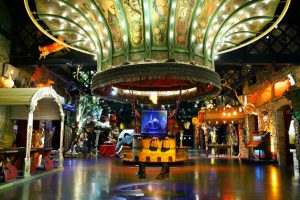
An immersive, unusual experience combining enchantment, heritage and live entertainment Located in the former Pavillons de Bercy, the Musée des Arts Forains…
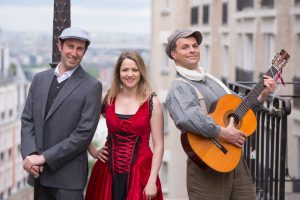
This tour offers groups a complete discovery of the village of Montmartre, one of Paris's most emblematic districts. Perched high above the…
Would you like to plan a similar experience? Request your personalized itinerary.