Thoiry ZooSafari
Thoiry ZooSafari: a life-size immersion in the heart of wildlife, just outside Paris Just forty kilometers from Paris, Thoiry ZooSafari offers a…
Discover the most beautiful historical monuments of our heritage
Go alone or in a group to discover these places
You won't miss a single detail - they know their subject inside out.
No visit to Paris feels complete without standing beneath the Eiffel Tower. Rising gracefully above the rooftops of the French capital, this remarkable monument has become much more than an architectural masterpiece—it is the universal symbol of Paris, a global icon of France, and one of the world’s most recognizable landmarks.
For millions of visitors every year, the Eiffel Tower represents romance, innovation, history, and unforgettable panoramic views. Yet beyond its famous silhouette lies an extraordinary story of engineering, controversy, scientific discoveries, and human ambition that few travelers fully experience.
Our Eiffel Tower experience goes far beyond simply admiring the monument. Through carefully designed guided visits, travelers discover the remarkable history behind Gustave Eiffel’s vision, understand the technical genius that made the structure possible, and appreciate the countless details often overlooked by independent visitors.
Whether you are traveling as a family, with friends, as part of a corporate group, an association, or simply exploring Paris on your own, discovering the Eiffel Tower with expert guidance transforms an iconic attraction into a fascinating journey through French history, architecture, and innovation.
From the impressive iron framework to the breathtaking observation platforms, every level of the Eiffel Tower tells a different story. Every rivet, beam, elevator, and panoramic viewpoint contributes to the legend of a monument that was never intended to become permanent—and yet ultimately became the defining image of Paris itself.
Planning a trip to Paris?
Whether you’re traveling as a couple, with family, as part of a private group, or organizing a corporate event, Suite Voyage Discovery creates tailor-made Paris itineraries that combine the Eiffel Tower with the city’s most iconic landmarks and authentic local experiences.
Request your personalized itinerary →
It may come as a surprise that the Eiffel Tower was never intended to remain in Paris permanently. When construction began in 1887, the ambitious project was designed as the centerpiece of the Exposition Universelle of 1889, celebrating the centennial of the French Revolution.
The organizers wanted a spectacular entrance that would demonstrate France’s industrial strength and engineering expertise. Gustave Eiffel’s proposal, developed alongside talented engineers Maurice Koechlin and Émile Nouguier and architect Stephen Sauvestre, offered precisely that: a revolutionary iron tower unlike anything the world had ever seen.
At nearly 1,000 feet tall when completed, it instantly became the tallest structure ever built by humans. No cathedral, monument, or skyscraper had previously reached such heights.
Construction itself represented an extraordinary logistical achievement. More than 300 workers assembled over 18,000 prefabricated iron components using approximately 2.5 million rivets. Remarkably, despite the scale of the project, safety standards were exceptionally advanced for the era, resulting in very few serious accidents.
Completed in just over two years, the Eiffel Tower officially opened in March 1889, astonishing visitors from around the world with its unprecedented size and daring design.
Yet success was far from guaranteed.
Long before becoming the symbol of France, the Eiffel Tower was one of the most controversial construction projects in Parisian history.
Many of the city’s leading artists, architects, writers, and intellectuals fiercely opposed the project. They argued that the immense iron structure would permanently disfigure the elegant skyline of Paris.
A famous public petition denounced what critics described as a “gigantic black factory chimney” dominating the capital. Among the signatories were some of the most respected cultural figures of the late nineteenth century.
Newspapers published passionate debates. Some Parisians admired the engineering achievement, while others viewed it as an industrial monstrosity incompatible with the city’s classical beauty.
Gustave Eiffel remained remarkably confident. He believed future generations would judge the tower not only by its appearance but by its technical brilliance and scientific usefulness.
History proved him right.
Within just a few decades, public opinion had completely changed. Visitors from across Europe began associating Paris with the remarkable iron tower rising above the Seine. Photographers, painters, filmmakers, and writers adopted it as the visual signature of the French capital.
Today, imagining Paris without the Eiffel Tower has become almost impossible.
Nicknamed “The Iron Lady,” the Eiffel Tower remains one of history’s greatest engineering accomplishments. Its apparent simplicity hides an astonishing level of mathematical precision and structural intelligence.
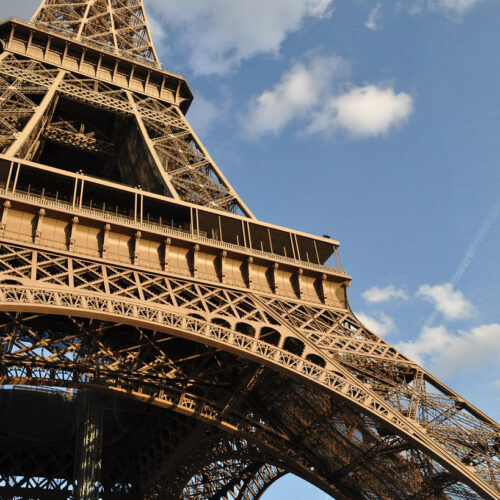
Unlike traditional stone monuments, the tower relies on an intricate lattice of iron beams that distributes weight while minimizing wind resistance. Every curve was carefully calculated to withstand powerful storms without sacrificing elegance.
One of the most fascinating aspects of the design is its flexibility. The structure can move slightly with strong winds while maintaining perfect stability. During hot summer days, thermal expansion may even cause the tower to grow by several inches before returning to its original dimensions as temperatures cool.
This remarkable adaptability continues to impress modern engineers more than a century after its construction.
Visitors looking closely at the framework quickly realize that no element appears random. Every beam contributes to the monument’s extraordinary balance, making the Eiffel Tower both exceptionally strong and surprisingly graceful.
Even today, engineering schools around the world continue studying its innovative structural design as a milestone in civil engineering.
Although universally associated with the monument, Gustave Eiffel was far more than the man who gave his name to the tower.
An internationally respected engineer, Eiffel specialized in metal bridges, railway viaducts, and large industrial structures at a time when iron construction was transforming architecture worldwide.
Before the Eiffel Tower, his company had already completed major engineering projects across Europe, South America, and Asia. His expertise was also called upon for one of America’s greatest monuments: the internal iron framework supporting the Statue of Liberty in New York Harbor.
The Eiffel Tower represented the culmination of decades of engineering innovation. Rather than serving merely as an observation tower, Eiffel envisioned it as a scientific laboratory where meteorological observations, aerodynamics, radio transmission experiments, and other technological research could be conducted.
That scientific vision would ultimately save the monument from demolition.
When the Eiffel Tower opened in 1889, few people imagined it would still dominate the Paris skyline more than a century later. In fact, its original operating permit was limited to just twenty years. According to the agreement signed with the French authorities, the structure was expected to be dismantled around 1909 once the World’s Fair had become a distant memory.
As that deadline approached, the future of the monument remained uncertain. Maintaining such a massive iron structure required significant resources, and many critics still considered it an eyesore rather than a masterpiece.
Gustave Eiffel understood that the tower needed to prove its usefulness if it were to survive. Rather than allowing it to become little more than a tourist curiosity, he encouraged scientists to use it as a laboratory suspended high above Paris.
Meteorologists conducted atmospheric observations from its upper platforms. Physicists carried out experiments on gravity and air resistance. Engineers studied wind pressure at unprecedented heights. These scientific activities demonstrated that the tower offered unique research opportunities impossible to reproduce elsewhere.
Its greatest contribution, however, came with the rapid development of wireless communications. The Eiffel Tower became an ideal location for radio transmission antennas, helping France establish one of Europe’s most advanced communication networks during the early twentieth century.
Military authorities soon recognized its strategic importance. During the First World War, radio transmissions sent from the tower played a vital role in military communications, contributing directly to the French war effort.
By proving its scientific and military value, the Eiffel Tower escaped demolition and gradually transformed from a temporary exhibition structure into a permanent national monument.
Want to experience more than the Eiffel Tower?
Our tailor-made Paris programs can combine the Eiffel Tower with Notre-Dame Cathedral, the Louvre Museum, a Seine River cruise, Montmartre, Versailles, and many other unforgettable experiences.
Build your custom Paris itinerary →
One of the most rewarding aspects of visiting the Eiffel Tower is discovering that each level offers a completely different experience. Rather than serving simply as observation decks, the various floors reveal new perspectives on both the monument itself and the city stretching below.
Located approximately 190 feet above ground, the first floor surprises many visitors. Spacious and modern, it combines exhibitions, interactive displays, restaurants, and panoramic walkways with spectacular views over the Champ de Mars.
One of the highlights is the famous glass floor. Looking straight down through the transparent panels offers an exhilarating perspective that allows visitors to appreciate the tower’s immense height from an entirely new angle.
This level also introduces visitors to the monument’s history through permanent exhibitions explaining its construction, evolution, and cultural significance.
The second floor is often considered the ideal observation level. At roughly 380 feet above Paris, visitors enjoy remarkably clear views while still being close enough to distinguish architectural details across the city.
From here, many of Paris’ most famous landmarks become instantly recognizable. The elegant avenues designed by Baron Haussmann unfold beneath the tower, while the Seine curves gracefully through the capital.
Professional photographers frequently recommend this level for capturing Paris because it offers the perfect balance between height and perspective.
This is also where visitors find one of the city’s most celebrated dining experiences, allowing guests to enjoy refined French cuisine while overlooking the capital.
Reaching the summit is an unforgettable experience. Standing more than 900 feet above Paris, visitors discover breathtaking 360-degree views extending for miles in every direction.
On clear days, visibility stretches far beyond the city’s historic center, revealing forests, suburbs, and distant landmarks that most visitors never notice from street level.
The summit also contains a reconstruction of Gustave Eiffel’s private office, complete with life-sized figures illustrating meetings with distinguished guests. This intimate space offers a fascinating glimpse into the daily life of one of history’s greatest engineers.
For many travelers, arriving at the summit represents the emotional highlight of their entire stay in Paris.
Few cities reward panoramic viewing quite like Paris. From the Eiffel Tower, visitors gain an extraordinary understanding of the capital’s elegant urban design, centuries of architectural evolution, and remarkable concentration of world-famous monuments.
Looking north, the magnificent skyline is crowned by the white domes of Sacré-Cœur overlooking Montmartre. To the east, the towers of Notre-Dame rise above the historic heart of Paris. The glass pyramid of the Louvre, the Arc de Triomphe, the golden dome of Les Invalides, and countless church steeples become part of a breathtaking architectural mosaic.
The Seine itself becomes one of the most beautiful sights. Winding gently through the city, it links many of Paris’ greatest landmarks while reflecting bridges, monuments, and elegant façades that have inspired artists for generations.
Observing Paris from above also reveals the remarkable symmetry introduced during the nineteenth century by Baron Haussmann. Wide boulevards radiate outward with geometric precision, creating the harmonious cityscape admired around the world today.
Whether visiting during the soft light of morning, the golden colors of sunset, or after nightfall when Paris sparkles with thousands of lights, every moment offers a completely different atmosphere.
Modern visitors often take the elevators for granted, yet they remain among the tower’s greatest engineering achievements.
Unlike conventional elevators traveling vertically inside buildings, the Eiffel Tower’s elevators must follow the monument’s curved legs before switching to more traditional vertical movement higher up.
Designing this complex transportation system in the late nineteenth century required innovative engineering solutions that astonished visitors during the World’s Fair.
Although today’s equipment has been modernized repeatedly to meet contemporary safety standards, the basic engineering challenge remains exactly the same: transporting millions of visitors safely through a structure unlike any other in the world.
Every year, technicians perform extensive inspections and maintenance to ensure exceptional reliability while preserving the tower’s historic character.
Maintaining a monument exposed to weather throughout the year requires constant attention. The Eiffel Tower is far from a static structure—it is a living monument cared for by teams of highly specialized engineers, painters, metalworkers, and technicians.
Perhaps its most famous maintenance operation is the complete repainting of the tower, carried out approximately every seven years. Tens of thousands of square meters of iron must be carefully cleaned, inspected, and repainted by hand.
Far from using a single uniform color, the tower is actually painted in three slightly different shades. Darker tones appear at the base while progressively lighter shades are applied toward the summit, creating an optical effect that enhances the monument’s elegant proportions against the Parisian sky.
Visitors are often surprised to learn that dozens of skilled painters work suspended high above the ground using ropes and safety equipment to reach every section of the iron framework.
Did you know? The Eiffel Tower remained the tallest man-made structure in the world for more than 40 years, until the completion of New York City’s Chrysler Building in 1930.
Did you know? More than 300 million people have visited the Eiffel Tower since it first opened to the public.
Did you know? Gustave Eiffel personally welcomed distinguished guests to his private office at the summit, including inventor Thomas Edison.
Did you know? During exceptionally cold weather, the tower becomes slightly shorter as the iron contracts.
Did you know? The sparkling lights that illuminate the Eiffel Tower every evening have become one of Paris’ most beloved daily spectacles.
The Eiffel Tower is one of the world’s most visited monuments, welcoming millions of travelers every year. A little planning can make the difference between a pleasant visit and a truly unforgettable experience.
Tickets for the summit often sell out several days—or even weeks—in advance, especially during spring, summer, school vacations, and the holiday season. Reserving ahead of time gives you greater flexibility and allows you to choose the time of day that best matches your itinerary.
Even with timed admission, arriving 20 to 30 minutes before your scheduled entry helps you pass through security comfortably and enjoy the surroundings without feeling rushed.
Many visitors focus only on the ascent, but the area surrounding the Eiffel Tower deserves just as much attention. Walking through the Champ de Mars, crossing the Seine, or reaching the Trocadéro provides some of the most iconic viewpoints in Paris.
Consider the Stairs
If you’re comfortable with moderate physical activity, climbing to the second floor offers a completely different perspective. Watching the iron framework unfold around you creates a deeper appreciation of Gustave Eiffel’s engineering masterpiece.
As daylight fades, Paris gradually transforms into the City of Light. Every evening, the Eiffel Tower sparkles for five minutes at the beginning of each hour after nightfall, creating one of the most magical spectacles in the French capital.
The Eiffel Tower offers a unique atmosphere throughout the year, with each season revealing a different side of Paris.
Blooming gardens, mild temperatures, and longer daylight hours make spring one of the most popular times to visit. The surrounding parks become especially beautiful, while comfortable weather encourages leisurely walks along the Seine.
Summer brings lively terraces, extended opening hours, and vibrant city life. Although visitor numbers are at their highest, the long evenings provide exceptional opportunities to admire the tower illuminated against the twilight sky.
Many experienced travelers consider autumn the ideal season. Softer light, colorful foliage, and slightly smaller crowds create excellent conditions for photography and sightseeing.
Winter offers a quieter atmosphere and a unique charm. On crisp, clear days, visibility from the upper platforms can be spectacular, while the festive decorations throughout Paris add a magical touch to the experience.
Few monuments have been photographed as often as the Eiffel Tower, yet every visitor can still capture unique images by choosing the right viewpoints and lighting conditions.
Rather than rushing from one viewpoint to another, take time to observe how changing light transforms the monument throughout the day.
The Eiffel Tower appeals to every type of traveler because it combines history, architecture, engineering, breathtaking scenery, and unforgettable emotions.
Children are fascinated by the immense structure, panoramic elevators, and spectacular views. Interactive exhibitions help younger visitors better understand how the tower was built and why it became one of the world’s greatest engineering achievements.
Whether celebrating a honeymoon, anniversary, or simply enjoying a romantic getaway, the Eiffel Tower offers one of the most memorable settings in Paris. Watching the city lights appear as evening falls creates unforgettable memories.
Independent visitors appreciate the opportunity to discover both the monument’s remarkable history and its panoramic viewpoints at their own pace. Every level offers moments for quiet observation and photography.
Associations, clubs, incentive groups, corporate travelers, and extended families particularly benefit from guided experiences. Expert commentary brings the monument to life while ensuring everyone enjoys a smooth and well-organized visit.
These itineraries can easily be customized according to your interests, available time, and group size, allowing you to experience the very best of Paris at a comfortable pace.
Many visitors are surprised to learn that the Eiffel Tower was never intended to become a permanent feature of the Paris skyline. Designed as the centerpiece of the 1889 World's Fair, it was granted an operating concession of only twenty years, meaning that its demolition was originally scheduled for 1909. At the time, numerous artists, writers, and architects openly criticized the project, arguing that such a massive iron structure would permanently damage the beauty of Paris. Even after the success of the World's Fair, there was no guarantee that the monument would survive. Gustave Eiffel, however, was convinced that his creation could serve a purpose far beyond welcoming visitors. He encouraged scientists to use the tower for meteorological observations, aerodynamic research, and experiments on atmospheric pressure. Its exceptional height also made it an ideal location for the rapidly developing field of wireless communications. Radio antennas installed on the tower soon proved invaluable, allowing engineers to transmit signals over long distances that had previously been impossible. The monument's strategic importance became particularly evident during the First World War, when military communications transmitted from the Eiffel Tower helped French forces intercept enemy messages and coordinate operations. These scientific and military contributions ultimately convinced the French authorities to preserve the structure rather than dismantle it. Over time, public opinion evolved dramatically. What had once been considered a controversial engineering experiment gradually became the world's most recognizable monument and the enduring symbol of Paris. Understanding this remarkable transformation allows visitors to appreciate the Eiffel Tower not only as an architectural masterpiece but also as a monument that changed the history of modern engineering and communications.
Each level of the Eiffel Tower offers a distinct experience, and together they reveal why the monument continues to fascinate millions of visitors every year. The first floor introduces travelers to the tower's remarkable history through interactive exhibits while offering the thrill of walking across its famous glass floor. This level provides a unique opportunity to admire the intricate iron framework from within and to understand the extraordinary engineering that made the structure possible. The second floor is widely regarded as the best observation platform for photography. At this height, visitors enjoy sweeping panoramic views while remaining close enough to distinguish many of Paris' iconic landmarks, including the Louvre, Notre-Dame Cathedral, the Arc de Triomphe, and the Seine River winding through the city. It is also home to one of the capital's most renowned restaurants, making it an ideal place to combine sightseeing with an exceptional dining experience. The summit delivers an entirely different perspective. Standing more than 900 feet above Paris, visitors are rewarded with breathtaking 360-degree views that stretch far beyond the historic center. They can also discover the reconstructed private office of Gustave Eiffel, a fascinating reminder that the tower was not simply designed as a tourist attraction but as a place dedicated to scientific innovation. For the most complete experience, exploring all three levels offers the richest understanding of both the monument itself and the city it has come to symbolize.
Although the Eiffel Tower is often the highlight of a visit to Paris, it is even more memorable when included within a carefully planned itinerary that reveals the city's extraordinary cultural heritage. Because of its central location, the monument combines naturally with many of the capital's most famous attractions. Visitors frequently continue their day with a relaxing cruise along the Seine, a walk through the elegant gardens of the Trocadéro, or an exploration of nearby landmarks such as the Arc de Triomphe and the Champs-Élysées. For travelers spending additional time in Paris, the Eiffel Tower can also be paired with iconic destinations including Notre-Dame Cathedral, the Louvre Museum, Montmartre, the Latin Quarter, or the Palace of Versailles. Each of these places offers a different perspective on French history, architecture, art, and culture, creating a well-balanced itinerary that goes far beyond a simple sightseeing tour. At Suite Voyage Discovery, every itinerary is designed around the interests, pace, and expectations of each traveler or group. Whether you are visiting as a couple, with your family, with friends, as part of a corporate event, or within an organized group, our tailor-made experiences combine world-famous landmarks with authentic discoveries to create lasting memories. Rather than simply visiting Paris, you experience the city through carefully curated moments that reflect its history, elegance, and unique atmosphere.
Thoiry ZooSafari: a life-size immersion in the heart of wildlife, just outside Paris Just forty kilometers from Paris, Thoiry ZooSafari offers a…

Located at the heart of the Rambouillet estate in the Yvelines, the Bergerie Nationale is a unique site in France, at the…
Eiffel Tower & Trocadéro – Monumental Paris A universal symbol of Paris, the Eiffel Tower is far more than its outline. Around…
Would you like to plan a similar experience? Request your personalized itinerary.