Rungis at Daybreak: Inside Paris’s Backstage Food World
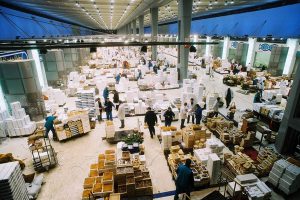
Just south of Paris, while the city sleeps, the world’s largest fresh food market is already wide awake. Rungis International Market operates…
Fill up on discoveries
We organize your transport by coach, train or plane
Marchez dans les pas des maquisards, traversez une zone de parachutage, découvrez le quotidien des combattants...
Go alone or in a group to discover these places
You won't miss a single detail - they know their subject inside out.
Where industry forged identity and art reframes the past, French Flanders offers a compact, culture-rich journey. Over two days, guided visits lead you from the emblematic heart of Lille to the former coal basin of Lewarde, from the Louvre-Lens’s singular “Galerie du Temps”—an open panorama of 5,000 years of art—to Roubaix’s celebrated La Piscine, an art museum housed in a former Art Deco swimming pool. The contrasts are striking yet coherent: brick-and-stone cityscapes, mining memory recognized by UNESCO, and a contemporary museum scene that has turned heritage into inspiration.
French Flanders is a place of vivid juxtapositions. In Lille, the Grand-Place anchors a historic core known for characterful façades and cobbled streets; nearby, Vieux-Lille forms part of a protected heritage site. Within easy reach, the former coal basin, whose landscapes and communities are recognized by UNESCO, holds one of France’s most ambitious industrial museums at Lewarde. A short distance away, the Louvre-Lens presents an expansive, open-plan timeline of human creativity, while Roubaix’s La Piscine transforms an Art Deco pool into a museum of art and industry. Across these encounters, you gain more than snapshots—you trace how a region with a powerful industrial past has reimagined itself through culture, architecture, and design.
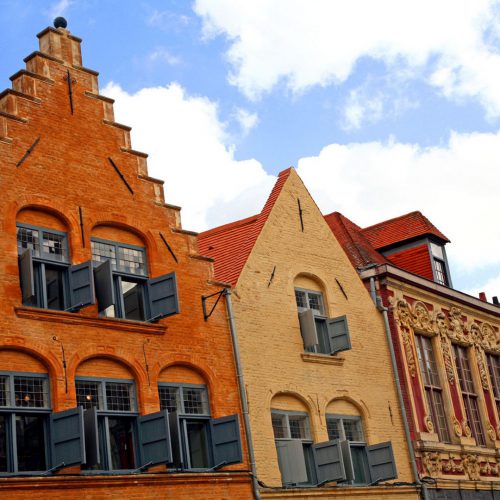
The journey opens with a sense of place that is both unmistakably northern and distinctly cosmopolitan. Lille’s Grand-Place (Place du Général-de-Gaulle) is described by the city’s tourism office as the emblematic heart of the metropolis, framed by notable historic architecture. The square’s presence is both ceremonial and welcoming, a shared living room where façades tell stories of evolving styles and civic ambition. Just beyond, Vieux-Lille draws you into a network of colorful fronts and cobblestone passages. In urban heritage terms, part of this district forms a Site patrimonial remarquable (protected heritage site), a designation that underscores the historical layers you sense in its streets and courtyards.
As you walk, the experience is less about rushing from landmark to landmark and more about immersion in a city that wears its past with quiet confidence. The Vieille Bourse, among the celebrated buildings around the Grand-Place, adds to the feeling of time held within the urban fabric. The wider palette—brick and stone, gilt and gable silhouettes, restrained elegance and bursts of ornament—evokes a French–Flemish vocabulary refined over centuries. Guided insights bring coherence to this mosaic, revealing how Lille’s public squares and intimate lanes complement each other: one extroverted, the other quietly atmospheric.
Industrial heritage becomes immediate at the Centre Historique Minier in Lewarde, which presents itself as France’s largest mining museum. The museum occupies the site of the former Fosse Delloye colliery and is recognized as a Monument Historique. Within the wider Nord–Pas de Calais Mining Basin—inscribed on the UNESCO World Heritage List as a testimony to coal mining landscapes and communities—Lewarde functions as both a repository and an interpreter of a defining regional story.
The museum’s exhibitions are installed across the former pit site, and external documentation notes the creation of a fully reconstructed gallery developed with former miners to evoke underground conditions. This strategy of interpretation—presenting tools, techniques, and the spatial reality of extraction—helps visitors appreciate how technology and human experience intersected below ground. The result is a place where objects and spaces make the past intelligible: the scale of operations, the specialized know-how, and the solidarity that many associate with mining communities.
Guided interpretation adds shape to this complexity, situating Lewarde not as an isolated museum but as part of a landscape of memory. The UNESCO inscription recognizes the basin for its distinctive combination of mining features and the cultural identity that formed around them. In this light, a visit to Lewarde becomes more than a museum stop; it’s an encounter with an industrial civilization whose traces, both material and social, continue to inform northern France.
From the strata of coal to the strata of culture: the Louvre-Lens is renowned for curating connections that leap across centuries and civilizations. Its signature Galerie du Temps extends over approximately 3,000 square meters, presenting more than 200 works in a single, open space that lays out roughly 5,000 years of art in a continuous chronological band. The visual argument is as compelling as it is clear: when masterpieces and artifacts share an uninterrupted field, patterns emerge—form echoes form; ideas migrate; materials and motifs acquire fresh resonance.
Unlike a thematic maze or a sequence of closed rooms, this gallery’s openness encourages slow looking and wide-angle comparisons. A guided visit helps you navigate the timeline, highlighting surprising dialogues between objects that may be geographically distant yet historically proximate. The experience is neither austere nor didactic; instead, it feels like a generously lit conversation among works, inviting visitors to draw connections at their own pace while benefiting from curated context.
In Roubaix, the language of reinvention becomes architectural. La Piscine – Musée d’art et d’industrie André Diligent opened as a museum in 2001 within the city’s former municipal swimming pool, a major example of Art Deco architecture. After a significant extension and reopening in 2018, La Piscine is widely cited for the distinct pleasure of experiencing painting and sculpture in a place long associated with light, rhythm, and a spirit of public well-being.
The setting’s aura—arched volumes, refined geometry, and the calibrated radiance characteristic of interwar design—shapes how you encounter the collections. It’s a reminder that museums are not only repositories; they’re also frames that color the art within them. That an industrial city would transform a historic civic amenity into an imaginative museum speaks to the broader narrative of northern France: aesthetic ambition coexisting with—and often emerging directly from—workaday history.
Ready to connect Lille’s historic heart with UNESCO-listed mining heritage, the Louvre-Lens timeline, and Roubaix’s Art Deco icon? SVD can shape a two-day, guided cultural journey to match your interests.
This is a two-day cultural and heritage itinerary with guided visits. The named places are specific and carefully chosen: Lille (Grand-Place; Vieux-Lille), Lewarde (Centre Historique Minier), Lens (Louvre-Lens and its Galerie du Temps), and Roubaix (La Piscine – Musée d’art et d’industrie). The rhythm is intentionally open—SVD does not prescribe a fixed daily timetable—allowing your guided time on site to deepen your understanding rather than chase a checklist.
In Lille, the emphasis falls on the city’s emblematic square and the textures of its old quarter. You take in the colorful façades, the feel of cobbled streets, and the ways in which public architecture stages civic life. At Lewarde, the focus turns to mining history and techniques in a setting that once served the coal industry, anchored by a museum that identifies as the country’s largest devoted to mining. At the Louvre-Lens, you encounter an unusually open gallery concept—5,000 years of art in a single chronological sweep—where your guide helps make sense of unexpected affinities. In Roubaix, you discover a museum where the very building enriches the art it houses, an Art Deco pool recast as a space for sculpture and painting.
Across these visits, you witness how northern France treats heritage not as an endpoint but as a resource. Streets and squares are preserved to remain lived-in; industrial sites become storytellers; museums curate diachronic conversations; Art Deco architecture regains civic purpose. The experience is cohesive without being uniform, and the narrative arc—city, mine, museum, pool—stays with you long after the two days conclude.
When a region is defined for generations by a single resource—here, coal—its landscapes, towns, and social fabric bear the imprint. In French Flanders and the wider mining basin, that imprint is still legible, even as the economy has diversified and the cultural scene has flourished. UNESCO’s recognition underscores the uniqueness of this palimpsest: slag heaps and shafts, workers’ housing and service buildings, and the networks that once pulsed with extraction and exchange.
At Lewarde, the industrial story is translated into a museum language that clarifies without smoothing over complexity. At the Louvre-Lens, chronology becomes a tool for empathy as you see how objects separated by geography nonetheless share DNA. In Roubaix, Art Deco’s optimism becomes a platform for present-day art appreciation. And in Lille, the articulation of a grand civic square alongside an intimate old quarter provides the human scale that keeps the narrative grounded. The throughline is not a single style or period; it’s the region’s capacity to repurpose, to set historic frameworks in dialogue with contemporary uses.
Spending time on the Grand-Place reveals how civic architecture mediates between ceremony and everyday life. The very way the square holds space—drawing lines of sight from its periphery to its center—creates a forum for the city’s energy. Around it, celebrated buildings, including the Vieille Bourse, punctuate the skyline, their detailing a reminder that public life in northern cities often unfolds within carefully crafted architectural envelopes.
Vieux-Lille, with portions recognized as a protected heritage site, complements this grandeur with a micro-scale reading of history. Here, the itinerary’s emphasis on strolling matters: you notice alignments of colorful façades, the cadence of paving underfoot, and the interplay of old and new. The experience offers no forced nostalgia; rather, it shows how historical preservation and contemporary city life coexist in a district that feels both rooted and forward-looking.
Mining history is frequently told through statistics—tonnage, depth, and output. At the Centre Historique Minier, the story widens to include people, practices, and the design of spaces that made an extreme environment workable. External references to a reconstructed gallery suggest how interpretation can communicate the physical realities of the mine while acknowledging the knowledge of those who worked there. In the former pit buildings and across the site, the museum aligns objects and narratives to demonstrate how technique, training, and teamwork underpinned all mining operations.
This is where the UNESCO inscription becomes more than a label. The mining basin is recognized not only for the presence of industrial structures but for the communities that formed around them. Museums like Lewarde help transform that recognition into understanding, letting visitors appreciate the delicate balance between technological ingenuity and human cost without prescribing a single emotional response. The tone is respectful and evidence-based, with guided visits helping you connect dots across spaces and themes.
The Galerie du Temps at the Louvre-Lens is one of those museum experiences that quietly recalibrate how you think about art history. By ordering works along an open, chronological plane, the gallery invites comparisons beyond a single culture or medium. Stone dialogues with bronze; ceramics cross-reference painting; fragments converse with complete forms. More than a clever layout, it’s a curatorial ethos that renders time legible and porous. Guided context helps you see what your eye senses: continuities and ruptures that make the past feel lucid.
The effect is contemplative rather than overwhelming. Because the open gallery resists compartmentalization, you can trace motifs across adjacent centuries without losing the thread. The architecture heightens this clarity—light, sightlines, and generous spacing facilitate a kind of visual breathing room that many travelers find restorative after dense urban visits.
La Piscine’s setting matters. Art Deco is not simply a backdrop; it is an active participant in how you encounter the museum’s collections. The building’s rebirth as a museum in 2001, and its significant extension and reopening in 2018, together illustrate how heritage can be adapted to new cultural uses without losing its character. The museum is described by the French Ministry of Culture as a place whose collections emphasize painting and sculpture, a mandate that feels at home amid the pool’s stylized geometries and carefully modulated light.
Many visitors find that this dialogue between architecture and art offers a different register from conventional galleries. The scale is intimate, the rhythm deliberate. Where the Louvre-Lens proposes a sweeping panorama, La Piscine frames depth through resonance: how a sculpture’s mass plays against a curve, how a painting’s color meets the architecture’s palette. Both experiences underscore the itinerary’s premise: that context changes how we see.
From Lille’s emblematic square to Lewarde’s mining memory, from the Louvre-Lens’s 5,000-year arc to Roubaix’s Art Deco revival, this two-day journey balances depth and variety through guided visits.
French Flanders rewards curiosity. Some travelers choose to linger longer in Lille’s historic quarters; others find themselves drawn to additional facets of the mining basin’s heritage or to the region’s broader cultural offerings. The common thread is simple: the more you explore, the more the region’s narrative coherence comes into view. With SVD, your itinerary can prioritize the places and themes that resonate—urban architecture, industrial memory, museum innovation—without forcing a one-size-fits-all approach.
In just two days, this itinerary sketches a vivid portrait of a region that has continually reinvented itself. You begin with a city square that embodies civic life; you engage with a mining site that speaks to labor, technology, and community; you traverse millennia in an open museum landscape; and you stand in an Art Deco pool reframed as a home for art. Throughout, guided visits provide a throughline of insight. The result is an experience that feels grounded and generous—true to place, rich in perspective, and open to discovery.
Included by SVD: Guided visits (as stated by SVD). No additional practical details are specified by SVD for this program.
It connects four complementary experiences through guided visits: Lille’s emblematic Grand-Place and the textures of Vieux-Lille; the Centre Historique Minier at Lewarde on the former Fosse Delloye colliery (within the UNESCO‑recognized mining basin); the Louvre‑Lens’s open‑plan Galerie du Temps presenting around 5,000 years of art; and Roubaix’s La Piscine, an art museum set in a former Art Deco municipal pool.
The Nord–Pas de Calais Mining Basin is inscribed on the UNESCO World Heritage List for its testimony to coal mining landscapes and communities. Visiting the Centre Historique Minier at Lewarde—identified as France’s largest mining museum and located on the former Fosse Delloye colliery—provides a focused entry point into that wider heritage, with exhibitions on mining history and techniques installed across the historic site.
At Louvre‑Lens, the Galerie du Temps offers an expansive, open display of more than 200 works spanning roughly 5,000 years, inviting comparisons across time in a single chronological sweep. In Roubaix, La Piscine—housed in a former Art Deco municipal pool—presents collections of painting and sculpture in an architecturally distinctive setting, with the museum opened in 2001 and significantly extended with a 2018 reopening.
Just south of Paris, while the city sleeps, the world’s largest fresh food market is already wide awake. Rungis International Market operates…

From the air, an airport appears as lines and lights. Up close, it is a living system—part transportation hub, part economic platform—where…
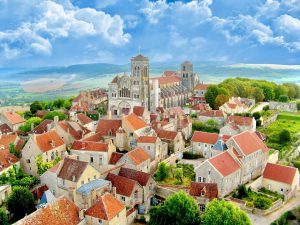
Two UNESCO World Heritage sites, one meaningful arc of history: this day unfolds Burgundy’s spiritual and architectural genius from the austere beauty…
Would you like to plan a similar experience? Request your personalized itinerary.