Visit the Louvre Museum in Paris: Masterpieces, History & the Iconic Pyramid
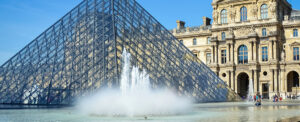
Some places display works of art. Others become works of art themselves. The Louvre belongs to the second category. Long before it…
We organize your transport by coach, train or plane
De 7 à 77 ans, sans aucune restriction
Go alone or in a group to discover these places
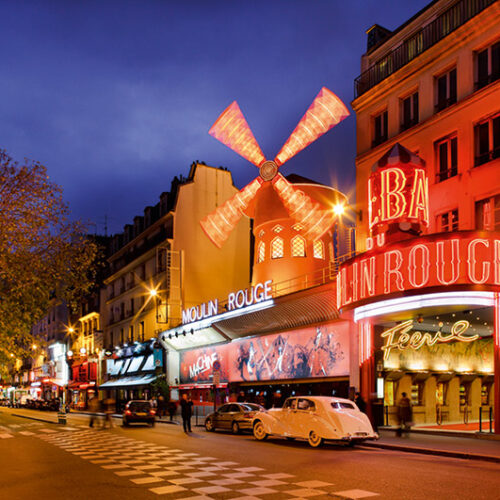
The red windmill at the foot of Montmartre has been turning heads since 1889. Step inside the Moulin Rouge and you step into living Parisian legend: an internationally renowned cabaret where the signature French Cancan, lavish costumes, and ever-changing tableaux come together in the long-running Féerie revue. With Suite Voyage Discovery, your evening centers on access to the Moulin Rouge show, with the possibility of a dinner-show or champagne option to complement the experience.
Some places become shorthand for a city’s spirit. The Moulin Rouge is one of them. Born in the Belle Époque and still at the heart of Montmartre’s cultural identity, this storied cabaret channels more than a century of Parisian nightlife into a single evening. The French Cancan—first popular in 19th-century dance halls—remains the show’s emblematic surge of energy, while Féerie connects past and present through theatrical tableaux, music, and spectacle. The scale is part of the thrill: Féerie typically brings together around 80 artists and nearly 1,000 costumes shimmering with feathers, sequins, and rhinestones. It’s the kind of orchestrated dazzle that makes “Moulin Rouge in Paris” as resonant a phrase today as it was when the windmill first lit up the boulevard.
The story begins on October 6, 1889, when founder Joseph Oller, alongside Charles Zidler, opened the doors of a brand-new entertainment venue. Its location—right at the base of Montmartre—was no accident. The hill was already entwined with Paris’s reputation for nocturnal creativity, and the Moulin Rouge quickly became a stage on which that spirit could dance. Over time, its windmill facade and electric atmosphere turned into an instantly recognizable emblem of the capital’s Belle Époque nightlife, and then of Paris itself.
Féerie is the Moulin Rouge’s current revue, performed in four acts. The format is a classic of the cabaret tradition: a sequence of tableaux inspired by different worlds, fusing movement, melody, and spectacle into a smooth-flowing whole. Part of its enduring appeal lies in contrasts—tempo shifts, tonal changes, and visual transformations—designed to keep eyes wide and attention rapt.
What also sets Féerie apart is the sheer craftsmanship involved. With around 80 performers on stage across the show and nearly 1,000 costumes sparkling with feathers, sequins, and rhinestones, the revue celebrates the grand tradition of Parisian cabaret pageantry. Sets evolve, silhouettes multiply, and the finale lands with the satisfying flourish of an institution that knows exactly how to captivate a room. The overall ambience is elegant—a polished balance between heritage and high-energy entertainment.
The French Cancan took shape in the popular balls of the 19th century and has long been the flagship dance of the Moulin Rouge. It’s more than a number: it’s a statement of identity. Each time the music surges and the choreography hits its stride, the cabaret’s history and present moment merge. The Cancan’s place in the program remains a highlight, the signal everyone recognizes, an exclamation mark amid the lush swirl of Féerie.
In 1891, artist Henri de Toulouse-Lautrec created the Moulin Rouge – La Goulue poster at the request of director Charles Zidler. That single commission helped amplify the reputation of both the artist and the cabaret. Stylized yet immediate, the image distilled the Moulin Rouge’s magnetism into a frame that could travel across the city. More than a publicity tool, the poster became a touchstone for how the world imagines the Parisian night—bold color, graphic movement, and a whiff of spectacle that audiences still seek out inside the windmill today.
Your evening focuses on the Moulin Rouge show, seating you within the historic Montmartre cabaret for the Féerie revue’s cascade of tableaux from different universes, crafted costumes, music, and movement. According to your preferences, you may choose an optional dinner-show—a gastronomic meal accompanying the evening—or opt for champagne as an alternative. The heart of the experience is the performance itself: an internationally known spectacle that blends Parisian tradition with contemporary stagecraft.
Ready to weave the Moulin Rouge into a tailor-made Paris itinerary? Start your custom trip request and our specialists will design an evening around the legendary Montmartre cabaret.
Part of the pleasure is realizing how many threads come together in a single night. There’s the heritage—a venue founded in the Belle Époque by Joseph Oller and Charles Zidler, a cornerstone of Montmartre’s performing identity. There’s the stagecraft: Féerie’s four-act structure, the rhythmic progression, and the show’s ability to surprise as scenes change. And there’s the visual radiance of the costumes—feathers, sequins, and rhinestones catching the light—which underscores how deeply craft and choreography are intertwined in Parisian cabaret tradition.
When the French Cancan arrives, it connects the dots across time. Rooted in the exuberant dance culture of the 19th century and now synonymous with the Moulin Rouge, this emblematic number gives the evening its signature punctuation. The Cancan’s reputation makes it a shared reference point in the room—one you can feel as part of the collective mood.
The Moulin Rouge stands where Montmartre’s slope meets the city below, anchoring the neighborhood’s identity in performance. The hill’s long association with nightlife and cabaret culture gives the windmill a sense of belonging: when you arrive, you’re not just going to a show, you’re stepping into a district that helped define the art of an evening out in Paris. This continuity matters. It’s why the experience feels both rooted and immediate—of a place and of a moment.
Part of the Moulin Rouge’s durability lies in its ability to adapt while keeping its essence intact. The tableaux of Féerie acknowledge that heritage with visual variety, while the scale—the dozens of artists who carry the performance and the nearly 1,000 costumes that shift its textures—keeps the experience grand. The combination of craft, choreography, and setting evokes the Belle Époque without turning it into a museum piece. Instead, the revue lives and breathes in the present, refreshed by each audience that enters under the red windmill.
There isn’t a single “right” way to experience the Moulin Rouge; the cabaret’s tradition is broad enough to welcome different preferences. Some travelers are drawn to the dinner-show option for the conviviality of a gastronomic meal wrapped into the evening. Others prefer the symbolic sparkle of champagne to accompany the revue. Either way, the constant is the show itself—its aesthetic sweep, its heritage, and the particular charge that comes from sitting in the room where the French Cancan is at home.
Knowing a little about the cabaret’s formation can heighten what you see on stage. The Belle Époque context explains the Moulin Rouge’s appetite for spectacle; the French Cancan’s roots in 19th-century popular balls explain its exuberance; and the Toulouse-Lautrec poster explains why so many first meet the cabaret as an image that demands to be made real. These aren’t prerequisites, of course, but threads that make the evening more legible and layered. When a tableau shifts from one world to another, you’re not just changing scenes—you’re watching a century of Parisian showmanship find its rhythm again.
Include the Moulin Rouge in a custom-designed trip that reflects your style of travel. Request your personalized quote and let SVD craft a Paris evening around Montmartre’s iconic cabaret.
The Moulin Rouge is a vibrant thread in the larger tapestry of Paris. Pair the cabaret with time in Montmartre to sense how the neighborhood shaped the city’s nightlife, or weave it into a broader exploration of the capital’s arts and heritage. However you structure your days, an evening at the windmill brings a distinctive cadence to a Paris itinerary—one anchored in history, creativity, and the shimmering pleasure of live performance.
To see the Moulin Rouge’s Féerie is to watch Paris’s Belle Époque glow refracted through a modern stage. The French Cancan still lands with a jolt of recognition; the costumes still gleam; and Montmartre still feels like the right place for a night that takes spectacle seriously. Choose dinner-show or champagne, settle in, and let the windmill’s promise deliver what it has offered since 1889: a Paris night to remember.
Opened in 1889 at the foot of Montmartre by Joseph Oller and Charles Zidler, the Moulin Rouge embodies the city’s Belle Époque nightlife. Its signature French Cancan and long-running revue tradition shaped global perceptions of Parisian cabaret. In 1891, Toulouse-Lautrec’s poster “Moulin Rouge – La Goulue,” commissioned by director Charles Zidler, helped project the venue’s image across the city and beyond.
Féerie is the Moulin Rouge’s current revue, presented in four acts (tableaux). It’s known for visual variety, an elegant ambiance, and the scale of its production—around 80 performers and nearly 1,000 costumes rich with feathers, sequins, and rhinestones. The French Cancan is an emblematic highlight of the evening.
Yes. Alongside access to the Moulin Rouge show, you may opt for a dinner-show featuring a gastronomic meal, or choose champagne as an alternative. Specific menus, quantities, or timing details are not fixed here and may vary.
Some places display works of art. Others become works of art themselves. The Louvre belongs to the second category. Long before it…
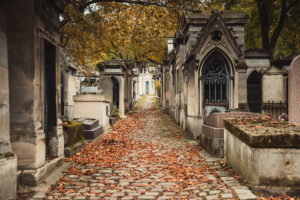
While Paris is famous for landmarks such as the Eiffel Tower, Notre-Dame and the Louvre, the city's largest cemetery offers a completely…
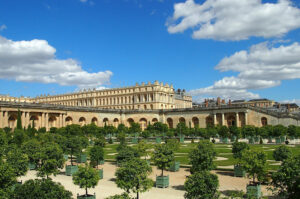
Versailles is where architecture, ritual, and landscape fused into a single theater of power—and where world history repeatedly returned to the same…
Would you like to plan a similar experience? Request your personalized itinerary.