

From Saint-Germain-des-Prés to the Latin Quarter: Discover the Soul of Paris’ Left Bank
Few areas capture the spirit of Paris quite like the Left Bank. Stretching from Saint-Germain-des-Prés to Saint-Michel and the Latin Quarter, this…
Fill up on discoveries
We organize your transport by coach, train or plane
Pénétrez dans les salles du musée, contemplez les façades, découvrez les collections...
Go alone or in a group to discover these places
You won't miss a single detail - they know their subject inside out.
Some places display works of art. Others become works of art themselves. The Louvre belongs to the second category.
Long before it became the world’s most visited museum, the Louvre was a medieval fortress guarding the western edge of Paris. It later evolved into a magnificent royal palace, witnessed the rise and fall of kings and emperors, and ultimately became one of humanity’s greatest cultural treasures. Today, millions of visitors pass beneath its iconic glass Pyramid every year, drawn not only by the Mona Lisa but by an extraordinary collection spanning more than five thousand years of civilization.
A visit to the Louvre is unlike visiting any other museum. It is an immersion into the story of human creativity, where Ancient Egyptian treasures, classical Greek sculptures, Renaissance masterpieces and French royal history coexist beneath one roof. Every gallery reveals a different civilization, every staircase uncovers another chapter of French history, and every masterpiece invites visitors to see the world through the eyes of the artists who shaped it.
Yet the Louvre is far more than a collection of famous paintings. It is a palace designed to impress, a symbol of France’s cultural heritage and a place where every traveler experiences something different. Some visitors come to admire Leonardo da Vinci’s mysterious Mona Lisa. Others are captivated by the graceful Venus de Milo, the breathtaking Winged Victory of Samothrace, or the monumental canvases that tell the story of France. Many simply fall in love with the building itself—its elegant courtyards, soaring galleries and the remarkable dialogue between centuries-old architecture and I. M. Pei’s modern glass Pyramid.
Because the museum is immense, the most rewarding visits are rarely those that attempt to see everything. Instead, they follow a thoughtful rhythm, allowing time to appreciate both the masterpieces and the remarkable stories behind them. Whether this is your first visit to Paris or another chapter in a lifelong passion for art, the Louvre rewards curiosity at every turn.
Perfectly located in the heart of historic Paris, the Louvre can easily be combined with a stroll through the Tuileries Garden, a visit to Notre-Dame Cathedral, an ascent of the Eiffel Tower, or one of our Personalized Parisian Escapades designed to reveal the French capital beyond its iconic landmarks.
At Suite Voyage Discovery, we believe that discovering the Louvre should never feel like checking attractions off a list. It should become one of the defining moments of your journey through France. Our tailor-made itineraries combine world-famous landmarks with authentic cultural experiences, allowing you to discover Paris at your own pace while uncovering the stories that make the city unforgettable.
If there is one place where the history of France, the history of art and the history of civilization come together, it is here. Welcome to the Louvre.
Start planning your tailor-made cultural journey through Paris with Suite Voyage Discovery.
Long before it became the world’s most visited museum, the Louvre stood as one of the most strategic locations in medieval Paris. Its story stretches back more than eight centuries and mirrors the evolution of France itself. Every stone, courtyard and gallery reflects a different chapter in the nation’s history, transforming a museum visit into a remarkable journey through time.
Understanding the Louvre’s past makes every room inside the museum more meaningful. Visitors quickly realize they are not simply walking through exhibition galleries—they are exploring a building that has continuously reinvented itself, adapting to changing kings, revolutions, artistic movements and political ambitions while always remaining at the heart of Paris.
The Louvre’s origins date back to the late twelfth century, during the reign of King Philip Augustus. At that time, Paris was growing rapidly, but it remained vulnerable to invasions from the northwest. To strengthen the city’s defenses, the king ordered the construction of a massive stone fortress outside the medieval walls.
This original Louvre looked nothing like today’s elegant palace. It was designed purely for military purposes. Thick defensive walls surrounded a large circular keep, while deep moats and fortified towers protected the capital from potential attacks. Soldiers guarded its entrances, supplies were stored within its walls, and the fortress stood as a visible reminder of royal authority.
Remarkably, part of this medieval fortress still survives today. Deep beneath the museum, visitors can explore the foundations and remnants of the original castle, offering a fascinating glimpse into Paris long before it became the City of Light. Few travelers expect to discover medieval military architecture hidden below one of the world’s greatest museums.
As Paris expanded and military threats diminished, the defensive fortress gradually lost its strategic importance. During the fourteenth century, King Charles V transformed the Louvre into a royal residence, replacing austere military spaces with more comfortable apartments suitable for court life.
This marked the beginning of the Louvre’s long relationship with the French monarchy. Successive kings expanded, renovated and embellished the palace according to the tastes of their own era. Gothic structures gave way to Renaissance architecture, elegant courtyards replaced defensive spaces, and artists, sculptors and architects were commissioned to create one of Europe’s most prestigious royal residences.
The Renaissance brought particularly profound changes. Inspired by Italy, French monarchs embraced classical architecture and artistic innovation. Large windows flooded interiors with natural light, richly decorated façades reflected new aesthetic ideals, and magnificent ceremonial spaces demonstrated the growing power of the French Crown.
Among the kings who shaped the Louvre, Francis I occupies a special place. Passionate about art and deeply influenced by the Italian Renaissance, he transformed the French court into one of Europe’s leading cultural centers.
Francis I invited renowned artists to France, including Leonardo da Vinci during the final years of the master’s life. According to tradition, Leonardo brought several paintings with him, including the work that would eventually become the Louvre’s most celebrated masterpiece: the Mona Lisa.
Under Francis I, the Louvre ceased to be simply a residence. It became a symbol of artistic patronage, intellectual curiosity and royal prestige. The foundations were laid for what would eventually become one of humanity’s greatest collections of art.
Over the following centuries, nearly every French monarch left a mark on the Louvre. Henry II, Henry IV, Louis XIII and Louis XIV all expanded the complex, adding new wings, galleries and courtyards. The palace gradually grew into an immense architectural ensemble extending toward the Seine.
One of the most ambitious projects was the creation of the Grande Galerie, an exceptionally long riverside gallery connecting the Louvre with the Tuileries Palace. At the time, it represented one of the longest enclosed galleries in Europe and symbolized the grandeur of the French monarchy.
Artists, craftsmen and scholars increasingly occupied parts of the palace. Studios flourished within its walls, turning the Louvre into an important center of artistic production long before it officially became a museum.
Ironically, one of the events that most influenced the Louvre was the decision of Louis XIV to move the royal court to Versailles in 1682. Although the palace remained an important royal property, it was no longer the principal residence of the French monarchy.
This departure created new opportunities. Without the permanent presence of the royal court, more space became available for artists, academies and collections. The idea of transforming the Louvre into a museum slowly began to emerge among scholars and intellectuals during the eighteenth century.
Even before the French Revolution, there were already proposals suggesting that the royal collections should one day become accessible to the public. It was a remarkably modern vision for its time.
The French Revolution profoundly transformed the Louvre’s destiny. As royal authority collapsed, many of the Crown’s artistic collections became national property. Rather than remaining hidden inside royal residences, these masterpieces would now belong to the French people.
In 1793, during one of the most turbulent periods in French history, the Louvre officially opened as a public museum. What had once symbolized royal privilege became a place dedicated to education, culture and shared heritage.
This transformation represented far more than a change of function. It reflected a revolutionary idea that art should not be reserved for monarchs or aristocrats but should be accessible to every citizen. That principle continues to define the Louvre today.
The rise of Napoleon Bonaparte ushered in another defining chapter. As French armies campaigned across Europe, thousands of artworks entered the Louvre, dramatically expanding its collections and strengthening its international reputation.
Although many pieces were eventually returned after Napoleon’s defeat, this period accelerated the museum’s development into one of the world’s greatest cultural institutions. Napoleon also commissioned architectural improvements and viewed the Louvre as a symbol of France’s artistic and political influence.
His legacy remains visible throughout the museum, from monumental paintings depicting his reign to the names of several sections of the palace itself.
Throughout the nineteenth and twentieth centuries, the Louvre continued to evolve. New archaeological discoveries enriched its collections. Entire departments were created to showcase civilizations from Ancient Egypt, Greece, Rome, the Near East and the Islamic world. French painting, sculpture and decorative arts expanded alongside acquisitions from across Europe.
The museum gradually became encyclopedic in scope. Rather than focusing on a single nation or artistic movement, it sought to present the history of civilization through works of exceptional quality.
This extraordinary diversity explains why no two visits are ever identical. Every traveler can build a different journey through the museum depending on personal interests, available time and curiosity.
By the middle of the twentieth century, the Louvre had become one of the world’s greatest museums—but it was also struggling to accommodate its own success. Visitor numbers were increasing every year, the collections continued to expand, and the historic palace was never designed to welcome millions of guests annually. Entering the museum could be confusing, circulation between the different wings was complicated, and large sections of the palace were still occupied by government offices.
French President François Mitterrand decided that the Louvre deserved a transformation worthy of its international importance. In 1981, he launched one of the most ambitious cultural projects ever undertaken in France: the Grand Louvre Project.
The objective was both simple and revolutionary. The entire palace would finally become a museum, government ministries would move elsewhere, underground visitor facilities would be created, and a completely new entrance would welcome visitors from around the world while preserving the historic architecture above.
To lead this extraordinary transformation, Mitterrand made an unexpected choice. Rather than selecting a French architect, he entrusted the project to Chinese American architect Ieoh Ming Pei, better known internationally as I. M. Pei. The decision immediately sparked controversy.
When Pei presented his design, reactions were passionate. Some critics argued that a modern glass structure had no place in the heart of a Renaissance palace. Newspapers debated the project, architects voiced opposing opinions, and many Parisians feared that one of France’s greatest historic landmarks would lose its identity.
Pei defended a radically different vision. Instead of competing with the palace, the Pyramid would celebrate it. Built from transparent glass, it would preserve the symmetry of the Cour Napoléon while allowing natural light to flood the new underground reception hall beneath the courtyard.
Construction began in the mid-1980s, and when the Pyramid was officially inaugurated in 1989, opinions gradually began to change. Visitors quickly appreciated the clarity of the new entrance, while photographers discovered one of the most striking architectural compositions in Paris. Today, it is almost impossible to imagine the Louvre without the Pyramid. What was once controversial has become one of the city’s defining symbols.
The story of the Pyramid also reflects the Louvre itself: a place where history and innovation coexist rather than oppose one another. Medieval walls, Renaissance façades and contemporary architecture now form a harmonious whole that tells the story of Paris across eight centuries.
The Louvre is often described as the largest museum in the world, but numbers alone cannot explain its extraordinary appeal. Visitors do not come simply because there are thousands of works of art on display. They come because the museum offers a journey through the history of human civilization itself.
Rather than following a single artistic movement or historical period, the Louvre brings together masterpieces from cultures that flourished thousands of miles apart and centuries apart. Walking from one gallery to another can feel like crossing continents and civilizations within a single afternoon.
For first-time visitors, trying to see everything is neither realistic nor necessary. The true pleasure lies in exploring a carefully selected route while allowing enough time to appreciate each masterpiece instead of rushing through endless galleries.
The Egyptian collections are among the richest outside Egypt itself. Massive statues of pharaohs, mysterious sarcophagi, beautifully carved reliefs, colorful jewelry and everyday objects reveal a civilization that continues to fascinate visitors more than three millennia after its golden age.
One of the most remarkable aspects of these galleries is their diversity. Monumental sculptures stand beside delicate writing tablets, religious artifacts and surprisingly familiar household objects, reminding visitors that ancient civilizations were built by ordinary people as well as legendary rulers.
For many families, these galleries become an unexpected highlight of the museum, offering children an engaging introduction to archaeology and ancient history long before they encounter the great European paintings upstairs.
The Greek and Roman collections showcase ideals of harmony, balance and beauty that continue to influence artists today. Here visitors encounter some of antiquity’s greatest surviving sculptures, including the magnificent Venus de Milo and the spectacular Winged Victory of Samothrace.
These masterpieces are impressive not simply because of their age but because they remain astonishingly modern. Their elegance, movement and emotional power continue to inspire artists, architects and designers around the world more than two thousand years after they were created.
Standing before the Winged Victory, dramatically positioned at the top of the Daru staircase, many visitors instinctively pause in silence. The sculpture seems almost alive, its flowing drapery suggesting movement even though it has remained perfectly still for centuries.
Few collections better illustrate the brilliance of the Italian Renaissance than those housed inside the Louvre. Masters such as Leonardo da Vinci, Raphael, Titian and Veronese transformed painting by introducing new approaches to perspective, anatomy, light and human emotion.
The Mona Lisa naturally attracts enormous attention, but limiting a visit to Leonardo’s famous portrait would mean overlooking dozens of extraordinary works that demonstrate why Renaissance Italy permanently changed the history of Western art.
Large religious scenes, intimate portraits and monumental historical compositions reveal artists who combined scientific observation with extraordinary technical skill, creating paintings that continue to fascinate audiences five centuries later.
The Louvre also tells the story of France through art. Monumental canvases illustrate revolutions, coronations, military victories and moments of national identity. Delacroix’s Liberty Leading the People embodies the ideals of freedom, while Jacques-Louis David’s monumental Coronation of Napoleon captures the ambition of an emperor determined to shape history.
These galleries allow visitors to understand how painting became a powerful political language as well as an artistic achievement. Every canvas reflects not only the talent of its creator but also the social and historical forces that shaped France.
Ask ten visitors what they remember most about the Louvre, and you’ll likely hear ten different answers. For some, it is a single painting that has fascinated the world for centuries. For others, it is a marble sculpture that seems to defy time, or a monumental canvas that captures a decisive moment in French history. One of the Louvre’s greatest strengths is precisely this diversity. Every masterpiece tells a different story, and every visitor forms a different connection with the museum.
Rather than trying to see hundreds of works in a single visit, many experienced travelers choose to focus on a handful of exceptional pieces. Doing so allows enough time to appreciate not only their artistic qualities but also the historical events, personalities and emotions that made them famous.
No work of art attracts more attention than Leonardo da Vinci’s Mona Lisa. Every day, thousands of visitors gather before this relatively small portrait, eager to experience one of the world’s greatest artistic icons.
Its fame often surprises first-time visitors. Many expect a monumental painting and are instead confronted with a remarkably intimate portrait protected behind specially designed glass. Yet the power of the Mona Lisa has never depended on its size. It lies in Leonardo’s extraordinary ability to create the illusion of life.
Her expression seems to change depending on where you stand. Her eyes appear to follow the viewer. Her famous smile is never entirely joyful nor entirely mysterious. Leonardo achieved this remarkable effect through his revolutionary painting technique known as sfumato, in which subtle transitions between light and shadow eliminate sharp outlines and create exceptional realism.
The painting’s story extends far beyond the Renaissance. It became internationally famous after its spectacular theft in 1911, when the portrait disappeared from the Louvre for more than two years before eventually being recovered in Italy. Newspapers around the world covered the story, transforming the Mona Lisa into a global celebrity long before the age of television or social media.
Today, standing before the painting is almost a cultural ritual. Visitors may spend only a few moments in front of it, but those moments often become one of the defining memories of an entire trip to Paris.
Long before visitors reach the sculpture itself, they usually see it from below. Standing triumphantly at the top of the Daru staircase, the Winged Victory of Samothrace creates one of the most dramatic perspectives anywhere in the museum.
Although the statue is missing both its head and arms, its emotional power remains extraordinary. The flowing garments appear to be sculpted by the wind itself, giving the impression that the goddess has just landed on the prow of a ship after announcing a great naval victory.
The careful placement of the sculpture amplifies its impact. Visitors naturally climb toward it, making the approach part of the artistic experience. Few museum displays combine architecture and sculpture with such theatrical brilliance.
Graceful, serene and timeless, the Venus de Milo has become one of the defining images of ancient Greek sculpture. Created more than two thousand years ago, the statue represents Aphrodite, the Greek goddess of love and beauty.
Its missing arms have inspired countless theories. Historians continue to debate what they originally held and exactly how the sculpture was intended to be viewed. Yet these mysteries only add to its fascination. Rather than diminishing its beauty, the missing elements encourage visitors to imagine the complete work for themselves.
The balance of the figure, the elegance of the drapery and the subtle twist of the body demonstrate the extraordinary sophistication achieved by Greek sculptors during the Hellenistic period.
Few paintings express the ideals of a nation as powerfully as Eugène Delacroix’s Liberty Leading the People. Painted in 1830, it commemorates the July Revolution while transforming a historical event into a universal symbol of freedom.
At the center of the composition stands Liberty herself, personified as a determined woman carrying the French flag high above the crowd. She is surrounded by citizens from different social backgrounds, united by a common desire for change.
The painting has become one of France’s most recognizable images, inspiring artists, writers and political movements around the world. Even visitors unfamiliar with French history immediately recognize its emotional intensity.
Jacques-Louis David’s enormous Coronation of Napoleon dominates an entire gallery. Measuring nearly ten meters wide, it depicts the lavish ceremony held inside Notre-Dame Cathedral in 1804.
Every figure, costume and architectural detail was carefully planned. Rather than showing the Pope crowning Napoleon, David chose to depict the emperor crowning Joséphine himself, emphasizing Napoleon’s determination to present his authority as independent of the Church.
Standing before the painting is almost like attending the ceremony in person. The sheer scale allows visitors to discover new details every time they look closer.
Théodore Géricault’s The Raft of the Medusa is one of the most emotionally powerful works in the Louvre. Inspired by a real maritime disaster, the painting portrays desperate survivors drifting at sea after the wreck of a French naval ship.
Hope and despair coexist within the same composition. Some figures collapse from exhaustion while others desperately wave toward a distant ship that may—or may not—have seen them.
Its realism shocked audiences when it was first exhibited. Today, it remains one of the defining masterpieces of French Romanticism.
Ironically, one of the Louvre’s largest and most impressive paintings often receives less attention than it deserves because it hangs directly opposite the Mona Lisa.
Paolo Veronese’s The Wedding at Cana stretches across an enormous wall, depicting the biblical miracle in which Christ turned water into wine during a wedding celebration.
Its extraordinary architectural setting, vibrant colors and hundreds of individual figures reward careful observation. While crowds gather around Leonardo’s portrait, visitors who simply turn around discover one of the museum’s true hidden masterpieces.
Want to experience the Louvre without simply following the crowd?
Suite Voyage Discovery can help you create a personalized Paris itinerary that brings together the Louvre’s masterpieces, the city’s legendary landmarks, and quieter cultural treasures often missed by traditional sightseeing routes.
From the reborn beauty of Notre-Dame to the unforgettable views from the Eiffel Tower, every journey can be tailored to your interests, pace, and travel style.
The Louvre rewards curiosity. Beyond the famous galleries lie countless details that many visitors overlook simply because they are focused on reaching the museum’s best-known masterpieces.
Deep beneath the Sully Wing, the remains of Philip Augustus’s medieval fortress reveal the Louvre’s earliest history. Massive stone walls and defensive towers remind visitors that this world-famous museum once protected Paris from invasion.
The lavish Apartments of Napoleon III offer another surprising contrast. Richly decorated with gilded ceilings, crystal chandeliers, velvet furnishings and elaborate tapestries, they provide a glimpse into the extraordinary luxury enjoyed by France’s imperial elite during the nineteenth century.
Even the ceilings deserve attention. Throughout the museum, visitors who occasionally look upward discover magnificent painted vaults, intricate moldings and architectural details that rival many of the artworks displayed below.
One of the greatest pleasures of the Louvre is allowing yourself to wander. Some of the museum’s most memorable moments occur unexpectedly, in quiet galleries where a remarkable sculpture, an overlooked painting or a peaceful courtyard suddenly captures your attention without the crowds surrounding the better-known masterpieces.
Even if you’ve visited the Louvre before, chances are you’ve walked past countless fascinating stories without realizing it. Behind every grand gallery and celebrated masterpiece lies a collection of remarkable details that transform a museum visit into a true journey through history.
Long before becoming the world’s largest museum, the Louvre began life as a medieval fortress built in the late 12th century to defend Paris.
The foundations of this original castle still exist beneath the museum. Visitors descending to the lower level can discover massive stone walls, defensive towers, and archaeological remains dating back more than 800 years—an extraordinary reminder that beneath today’s elegant palace lies medieval Paris itself.
Although the museum officially bears the name Musée du Louvre, Emperor Napoleon Bonaparte briefly renamed it the Musée Napoléon.
Many galleries still display the unmistakable “N” monogram, imperial bees, laurel wreaths, and symbols celebrating his reign. Walking through the palace becomes a fascinating treasure hunt for those who know where to look.
Today, the Louvre Pyramid is one of Paris’ defining landmarks.
When architect I. M. Pei unveiled his design in the 1980s, however, the reaction was fierce. Many Parisians believed the modern glass structure clashed with the historic palace.
Decades later, the pyramid has become an architectural icon in its own right, perfectly illustrating how innovation and history can coexist.
When the final visitors leave, the museum enters an entirely different rhythm.
Conservators examine priceless paintings under specialized lighting.
Security teams monitor nearly every room around the clock.
Curators prepare future exhibitions, photographers document works of art, and restoration specialists continue painstaking conservation projects.
Behind the scenes, hundreds of professionals ensure that millions of visitors can safely enjoy humanity’s artistic heritage every year.
Although visitors often imagine seeing “the Louvre,” only a small percentage of its collection is actually exhibited.
The museum owns well over half a million objects, while approximately 35,000 works are displayed throughout its galleries.
If each exhibited artwork received only thirty seconds of attention, a complete visit would still require well over two weeks.
That’s why every visit becomes unique: no one ever truly finishes discovering the Louvre.
Absolutely. The Louvre is far more than the world's most visited museum—it's one of the defining cultural experiences of any trip to Paris. Even if you only have a few days in the French capital, a thoughtfully planned visit allows you to discover world-famous masterpieces such as the Mona Lisa, the Winged Victory of Samothrace and the Venus de Milo while exploring a former royal palace that has shaped French history for more than eight centuries. Rather than trying to see every gallery, we recommend focusing on a carefully curated route that matches your interests and leaves time to appreciate both the artworks and the remarkable architecture. Combined with nearby landmarks such as the Tuileries Garden, Notre-Dame Cathedral or the Seine River, the Louvre becomes the centerpiece of an unforgettable day in Paris.
The ideal duration depends on what you hope to experience. A first visit usually requires at least two to three hours to discover the museum's highlights without feeling rushed. Travelers with a passion for art, history or archaeology often prefer spending half a day or even a full day exploring specific collections such as Ancient Egypt, the Italian Renaissance or French painting. Because the Louvre is one of the largest museums in the world, trying to see everything in one visit is rarely the most rewarding approach. A personalized itinerary allows you to focus on the collections and masterpieces that matter most while maintaining a comfortable pace.
Yes. The Louvre can be seamlessly integrated into one of Suite Voyage Discovery's tailor-made Paris experiences. Depending on your interests, your itinerary may combine the museum with iconic landmarks such as the Eiffel Tower or Notre-Dame Cathedral, a walk through the Tuileries Garden, a Seine River cruise, gourmet dining or other cultural discoveries across Paris. Rather than simply organizing a museum visit, we design complete travel experiences that balance world-famous attractions with authentic local discoveries, creating a journey that reflects your interests, your pace and your vision of France.
Few areas capture the spirit of Paris quite like the Left Bank. Stretching from Saint-Germain-des-Prés to Saint-Michel and the Latin Quarter, this…
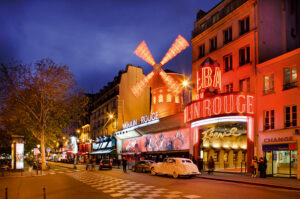
The red windmill at the foot of Montmartre has been turning heads since 1889. Step inside the Moulin Rouge and you step…

Thirty kilometers north of Paris, the village of Auvers‑sur‑Oise holds some of the most resonant places in Vincent van Gogh’s life. Here,…
Would you like to plan a similar experience? Request your personalized itinerary.
