Visit Château de Vaux-le-Vicomte: The Masterpiece That Inspired Versailles
In the 1650s, one audacious idea changed how Europe imagined a country house: conceive the residence, its interiors, and the garden as…
Stock up of discoveries
We organize your transport by coach, train or plane
Experience full of surprises as your day goes by.
Go alone or in a group to discover these places
You won't miss a single detail - they know their subject inside out.
Step through the gates of the Château de Fontainebleau and you enter eight centuries of French history under one roof—an exceptional continuity from the Middle Ages to the Second Empire. Recognized by UNESCO in 1981, the Palace and Park of Fontainebleau fuse medieval origins, Renaissance invention, classical grandeur and imperial memory. It is here that François I cultivated a new artistic language with Italian masters Rosso Fiorentino and Primaticcio, giving rise to the School of Fontainebleau; and here, on April 20, 1814, Napoleon I took leave of the Imperial Guard in the main court. Few places in France bring so many defining chapters this close together. No wonder Napoleon later called it “the true home of kings, the house of the centuries.”
Click a photo to enlarge
Fontainebleau is more than a château; it is a palimpsest of power and taste, evolving with each era yet retaining the presence of what came before. UNESCO recognized the palace and its park for their deep association with events and ideas of outstanding universal value—from the Renaissance currents shaped under François I to Napoleon’s abdication and farewell in 1814. For a traveler, that recognition translates into a rare opportunity: to move between worlds without leaving a single estate, and to sense how the arts and the state once intertwined in France.
The story begins in the Middle Ages. Fontainebleau is attested as a royal residence under Louis VII, and the medieval donjon still anchors the Cour Ovale. When François I turned to the site in the sixteenth century, he did not sweep the past away; he worked with it, enlarging and reimagining Fontainebleau into a Renaissance residence that became a laboratory for new art and architecture in France.
The Renaissance episode proved decisive. Italian artists Rosso Fiorentino and Primaticcio arrived at the invitation of François I, creating a decorative language whose influence spread far beyond Fontainebleau. Their work helped crystallize what came to be known as the School of Fontainebleau, a current that reshaped French Renaissance aesthetics. Today, the François I Gallery stands as a touchstone for that flowering, a place where courtly ambition and artistic experimentation coincide.
Subsequent rulers continued to revise Fontainebleau. Louis XIII commissioned the horseshoe staircase in the Cour du Cheval Blanc, a sculptural entry that replaced an earlier structure and soon became a signature of the palace. Louis XIV’s era looked outward to the gardens, where André Le Nôtre formalized the landscape at an imperial scale. The nineteenth century would bring further transformation under Napoleon I, whose imprint—political and personal—remains in the imperial apartments and in the memory of his departure in 1814. Later, the palace continued to be associated with national life, becoming a summer setting for early Third Republic presidents and, eventually, a national museum in 1927.
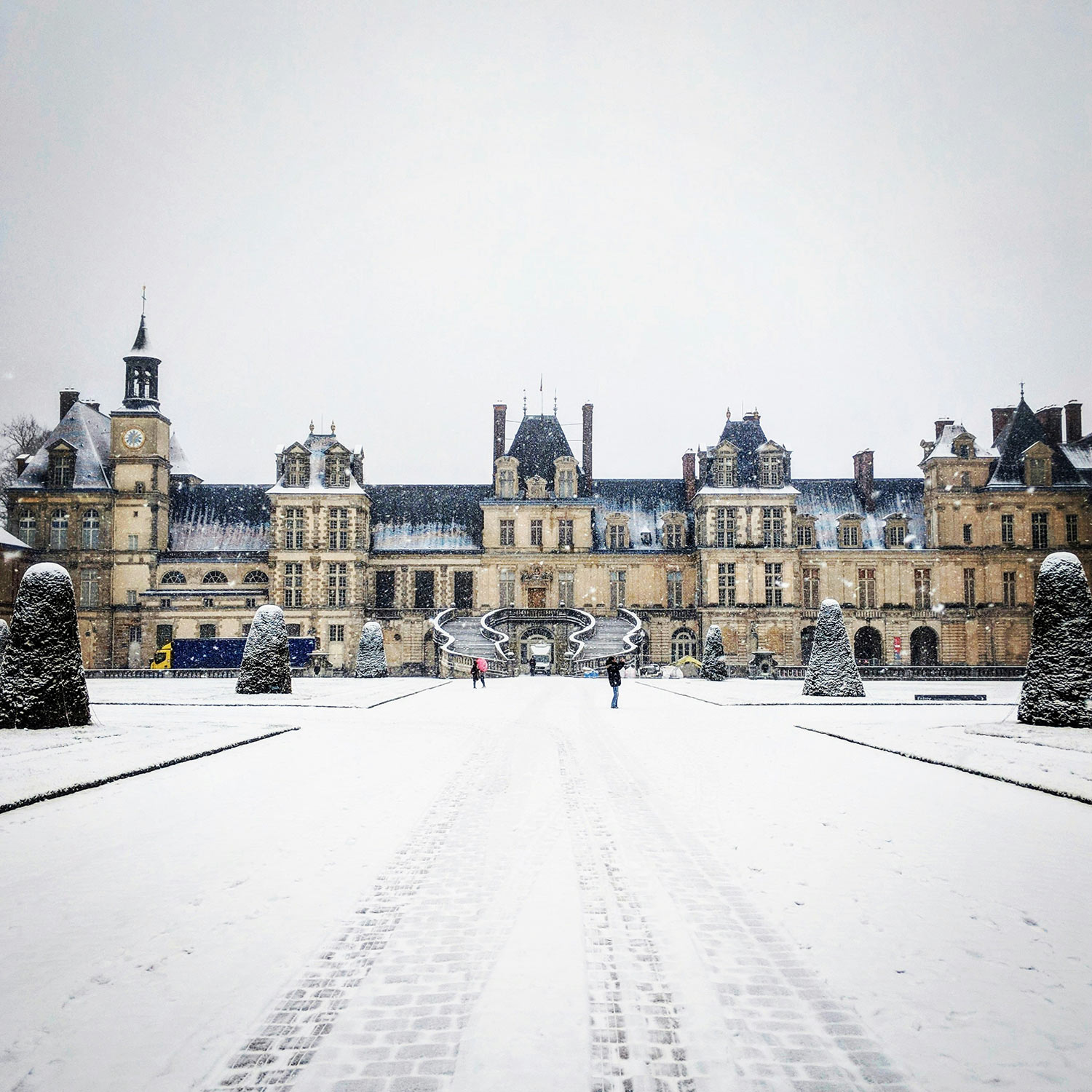
Every great residence has its ceremonial stage, and at Fontainebleau it is the Cour du Cheval Blanc. Also known as the Cour des Adieux, the Court of Farewells, it is inseparable from Napoleon I’s departure after his abdication. On April 20, 1814, he addressed the Imperial Guard here, a moment that echoes in the court’s alternate name.
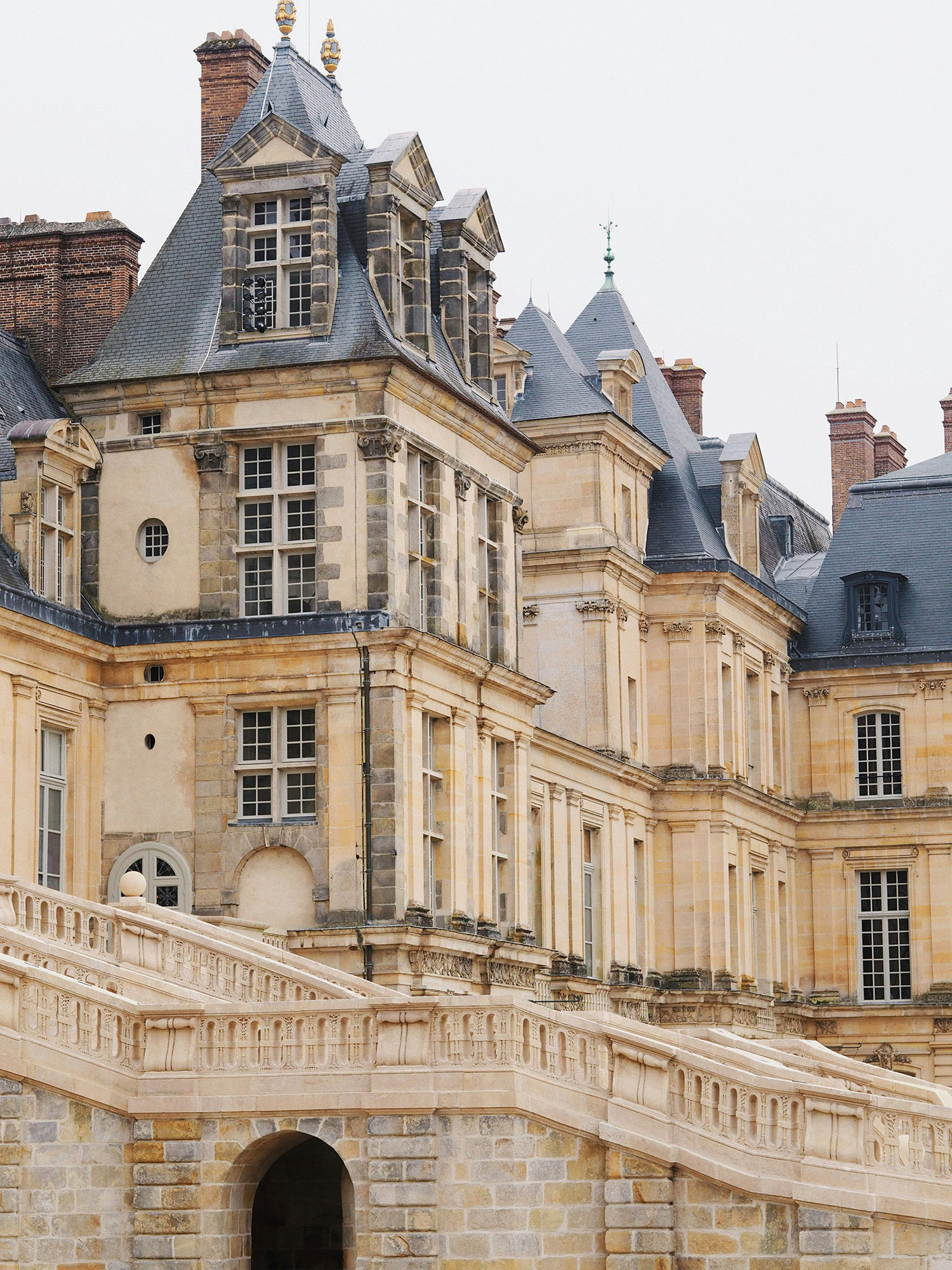
The court’s emblem is the escalier en fer-à-cheval, the horseshoe staircase—an elegant double ramp designed by Jean Androuet du Cerceau for Louis XIII. Its geometry gives a theatrical quality to the façade, mediating between the palace’s grand interiors and the public life of the court. For generations of visitors, the staircase has framed arrival and departure, ceremony and memory.
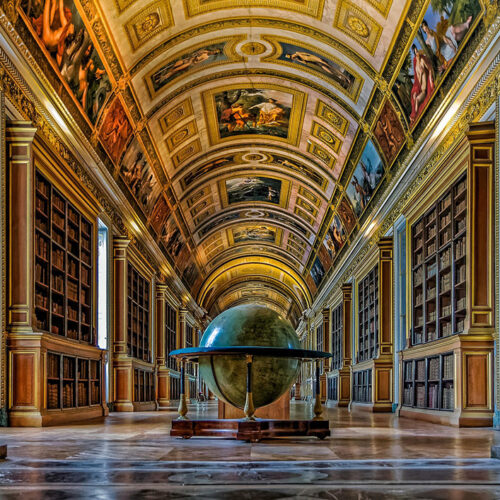
Fontainebleau’s interiors are not a single style but a dialogue across centuries. The royal and imperial apartments—and the chambres d’apparat and reception salons that surround them—offer a tour through evolving tastes and political worlds. The François I Gallery, emblematic of the palace’s Renaissance identity, carries the imprint of Italian-born artists working in France under the king’s patronage. Closer to our own era, the Appartements de Napoléon Ier recall the presence of an emperor who regarded Fontainebleau with particular interest, later calling it “the true home of kings, the house of the centuries.”
Because Fontainebleau remains a living heritage site, conservation is continuous; access to particular rooms or sequences may vary with preservation needs and programming. That ongoing care is part of the reason the palace retains such remarkable integrity and depth.
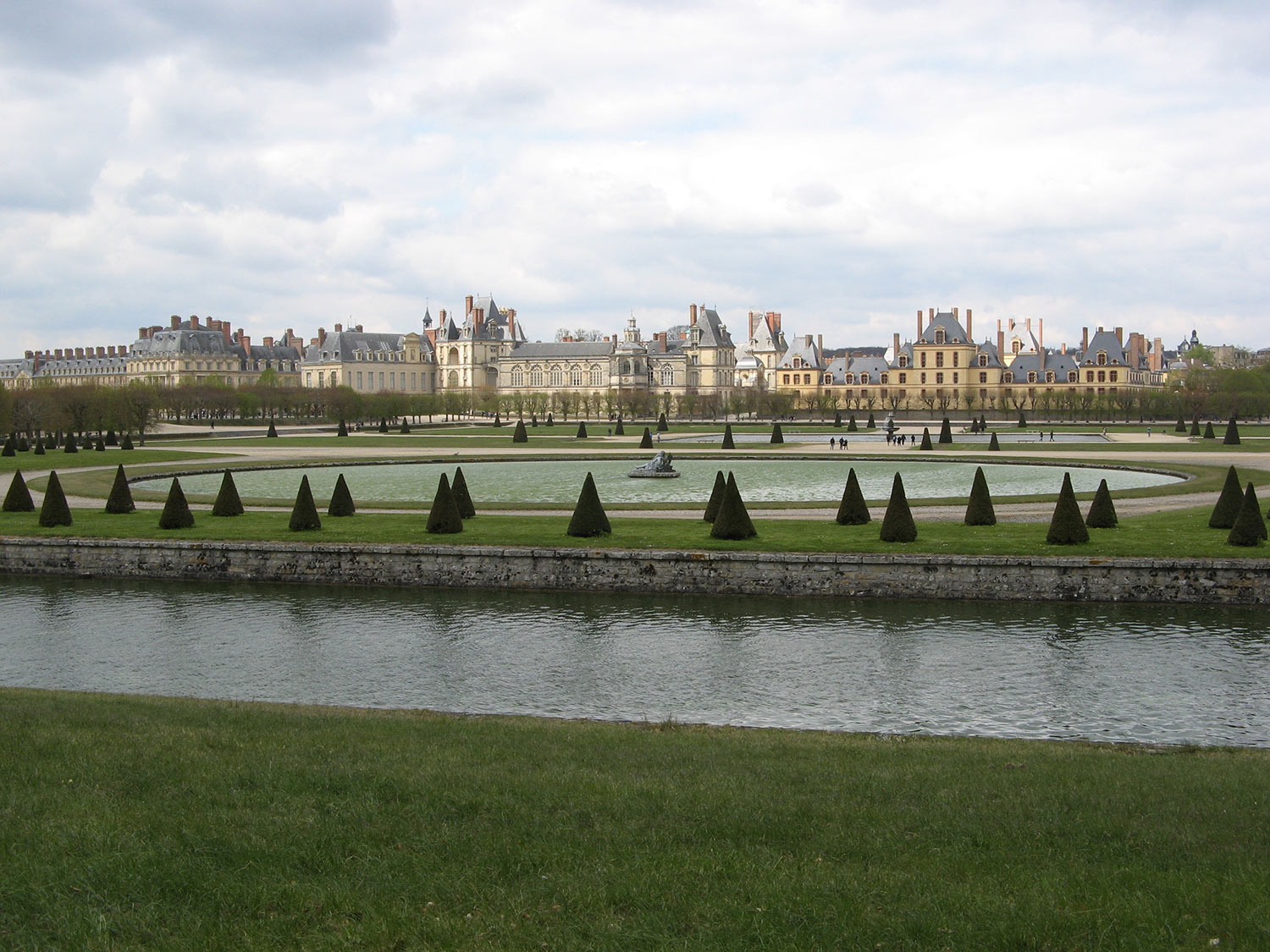
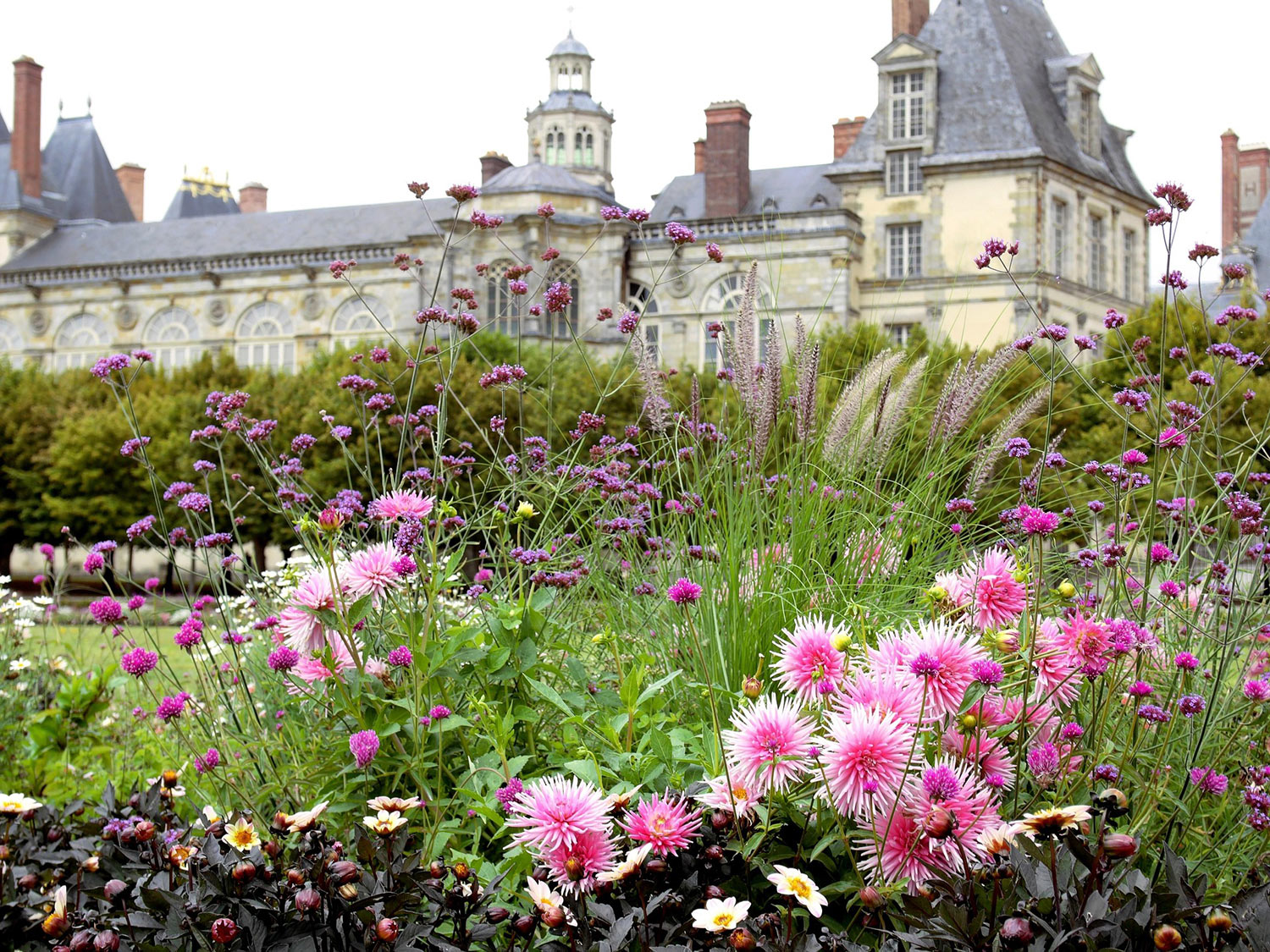
Fontainebleau’s gardens are a lesson in how landscape communicates power, pleasure and perspective. On the garden front, the Grand Parterre, laid out under Louis XIV by André Le Nôtre, extends in an orchestrated plane of order and geometry. It is considered the largest formal parterre in Europe, a stage where water, gravel, clipped forms and long axes form a single visual argument: measure and mastery.
Elsewhere, a different sensibility takes hold. The English Garden was reshaped in the early nineteenth century by Maximilien-Joseph Hurtault, who introduced a winding artificial river to bend lines and soften edges. Here, the language of curves and surprise complements Le Nôtre’s rectilinear clarity. Between these poles, the Jardin de Diane and the basins and long perspectives stitch the domain together, while the extensive wooded park acts as a buffer and a foil—cultivated, yet open to the suggestion of nature.
Ready to weave UNESCO heritage, Renaissance art and Napoleonic history into a trip made just for you? Our specialists craft custom itineraries that highlight Château de Fontainebleau within a broader France experience.
There is no single “right” way to engage with Fontainebleau. The estate suggests its own sequence—courtyard, staircase, galleries, apartments, gardens—yet it rewards lingering in places that speak most clearly to you. Many travelers find themselves drawn first to the Cour du Cheval Blanc for its wide-open perspective and the immediate recognition of the horseshoe staircase. The court’s sobriquet, Cour des Adieux, lingers at the edge of any visit here, a reminder that history joined architecture on this very ground.
From there, movement inside becomes an exercise in changing registers. In the François I Gallery and the surrounding historic spaces, the palace’s Renaissance identity takes lucid form. Rosso Fiorentino and Primaticcio brought with them an Italianate sense of composition and imagery that, translated through French materials and court culture, became something distinct. The School of Fontainebleau is less a formal institution than a shorthand for this synthesis at scale—one whose influence radiated through French art of the period.
In the imperial apartments, the narrative tightens around personality and episode. Napoleon I’s time at Fontainebleau connects interior life with a Europe in flux, and his farewell to the Guard in 1814 gives a heightened awareness to rooms and corridors—spaces the emperor knew and used. The palace’s ability to hold multiple eras in tension—to let one century illuminate another—is one of its quiet strengths.
Gardens at Fontainebleau are not simply decorative grounds; they are texts to be read. The Grand Parterre speaks in the pronounced grammar of the French formal garden—axes and parterres aligning in clean planes. It projects a message of clarity that suits the reign that commissioned it. By contrast, the English Garden answers with a counterpoint of meander and atmosphere, shaped in the early nineteenth century to suggest variety and movement. The winding artificial river introduced by Hurtault draws the eye into loops and returns, inviting reflection of a different kind. Between these two poles, the Jardin de Diane and the sequence of basins and long views create transitions, giving the estate a rhythm that alternates between procession and pause.
Fontainebleau asks you to think about architecture as a series of edits and commentaries. The medieval donjon in the Cour Ovale sets a baseline: compact, defensive, the sign of a residence anchored in a different political topography. The Renaissance overlay stretches and adorns that core, aligning living with display. The seventeenth-century interventions—among them Louis XIII’s horseshoe staircase—add a theatrical layer to arrivals and departures, turning practical circulation into emblem. Later, the Napoleonic presence underscores a truth about historic houses: they do not stop acquiring meaning when the stonework is finished. Fontainebleau’s meanings continued to accumulate, well into the nineteenth century and beyond.
Napoleon’s farewell to the Imperial Guard forms one of the estate’s most widely recognized moments. Taking place in the main court—the Cour des Adieux—it concentrates political change into a single scene. What endures today is less a reenactment than an awareness: a sense that events of continental scale once hinged on words spoken on these steps and cobbles. UNESCO’s recognition of Fontainebleau explicitly cites the site’s association with moments of outstanding universal significance, and this is among the clearest examples.
The palace’s extraordinary sweep of history explains both its aura and its responsibility. After serving as a residence continuously from the Middle Ages through the Second Empire, and later as a summer setting for early Third Republic presidents, Fontainebleau became a national museum in 1927. That status supports the conservation work that allows visitors to trace so many eras in situ. As with any active heritage site, specific rooms or gardens may occasionally be closed for conservation or events; the preservation of what gives Fontainebleau its power is an ongoing work in progress.
The château’s scale and variety mean that different parts of the estate will speak differently to different travelers. Many itineraries move among a core set of spaces that express Fontainebleau’s identity across time:
Historic interiors and galleries. The royal and imperial apartments, reception salons, and long galleries (including the François I Gallery) embody the continuity and transformation that define the palace. They are places to observe how art and authority once framed daily life at the highest level.
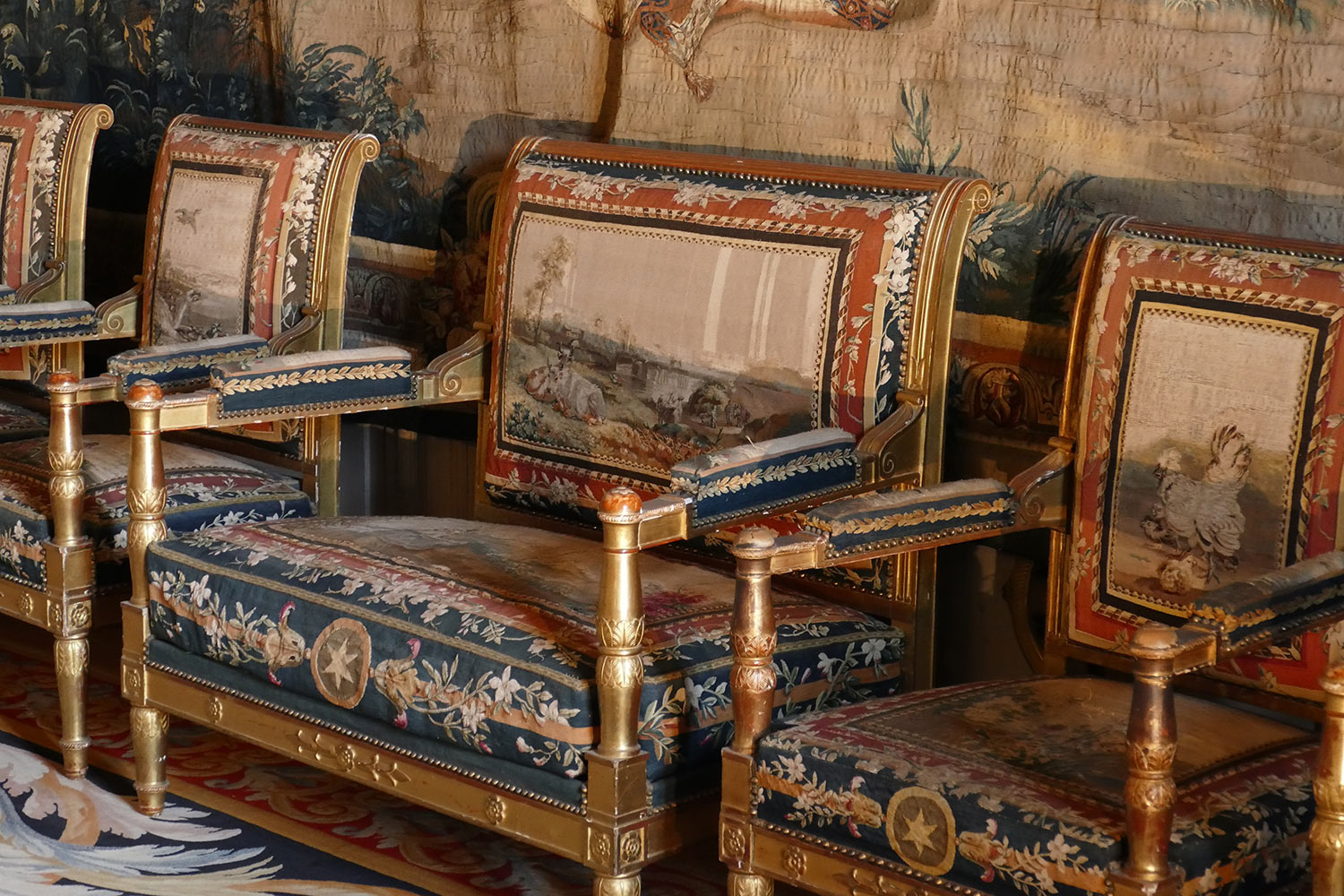
Napoleon I’s world. The Appartements de Napoléon Ier carry the stamp of an emperor whose political fortunes intersected with Fontainebleau at critical moments. The palace’s association with his farewell in 1814 intensifies the visit’s narrative line.
Ceremonial spaces outdoors. The Cour du Cheval Blanc—Cour des Adieux—gathers the palace’s public memory, anchored by the horseshoe staircase, a defining architectural gesture introduced under Louis XIII.
Gardens and parkland. The Jardin de Diane, the Grand Parterre, the basins and long axial vistas, and the broader wooded park form an ensemble of outdoor experiences that complement the interiors. The English Garden’s winding artificial river adds a nineteenth-century counterpoint to Le Nôtre’s classical order.
Across all of these, the governing pleasure is not to race but to connect—between a staircase and a speech, a gallery and an artistic school, a parterre and the idea of kingship. Fontainebleau rewards that kind of reading.
The School of Fontainebleau is a term that gestures to a movement rather than a formal academy. In the sixteenth century, François I’s patronage brought the Italian artists Rosso Fiorentino and Primaticcio to Fontainebleau, where together with French collaborators they developed a new decorative language in service of a royal vision. Its impact was broad and enduring, shaping the visual culture of the French Renaissance and setting models that artists and patrons would reference for generations. For visitors today, this history is not an abstract point: it’s perceptible in the palace’s historic galleries, especially the François I Gallery, where the synthesis between Italian innovation and French courtly identity becomes vividly legible.
Because Fontainebleau gathers so much under one roof and within one domain, it reframes how we think about French heritage. Instead of a single style perfected at a single moment, we read an ongoing conversation: medieval foundations shaped by Renaissance ambition; classical gardens revised by romantic turns; imperial memory layered onto royal precedent. The palace’s strength is not unanimity but continuity. For modern travelers, that continuity offers exceptional context: it places well-known episodes within a much longer arc, clarifying how the arts of power adapt without erasing what came before.
Design a journey that connects royal and imperial France—Renaissance galleries, ceremonial courtyards, and landmark gardens—at your pace. Our team will tailor routes and themes around Château de Fontainebleau and the stories that speak to you.
Fontainebleau opens pathways through French history and art that extend naturally into a broader itinerary. You might follow the thread of the Renaissance across France, trace the lines of landscape design from classical formality to nineteenth-century reinterpretations, or pursue Napoleonic memory where it intersects with national identity. Because Fontainebleau concentrates these themes in one estate, it sharpens the eye for similar dialogues elsewhere in the country. However you shape the trip, the palace becomes a touchstone—a place that makes subsequent experiences more legible.
Places that seem fixed are often the most alive. Fontainebleau’s life has been long, public and layered. It is, in Napoleon’s phrase, a house of centuries, and its value now lies in how clearly those centuries remain present to us. Come for the emblematic staircase or the galleries of the Renaissance, for the measured force of the Grand Parterre or the softer turns of the English Garden. Stay for the way they connect—the way a gallery explains a garden, a staircase recalls a speech, and a palace distills a nation’s long conversation with itself.
Note: The château indicates that hours and access may vary and that conservation needs can affect room openings. Always consult official sources for the latest information.
Fontainebleau is a rare example of a royal residence continuously inhabited from the Middle Ages to the Second Empire. It later served as a summer setting for early Third Republic presidents and became a national museum in 1927. In 1981, UNESCO inscribed the Palace and Park of Fontainebleau on the World Heritage List, noting their association with events and ideas of outstanding universal significance. This long continuity allows travelers to encounter multiple eras—medieval, Renaissance, classical and imperial—within one estate.
Under François I, Italian artists Rosso Fiorentino and Primaticcio worked at Fontainebleau, developing a new decorative vocabulary that profoundly shaped French Renaissance art. This current is known as the School of Fontainebleau. Its spirit is especially legible in the palace’s historic galleries—most famously the François I Gallery—where the synthesis of Italian innovation and French court culture becomes a defining experience of the château.
The main courtyard, the Cour du Cheval Blanc, is also called the Cour des Adieux (Court of Farewells) in memory of Napoleon I’s farewell to the Imperial Guard on April 20, 1814, before his departure for Elba. The court’s emblematic feature is the horseshoe staircase designed by Jean Androuet du Cerceau for Louis XIII, a stage-like architectural element that frames the site of this historic moment.
In the 1650s, one audacious idea changed how Europe imagined a country house: conceive the residence, its interiors, and the garden as…
Few places bring you as close to an artist’s way of seeing as Giverny. Claude Monet lived and worked here from 1883…
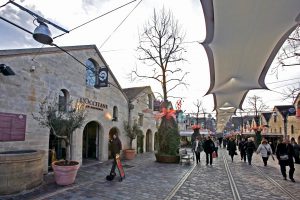
Step away from Paris's well-trodden paths, and the 13th arrondissement gently unfolds a story of transformation — where the past’s industrial grit…
Would you like to plan a similar experience? Request your personalized itinerary.