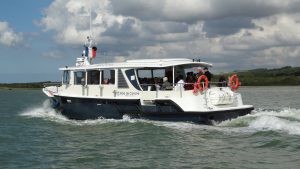
Sea outing on the Opal Coast in the Bay of Canches
An escape between heritage and wide open spaces The Côte d'Opale sea trip in the Bay of Canche offers a complete experience…
Fill up on discoveries
Marchez dans les pas des maquisards, traversez une zone de parachutage, découvrez le quotidien des combattants...
Go alone or in a group to discover these places
You won't miss a single detail - they know their subject inside out.
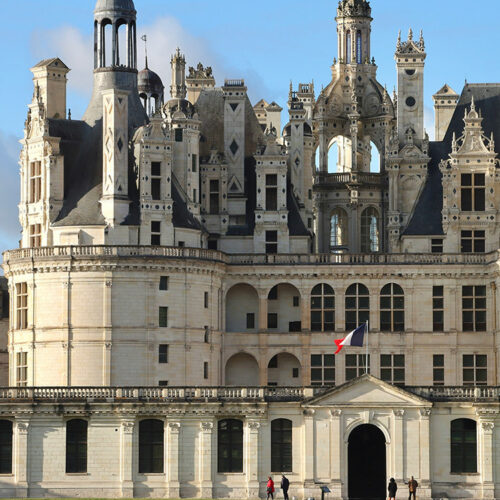
It’s impossible to remain indifferent to the Château de Chambord. With its majestic towers, hundreds of chimneys, sculpted roofs, and a silhouette straight out of a fairy tale, Chambord is undoubtedly the most spectacular of the Loire Valley castles.
Built beginning in 1519 at the request of King Francis I, this exceptional monument attracts visitors from around the world every year. More than just a castle, Chambord is a unique architectural masterpiece that bears witness to the power of the French monarchy and the influence of the Italian Renaissance in France.
Located in the heart of a vast forest estate spanning over 5,000 hectares, the Château de Chambord offers a truly unique experience, blending history, architecture, nature, and the French art of living.
Upon his return from the Italian Wars, Francis I wanted to build a residence that would reflect his power and his love of the arts. Fascinated by the innovations of the Renaissance, the king dreamed of a building capable of impressing both foreign ambassadors and the members of his court.
Construction on Chambord began in 1519. Over the course of several decades, thousands of laborers, craftsmen, and artists worked on this colossal project.
Although there are no documents to confirm this with certainty, many historians believe that Leonardo da Vinci, who settled in France toward the end of his life, may have influenced certain aspects of the project, particularly the famous double spiral staircase, which remains one of the castle’s most fascinating features today.
What immediately strikes you when you first see Chambord is its extraordinary silhouette.
Featuring:
The castle seems to have sprung straight out of a fantasy world.
Its rooftops offer a striking sight. Some visitors compare them to a miniature city reaching toward the sky. From the terraces, the view takes in a unique landscape where forests, gardens, and monumental vistas blend together.
This spectacular architecture plays a major role in Chambord’s international reputation. Few monuments in Europe evoke such a sense of grandeur and enchantment.
At the heart of the château lies Chambord’s most famous feature: the double helix staircase.
Two people can use the two ramps at the same time without ever crossing paths, while still being able to see each other through the central openings.
This architectural marvel continues to fascinate visitors five centuries after its construction.
The staircase is the true symbolic heart of the castle. It perfectly reflects the spirit of innovation that characterized the Renaissance and contributes to the monument’s unique character.
Chambord Castle is more than just its architecture.
It is surrounded by the largest enclosed forest park in Europe. A 32-kilometer fence encloses a vast area that is home to red deer, roe deer, wild boar, and numerous species of birds.
The Chambord estate is a true natural sanctuary.
This blend of historical heritage and unspoiled natural surroundings contributes to the unique experience offered to visitors. A day in Chambord allows visitors to discover an architectural masterpiece while enjoying a remarkable natural setting.
The castle and its estate are among the jewels of the Loire Valley, a UNESCO World Heritage Site.
Curiously, Francis I spent relatively little time at his enormous castle.
Chambord was intended above all to symbolize the power of the Kingdom of France. The king held grand celebrations, prestigious receptions, and spectacular hunts there.
Over the centuries, the château has hosted many famous figures. Louis XIV stayed there on several occasions and had Molière’s plays performed for the court.
Despite changes in government, wars, and revolutions, Chambord has stood the test of time and remains one of the most prestigious symbols of French heritage.
Visiting Chambord means stepping into one of France’s most impressive monuments.
During the tour, you can admire:
The castle appeals to history buffs and architecture enthusiasts alike, as well as families and visitors who simply want to explore one of France’s most iconic sites.
Each season has its own unique atmosphere. In the spring and summer, the gardens and terraces are at their most beautiful. In the fall, the colors of the forest create a particularly spectacular backdrop.
Among the many châteaux of the Loire Valley, Chambord holds a special place.
Its exceptional size, unique architecture, famous staircase, vast wooded grounds, and royal history make it a must-see destination.
For many visitors, Chambord is the very embodiment of a French fairytale castle.
A magnificent monument, a Renaissance masterpiece, and a symbol of national heritage, it remains one of the most memorable sights on any trip to France.
Chambord Castle is famous for its spectacular Renaissance-inspired architecture, its double-helix staircase—the only one of its kind in the world—and its vast forest estate. It is considered one of the most beautiful castles in France and is among the iconic sites of the Loire Valley.
The Château de Chambord was built beginning in 1519 at the request of King Francis I. Although the architect remains unknown for certain, several historians believe that Leonardo da Vinci may have influenced certain aspects of the design, particularly the double-helix staircase.
A tour of the castle usually takes between two and four hours. If you have more time, many visitors also choose to explore the gardens, terraces, and woodlands to fully enjoy the experience
An escape between heritage and wide open spaces The Côte d'Opale sea trip in the Bay of Canche offers a complete experience…

Immerse yourself in nature, the Renaissance and royal history The Zoo de Beauval, Château de Chenonceau and Amboise trip offers an exceptional…

A complete experience combining the discovery of Normandy's industrial heritage with a moment of relaxation by the sea. Between a visit to…
Would you like to plan a similar experience? Request your personalized itinerary.