
Visit the Eiffel Tower: The Ultimate Paris Experience
No visit to Paris feels complete without standing beneath the Eiffel Tower. Rising gracefully above the rooftops of the French capital, this…
Fill up on discoveries
We organize your transport by coach, train or plane
Passez de surprise en surprise au fil de votre journée
Go alone or in a group to discover these places
You won't miss a single detail - they know their subject inside out.
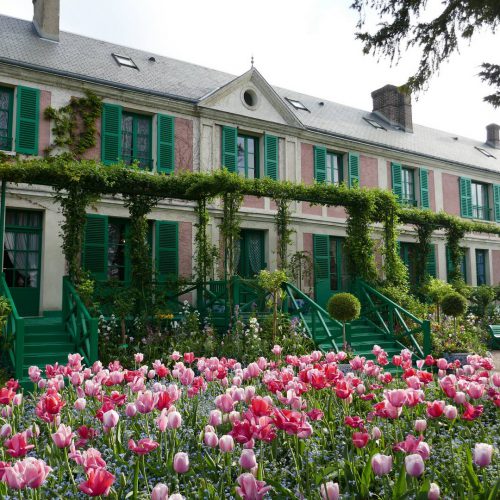
Few places bring you as close to an artist’s way of seeing as Giverny. Claude Monet lived and worked here from 1883 until 1926, cultivating the gardens that became both his refuge and his grand subject—most famously the Water Lilies he began painting in 1897, now celebrated in Paris and around the world. Step into this living canvas, wander the flower-filled Clos Normand and the mirror-like water garden with its Japanese bridge, and—if you wish—pair the day with a leisurely heritage-train escapade from nearby Pacy-sur-Eure along the verdant Eure Valley. It’s an evocative dialogue between art and landscape, color and motion, past and present.
Giverny is not simply a famous address in Normandy—it is an artist’s total environment. Monet shaped the grounds as deliberately as he composed his canvases, removing hedges, installing metal arches, arranging flowers by color, and later, diverting a small stream to create a water-garden pond rimmed by oriental plantings. In these spaces he explored the play of light and reflection that defines the Water Lilies cycle he began in 1897. To walk here is to stand inside a set of ideas about color, light, and perception that transformed modern painting.
Adding the Eure Valley heritage train changes the register of the day without leaving its spirit behind. From Pacy-sur-Eure, volunteer enthusiasts operate vintage rolling stock along a scenic former main line, preserving a tangible slice of railway history. The ride’s gentle pace and period atmosphere echo Giverny’s invitation to slow down and observe—another way to connect with Normandy’s textures and rhythms.
When Monet arrived in Giverny in 1883, he found a rural setting with a modest house and a plot that would become the one-hectare Clos Normand. The painter reimagined the garden with an eye for line and color. He removed box hedges and conifers that constrained the view, introduced iron arches to lead the eye across beds, and grouped plants by hue to stage painterly perspectives. What matters here is the intentionality: the garden is not a backdrop to art; it is the laboratory in which color relationships and light effects were tested, felt, and then translated to canvas.
Beyond the Clos Normand lay a different possibility. In 1893, Monet acquired land across the railway and shaped it into what would become the water garden. By diverting the small Ru (a branch of the Epte) to feed a pond, he created a reflective surface to capture the sky. He planted water lilies and set a Japanese bridge—painted green—amid oriental plantings. The design is serene, but it is also purposeful. The bridge arcs across a composition in three dimensions; the lilies become constellations in a shifting firmament. Here, Monet found a subject that could hold endless variations of color and weather.
Monet’s Clos Normand occupies roughly a hectare, yet it feels larger because it is staged as a series of views. The metal arches, the long beds, and the calibrated contrasts of color create movement. You can read the space as if it were a painting in progress: foreground accents, mid-ground textures, and distant notes that draw you forward. The unusual thing—at least for a garden—is that logic of color supersedes botanical taxonomy. Monet was not building a collection; he was building effects.
Walking its paths, you notice how lines converge and open, how the arches frame the house, how a swathe of complementary tones seems to vibrate when the light shifts. For travelers who love gardens, this is a case study in how structure directs perception. For travelers who love art, it’s a reminder that Impressionism’s “impressions” were anything but accidental: they were carefully engineered encounters between eye and world.
Across the road and beyond the former railway line, Monet’s water garden grew from an audacious choice: he literally redirected a watercourse to make a pond. That decision, taken in 1893, gave him a living mirror where sky and leaf could converse. The Japanese bridge, painted a distinctive green, crosses this surface with a gesture both sculptural and graphic. Around it, oriental plantings soften the edges and provide seasonal counterpoints. The scene is staged, but the drama belongs to light: a stray cloud and the whole palette changes.
It is here that Monet embarked on the Water Lilies cycle in 1897, returning again and again to the same motifs to capture time’s variability. Today, major canvases from the series hang in the Musée de l’Orangerie in Paris and in museums around the world. Standing at the pond’s edge, you recognize the painter’s strategy: reduce subject to essentials—water, leaf, sky—so that color and sensation carry the weight.
The visit includes the interiors of Monet’s house and the atmosphere of his atelier. It’s a rare chance to be physically present where an artist orchestrated daily life to sustain a lifetime of work. The rooms and workspaces add intimacy to the outdoor experience, making the gardens feel less like a museum setting and more like an extension of a lived idea. Together—with the Clos Normand and the water garden—they form a single environment that sharpened Monet’s powers of observation.
Expect a gentle, sensory-forward visit focused on seeing. You’ll stroll the Clos Normand, noticing how color is used to lead the eye. You’ll cross to the water garden, pausing on or near the Japanese bridge to watch how reflections intensify or dissolve with changing light. You’ll move through the house, absorbing its intimate scale and atelier ambience. There’s a simple satisfaction in taking the time to observe light on water and the interplay of tones—the same essentials that animated the work Monet created here.
For a complementary change of pace, consider an optional outing on the Chemin de Fer de la Vallée de l’Eure (CFVE). Based at Pacy-sur-Eure, this enthusiast association runs tourist heritage trains along segments of a former Orléans–Rouen railway line, with operations stretching toward Breuilpont and Cocherel. Created by volunteers in 1993 and launching its first tourist run from Pacy-sur-Eure on November 1, 1996, the CFVE preserves a hands-on chapter of local railway history.
Part of the charm is atmosphere. At Pacy-sur-Eure station you encounter a heritage setting—old ticket counters, historic rolling stock, and period objects—before boarding. On the line itself, views open onto the verdant Eure Valley. Time seems to slow, inviting you to look outward with the same attentive curiosity you brought to Giverny. The two experiences meet in their insistence on detail: look long enough, and the ordinary becomes memorable.
Ready to pair Monet’s gardens with a nostalgic Eure Valley rail escape? Share your interests and travel dates, and SVD will help you shape a tailor-made cultural day around Giverny—and beyond.
SVD encourages a simple approach: reserve tickets in advance for Giverny when possible, try to visit outside peak periods, and build in unhurried time to let the gardens work on you. The house-and-gardens visit is typically about 1h30–2h in SVD’s planning guidance—enough to see the essentials without rushing past what makes them special.
As a practical note, the Claude Monet Foundation site currently publishes a seasonal opening period, generally April 1 to November 1, with daily hours listed as 10:00–18:00 (last admission 17:30). These are operational details that can change; check the official source close to your visit. Similarly, the CFVE runs heritage trains from Pacy-sur-Eure on select days, sometimes with themed outings during the year. Because schedules vary, treat them as a delightful option to weave into your plans when they align.
One of Giverny’s gifts is how it recalibrates attention. Stand by the pond and wait for a breeze to crease the surface. Colors soften, edges blur, and what felt solid becomes a study in tonal relationships. Look back toward the arches of the Clos Normand and notice how a line guides your gaze exactly the way a painter would guide a brush. The lesson is straightforward and surprisingly modern: perception is active. Monet built a place where the simple act of looking becomes a creative experience.
That same attentiveness pays dividends on the Eure Valley heritage train. The rhythm of steel on rail, the framed views from a carriage window, the way a landscape unspools at a human scale—these small things collect meaning when you give them time. The pairing may feel unexpected, but both experiences value presence over speed, detail over summary.
Monet’s House and Gardens form part of a carefully tended cultural legacy. The property belongs to the Académie des beaux-arts (Institut de France), and the site has become one of Normandy’s most emblematic places to visit. Responsibility here is shared between history and horticulture: the structures that stage the view, the water that reflects the sky, the pathways that tell you how to look—all require care to keep the experience legible for new generations of travelers.
Giverny’s popularity is easy to understand—and part of its story. What began as an artist’s private workshop in perception now welcomes visitors from around the world to a setting where art and garden are inseparable. That the site operates seasonally underscores its living character; what you see is shaped by light and time, just as it was for Monet.
Giverny naturally points in several directions. One leads to Paris and the Musée de l’Orangerie, where the vast Water Lilies ensembles envelop viewers in painted light—a powerful counterpoint to the living reflections you’ve just seen in the garden. Another leads along the Eure Valley, where the CFVE keeps local railway heritage alive on a former artery of regional travel. Both threads echo what Giverny teaches: that place, history, and the act of looking are intertwined.
For travelers shaping a broader Normandy journey, the region’s landscapes and river valleys provide context for Monet’s lifelong pursuit of light. Whether you choose to add the heritage-train outing or simply linger longer among the arches and ponds of Giverny, the day coheres around attention—to color, to movement, to the ways in which a landscape can be read.
By the time you leave, you may find yourself looking differently at the world: testing how colors sit together, how water steals a fragment of sky, how a curve—a bridge, an arch, a railway—directs the eye. Giverny doesn’t argue its importance; it demonstrates it quietly, through experience. And the Eure Valley’s preserved railway adds a companionable chapter, reminding you that travel itself can be a study in perception when you slow down enough to see.
Tell us how you’d like to balance Monet’s gardens with time on the Eure Valley’s heritage railway. SVD will help you shape a thoughtful, flexible plan around Giverny that suits your pace.
You’ll experience the interiors of Monet’s house and the ambience of his atelier, stroll the one-hectare Clos Normand that he reshaped using metal arches and color-composed flower beds, and explore the water garden he created in 1893 by diverting a small stream to feed a pond planted with water lilies and crossed by a green-painted Japanese bridge amid oriental plantings. The setting invites you to observe light on water and color contrasts that informed his work, including the Water Lilies series begun in 1897.
The Claude Monet Foundation generally opens the site from April 1 to November 1, with currently published hours of 10:00–18:00 and last admission at 17:30 (operational information; subject to change—check the official site before traveling). SVD indicates that the house-and-gardens visit typically takes about 1h30–2h, a comfortable window to move through the interiors and both gardens without rushing.
The CFVE is an enthusiast association based at Pacy-sur-Eure that operates tourist heritage trains along segments of a former Orléans–Rouen railway line, with operations toward Breuilpont and Cocherel. Expect a convivial retro atmosphere, with a heritage setting at Pacy-sur-Eure station—old ticket counters, historic rolling stock, and period objects—and views over the verdant Eure Valley along the route. Service patterns and occasional themed outings can vary across the year; schedules are published by the CFVE and are subject to change.
No visit to Paris feels complete without standing beneath the Eiffel Tower. Rising gracefully above the rooftops of the French capital, this…
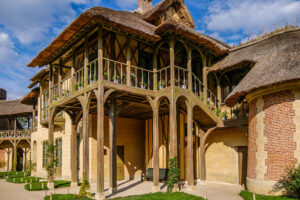
Most visitors come to Versailles to admire the Palace of Versailles, the Hall of Mirrors and the famous royal gardens. Yet beyond…
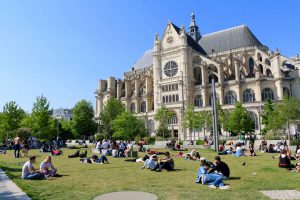
Step away from the polished boulevards into a quarter where Paris’s heartbeat quickens with layers of history and vibrant modernity. The air…
Would you like to plan a similar experience? Request your personalized itinerary.