
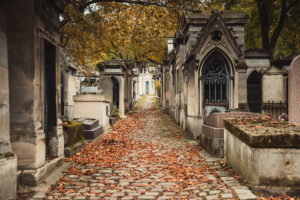
Père-Lachaise Cemetery: Discover Paris’ Most Famous Cemetery and Its Legendary Residents
While Paris is famous for landmarks such as the Eiffel Tower, Notre-Dame and the Louvre, the city's largest cemetery offers a completely…
Fill up on discoveries
We organize your transport by coach, train or plane
Go alone or in a group to discover these places
You won't miss a single detail - they know their subject inside out.
Most visitors come to Versailles to admire the Palace of Versailles, the Hall of Mirrors and the famous royal gardens.
Yet beyond the palace lies another Versailles—one filled with hidden gems, fascinating stories and places that reveal a more personal side of French history.
This unique experience takes you beyond the traditional tourist route to discover three remarkable sites: the Royal Tennis Court, the King’s Kitchen Garden and the Trianon Estate with Marie-Antoinette’s Hamlet.
Together, these locations reveal a side of Versailles that many travelers never see. They tell the story of revolution, innovation, gastronomy and royal life behind closed doors.
For visitors who want to experience Versailles beyond the palace, this journey offers one of the most rewarding cultural excursions near Paris.
The first stop takes visitors to one of the most important sites in French political history.
The Royal Tennis Court, known in French as the Salle du Jeu de Paume, is where the famous Tennis Court Oath took place on June 20, 1789.
Gathered inside this simple building, representatives of the Third Estate pledged not to separate until France had a constitution. Their decision marked a turning point in history and helped trigger the French Revolution.
Visitors can discover:
Standing in the hall today offers a powerful reminder of how a single event can change the course of history.
For travelers interested in politics, history and the French Revolution, it is one of the most meaningful places to visit in Versailles.
Far from the crowds surrounding the palace lies another remarkable treasure: the King’s Kitchen Garden.
Created during the reign of Louis XIV by renowned gardener Jean-Baptiste de La Quintinie, this extraordinary site supplied fruits and vegetables to the royal court.
More than a simple vegetable garden, it was a laboratory of innovation where advanced horticultural techniques were developed to provide fresh produce throughout the year.
Visitors can explore:
The garden reveals how closely gastronomy, science and royal prestige were connected during the reign of the Sun King.
Many of the techniques developed here helped establish France’s reputation as one of the world’s great culinary nations.
Unlike many historic monuments, the King’s Kitchen Garden remains active today.
Gardeners continue to cultivate the land, preserve historic varieties and maintain traditions that have been passed down for generations.
This living heritage makes the visit particularly engaging.
Guests can see how historical knowledge continues to shape modern horticulture while gaining a deeper understanding of everyday life at the royal court.
The experience offers a refreshing contrast to the grandeur of Versailles Palace and highlights a lesser-known aspect of French culture.
The Trianon Estate reveals another side of Versailles entirely.
While the palace symbolized royal power and public ceremony, the Trianon served as a private retreat where monarchs could escape court life and enjoy greater freedom.
Surrounded by elegant gardens and peaceful landscapes, the estate offers a more intimate perspective on the French monarchy.
Visitors can explore:
The atmosphere here is noticeably calmer and more personal than in the palace itself.
One of the most beloved attractions within the Trianon Estate is Marie-Antoinette’s Hamlet.
Created for the queen in the late eighteenth century, this picturesque village was designed to offer a peaceful escape from the strict etiquette of Versailles.
Its charming cottages, gardens, lakes and rustic buildings present an idealized vision of rural life that fascinated the aristocracy of the period.
Visitors can discover:
The hamlet provides valuable insight into Marie-Antoinette’s personality and offers a deeper understanding of the cultural trends that shaped the final years of the French monarchy.
What makes this itinerary truly unique is the way it combines three completely different dimensions of French history.
The Royal Tennis Court tells the story of political change and the birth of modern France.
The King’s Kitchen Garden reveals the innovation and expertise that contributed to France’s culinary reputation.
The Trianon Estate and Marie-Antoinette’s Hamlet offer a rare glimpse into the personal lives of kings and queens beyond official ceremonies.
Together, these sites create a richer and more complete portrait of Versailles than many visitors ever experience.
Most travelers spend their entire visit inside the palace grounds and never discover these extraordinary places.
Exploring Hidden Versailles allows visitors to:
For returning visitors and first-time travelers alike, these locations provide a deeper and more rewarding understanding of French history and culture.
Located just outside Paris, Versailles offers far more than its famous palace.
By exploring the Royal Tennis Court, the King’s Kitchen Garden and the Trianon Estate, visitors discover a hidden side of Versailles filled with remarkable stories, beautiful landscapes and unforgettable experiences.
From revolutionary ideals to royal gardens and private retreats, this journey reveals the many faces of one of France’s most fascinating destinations.
Versailles is home to many fascinating sites beyond the palace itself, including the Royal Tennis Court, the King's Kitchen Garden, the Grand Trianon, the Petit Trianon and Marie-Antoinette's Hamlet. These locations offer a deeper and more intimate understanding of French history and royal life.
Marie-Antoinette's Hamlet is famous for providing a glimpse into the queen's private world. Designed as an idealized rural village, it allowed her to escape the formal atmosphere of Versailles and enjoy a more relaxed environment surrounded by nature.
The Royal Tennis Court is where the Tennis Court Oath was taken in 1789. This event marked the birth of the National Assembly and is widely considered one of the key moments that led to the French Revolution.
While Paris is famous for landmarks such as the Eiffel Tower, Notre-Dame and the Louvre, the city's largest cemetery offers a completely…
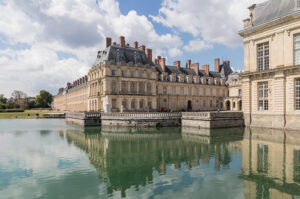
Step through the gates of the Château de Fontainebleau and you enter eight centuries of French history under one roof—an exceptional continuity…
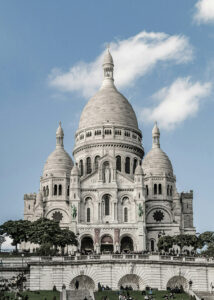
Imagine stepping off the bustling Parisian avenue into a narrow alley where the rhythm slows, and the city’s hum softens into whispers…
Would you like to plan a similar experience? Request your personalized itinerary.