Van Gogh in Auvers‑sur‑Oise: A Guided Walk Through the Places of His Final Months
Thirty kilometers north of Paris, the village of Auvers‑sur‑Oise holds some of the most resonant places in Vincent van Gogh’s life. Here,…
Stock up of discoveries
To help you to discover a region or a village, we propose to you pre-planned and pre-organised tours.
Go alone or in a group to discover these places
You won't miss a single detail - they know their subject inside out.
Paris keeps its past in plain sight, and nowhere does the city read more clearly than in the Marais. Here, an early‑17th‑century royal square sits steps from medieval traces; aristocratic townhouses open onto courtyards and gardens; streets carry memories of Jewish life and the Shoah; and since the 1980s, rainbow symbols of LGBTQ+ visibility have remapped the neighborhood’s sociabilities. In 1964 the city formally protected this historic fabric as a safeguarded sector—Paris notes it as the first of its kind delimited in the capital, and, per the city’s account, in France—helping the Marais remain both preserved and vividly lived‑in.
This guided walking exploration by Suite Voyage Discovery invites you to read the Marais as layered urban history. From the brick arcades of Place des Vosges to the hôtels particuliers of Sully, Soubise, Rohan and Salé; from the Pletzl around rue des Rosiers to the Mémorial de la Shoah; from rue de Bretagne’s food culture to the repurposed halls of the Carreau du Temple, the walk opens a conversation across centuries. With thematic options that can emphasize Jewish heritage, LGBTQ+ places and struggles, Paris’s history at the Musée Carnavalet, or the Picasso story anchored in the Hôtel Salé, SVD adapts the narrative so the Marais speaks directly to you.
Click a photo to enlarge
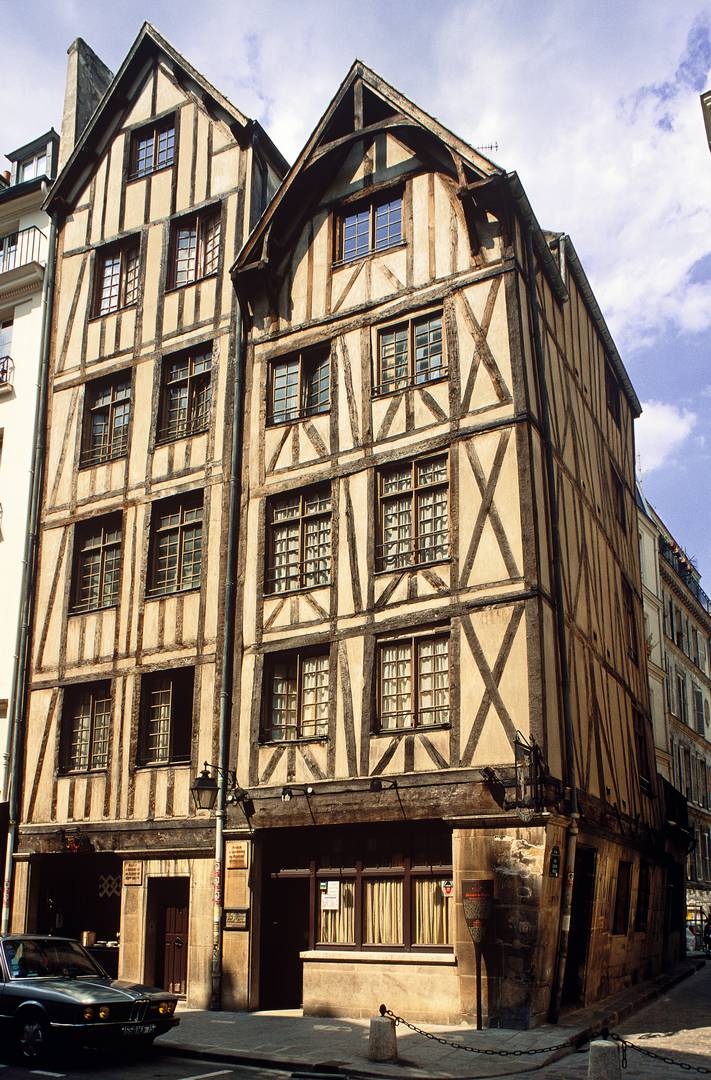
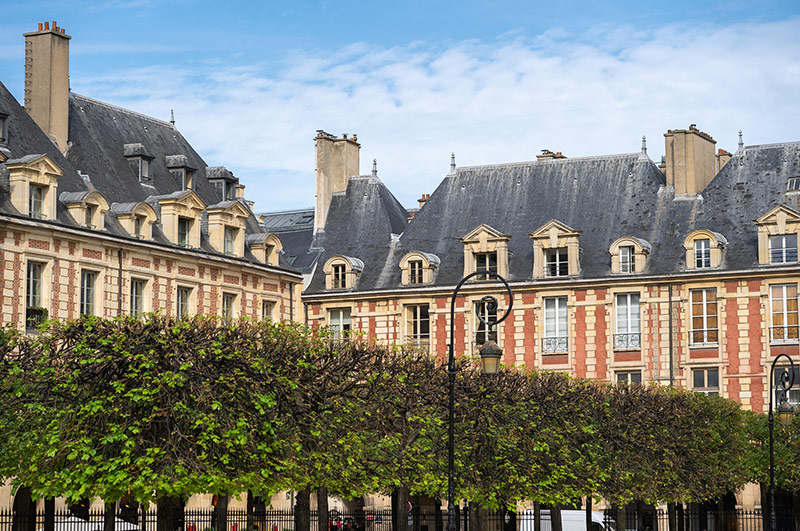
The Marais began as marginal land on Paris’s Right Bank. By the era of Philippe Auguste (c. 1190–1215), the expanding medieval city drew parts of this terrain into its orbit; fragments of the old enceinte still survive across Paris as quiet reminders of the city’s early growth. Four centuries later, power and planning transformed the district: under Henri IV, the Place Royale—today’s Place des Vosges—inaugurated a new vision of Parisian urban life: ordered façades of brick and stone, arcades framing social space, and a green square at the center. The model proved durable enough that even after monarchies and regimes had come and gone, the geometry still structures how the neighborhood breathes.
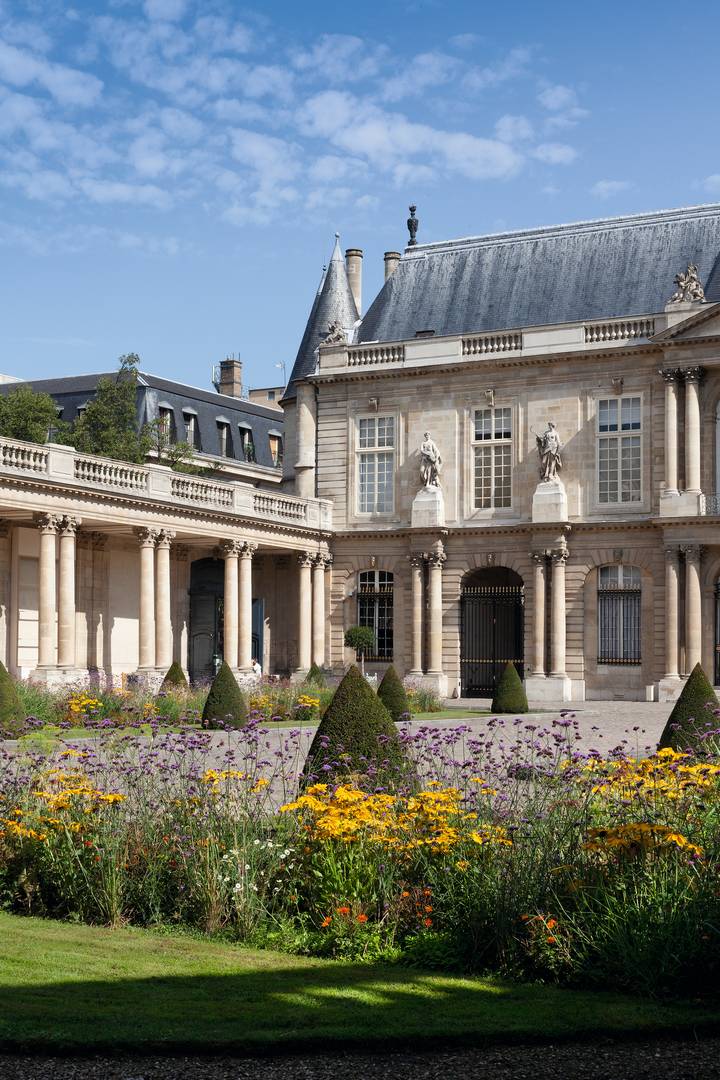
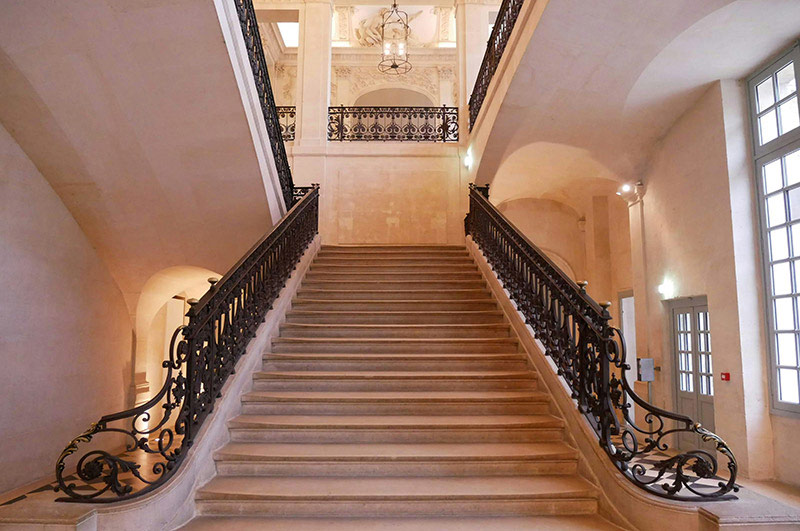
As courtiers and financiers claimed land nearby, the Marais filled with hôtels particuliers, grand private residences typically organized entre cour et jardin—between a formal entrance court and a garden. Names like Sully, Soubise, Rohan, and Salé sketch a lineage of artful façades, ceremonial staircases, and stonework refined for prestige. Over time, these settings were repurposed for modern life: national collections and archives arrived; museums moved in; and, crucially, policies of preservation were put in place so that adaptation did not mean erasure.
The neighborhood’s story, however, isn’t only aristocratic. Waves of migration and artisanal activity shaped its everyday streets, especially around the Pletzl, the historic Jewish quarter whose very name in Yiddish means “little place.” The 20th century added chapters of rupture and remembrance, now anchored in institutions of memory. From the 1980s onward, the Marais also emerged as Paris’s emblematic LGBTQ+ neighborhood, its streets reinterpreted as places of visibility and community life. And in the Haut Marais, a long‑standing market culture meets creative scenes in renovated halls and along food‑lively streets.
Start with the model. Place des Vosges—born as Place Royale in the early 17th century—represents one of Paris’s most elegantly coherent pieces of urban design. Brick‑and‑stone façades form a continuous perimeter; arcades outline public promenades and frontages; a central garden, today known as Square Louis XIII, anchors the geometry. Look closely and you are seeing not only a beautiful square but also a template that signaled a new kind of urban sociability.
The square’s addresses tell their own stories. Victor Hugo lived here from 1832 to 1848 in the Hôtel de Rohan‑Guéménée, today preserved as the Maison de Victor Hugo museum. A short step away stands the Hôtel de Sully, begun in 1625 and later connected to the square by a passage. Since 1967 it has served as the headquarters of the Centre des monuments nationaux, a subtle sign of how heritage stewardship is woven directly into the Marais’s daily life.
To understand the Marais is to grasp the entre cour et jardin layout. In this paradigm, a townhouse unfolds from a street gate into a paved cour d’honneur, then recedes toward a private garden beyond. The effect balances ceremony and retreat: a carefully choreographed sequence of spaces that turned city plots into micro‑palaces. The Hôtel de Sully offers a classic example, its urban face linked to its calmer interior world; so do the Hôtels de Soubise and de Rohan, later entrusted to the nation’s archives. The Hôtel Salé, whose sculpted exuberance earned it its nickname, now houses the Musée national Picasso‑Paris.
A guided walk in the Marais becomes, in effect, a lesson in this typology. From street façades you can read how status announced itself in stone; from the alignment of wings and garden walls, you can infer how privacy and prestige were staged. These settings outlived the families that built them, but their spaces proved versatile enough to host modern institutions without losing their architectural legibility.
Napoleon’s administration assigned the Hôtel de Soubise to the state archives in 1808, binding the building’s ceremonial spaces to a national function. Together with the neighboring Hôtel de Rohan, the ensemble serves today as the Paris site of the Archives nationales. Beyond their role as repositories of documents, these hôtels particuliers demonstrate how grand domestic architecture can be reinterpreted for public missions while retaining an intelligible 18th‑century presence in the city.
The Marais also shelters one of the most concentrated narratives of modern art anywhere: the Musée national Picasso‑Paris. Set in the 17th‑century Hôtel Salé, the museum holds the world’s largest public collection of Picasso’s works, built notably through state dations in 1979 and 1990. Even seen from the exterior, the building itself—long recognized for its profuse Baroque flourishes—signals the dialogue between past settings and 20th‑century creativity that defines so much of the neighborhood.
Few museums are as rooted in their neighborhood as the Musée Carnavalet – Histoire de Paris, installed across the Hôtels Carnavalet and Le Peletier de Saint‑Fargeau. Devoted to Paris from its origins to the present, it turns the Marais into both subject and setting, making it a natural anchor for anyone using the district as a lens onto the city as a whole.
In Yiddish, Pletzl means “little place,” a term that came to designate the Jewish sector around rue des Rosiers and the Saint‑Paul area. The name suggests intimacy as much as geography: courtyards and ground‑floor frontages tied to daily commerce; streets that doubled as social networks. While the 20th century brought interruption and loss, the neighborhood retains living threads of Jewish culture alongside places of remembrance.
The institutional counterpart to this memory sits close by. The Mémorial de la Shoah, at 17, rue Geoffroy‑l’Asnier in the 4th arrondissement, is a leading European site for Shoah memory and education. Its presence situates remembrance within the walkable texture of the Marais rather than at a remove, underlining how the district’s streets hold both everyday life and history of the gravest kind in the same frame.
Within the broader cultural landscape, the Musée d’Art et d’Histoire du Judaïsme (mahJ) occupies the Hôtel de Saint‑Aignan (1644–1650) in the Marais, opened in 1998 with the support of the City of Paris. While your guided walk concentrates on the neighborhood outdoors, these institutions help contextualize what the streets record.
From the 1980s, the Marais became the emblematic heart of Paris’s LGBTQ+ life. Streets such as Sainte‑Croix‑de‑la‑Bretonnerie, des Archives, du Temple, and Vieille‑du‑Temple articulated a new social map anchored by visibility, community, and activism. The City of Paris has since marked LGBTQIA+ memory in public space, including the naming of Place des Émeutes‑de‑Stonewall in the Marais in 2019, acknowledging global currents of struggle and change.
Reading these streets today is an exercise in urban semiotics: signage and storefronts certainly matter, but so do the quieter moves—the pedestrian flows, the lingering in doorways, the way windows stage interior lives to the outside. An SVD‑guided walk can attend to these signs without turning them into spectacle, situating the Marais’s LGBTQ+ chapter within the neighborhood’s longer arc of arrivals, assertions, and adaptations.
Move north and you find the Haut Marais, where the longue durée of food and craft culture intersects with contemporary scenes. The Marché des Enfants‑Rouges, founded in 1615 and listed as a historic monument since 1982, is Paris’s oldest covered food market. Its continuity ties the neighborhood to a centuries‑old rhythm of provisioning and conviviality. Along rue de Bretagne, market energy spills into surrounding streets, connecting local life with visitors’ curiosity.
Nearby, the Carreau du Temple occupies a historic enclosure with a new civic role: a multidisciplinary venue for cultural, sporting, and associative events. The glass‑and‑iron volume speaks to Paris’s 19th‑century building language, while its current programming keeps the site woven into the everyday. Together, these places show how the Marais’s adaptive reuse is less about nostalgia than about an ongoing public life.
France’s 1962 Loi Malraux created the instrument of secteurs sauvegardés—protected historic urban ensembles. The Marais was designated by interministerial order on December 21, 1964, and city documents note it as the first delimited safeguarded sector in Paris and, in the city’s account, in France. The policy’s ambition was to safeguard architectural and urban coherence while allowing for sensitive renewal.
That balance has always invited debate. Preservation stabilized historic buildings and urban forms; social dynamics, especially in later decades, have raised questions about affordability and community continuity. In this light, a walk through the Marais becomes more than a heritage tour: it is an engagement with how cities manage memory, value, and change over time, and how a neighborhood can be protected without being turned into a stage set.
The Marais’s protected status dates to 1964. The safeguarded sector was created by interministerial order that year—city documents cite it as the first delimited in Paris and, per the city, in France—establishing a framework that still shapes development today.
“Pletzl” is Yiddish for “little place.” The term traditionally designates the Jewish sector around rue des Rosiers and Saint‑Paul, suggesting both a location and an intimate network of sociability.
Paris’s oldest covered food market opened here in 1615. The Marché des Enfants‑Rouges in the Haut Marais is listed as a historic monument and continues to anchor local food culture.
Victor Hugo made Place des Vosges home. The writer lived at the square from 1832 to 1848 in the Hôtel de Rohan‑Guéménée, now a museum dedicated to his life and work.
LGBTQIA+ memory is mapped onto the Marais’s streets. In 2019, the city named Place des Émeutes‑de‑Stonewall in the neighborhood, linking Paris’s landscape to a wider history of LGBTQ+ rights and remembrance.
National heritage and archives live inside former palaces. The Hôtels de Soubise and de Rohan house the Archives nationales’ Paris site, a striking reuse of spaces built for aristocratic life.
Design a tailor‑made exploration with Suite Voyage Discovery—whether you’re drawn to hôtels particuliers, Jewish heritage and memory, the Picasso narrative, or the neighborhood’s LGBTQ+ places and cultures. Request your custom Paris quote and let SVD align the walk’s narrative to your interests.
The Marais lends itself to discovery in sequences. You might begin under the arcades of Place des Vosges, tracing how royal planning set a pattern for public life, before slipping toward the Hôtel de Sully and its historic passage that reconnects courtly interiors to the modern square. From there, the façades of hôtels particuliers become a text to read: window rhythms, portal carvings, and the depth of parcels speaking of status and privacy. The conversation can then widen to include the Archives nationales at the Hôtels de Soubise and Rohan—buildings whose ceremonial volumes now frame a national memory project—before turning to the exterior of the Hôtel Salé and the story of how it came to house the Musée national Picasso‑Paris and the world’s largest public Picasso collection.
From grand architecture, the walk shifts scale to the intimate grain of the Pletzl around rue des Rosiers, where street‑level commerce and community have long intertwined. The neighborhood’s Jewish history leads naturally to the Mémorial de la Shoah on rue Geoffroy‑l’Asnier, a few minutes away, which situates remembrance within the city rather than outside it. Without leaving the streets, you sense how daily life and memory inhabit the same urban rooms.
Depending on your interests, the route may then thread through the LGBTQ+ streets of the Marais—Sainte‑Croix‑de‑la‑Bretonnerie, des Archives, du Temple, Vieille‑du‑Temple—where visibility, sociability, and activism have redrawn the map since the 1980s. The city’s naming of Place des Émeutes‑de‑Stonewall underscores how these streets connect to a broader, ongoing narrative.
In the Haut Marais, the rhythm changes again. Along rue de Bretagne, the Marché des Enfants‑Rouges contributes a centuries‑old market cadence, while the nearby Carreau du Temple shows how industrial‑era structures can sustain new civic programs. The cumulative effect is a neighborhood that’s both museum‑worthy and unmistakably alive.
Interior access to museums and monuments varies with the program and the day. SVD’s emphasis here is on helping you read the city in situ—using exteriors, streetscapes, and urban sequences to connect architecture, history, and contemporary life.
The Marais accommodates multiple angles of approach. SVD can shape the walk’s narrative to emphasize one thread or balance several:
These emphases can be combined or weighted differently—the goal is a coherent reading of the neighborhood that aligns with what matters most to you.
The Marais is not a single story—it is a format for stories to coexist. This is where high urban design meets daily sociability; where monuments of literature and art share streets with living markets; where memory work is conducted not in isolation but amid residential facades and storefronts. The designation of a safeguarded sector in 1964 was an act of care, but it also set in motion long debates about how to protect a city without embalming it. Walking here with a guide is less about checking boxes than about learning to see: to connect a brick course under arcades to a royal vision, or to read a new place name in light of a decades‑long social movement.
For travelers attentive to how cities evolve, the Marais offers a remarkably compact, legible case study—and a deeply atmospheric one. Every turn seems to reveal another layer that matters, whether you are drawn to major names like Victor Hugo and Pablo Picasso, to the resilient life of the Pletzl, to the LGBTQ+ chapter written onto streets since the 1980s, or to the rhythms of market culture that have persisted since 1615.
Because the Marais contains so much, any route is a curated selection rather than an exhaustive catalogue. Museums such as the Musée Carnavalet or the Musée national Picasso‑Paris provide deep dives; the Archives nationales and the Mémorial de la Shoah anchor distinct forms of memory. Your guided walk brings these institutions into dialogue with the spaces around them, so that the city itself becomes the interpretive instrument.
Operational details such as museum opening hours and temporary exhibitions change frequently and are treated independently from the walk. What remains constant is the neighborhood’s ability to connect architecture, history, and contemporary culture in ways that feel immediate on foot.
Ready to explore Le Marais with nuance—at your pace and through the themes you care about most? Request your custom Paris quote and let Suite Voyage Discovery design a walk that makes the neighborhood’s layers come alive for you.
Seen from the Marais, Paris comes into focus as an ecosystem: royal planning and medieval traces; repurposed market halls and living streets; museums embedded in historic houses; social movements inscribed onto the urban grid. This vantage point naturally extends to nearby quarters along the Right Bank and the Seine, where similar dialogues between past and present play out in different registers. However you choose to continue, the Marais equips you with a way of seeing—one that turns façades into stories and squares into arguments about how a city remembers, adapts, and thrives.
The Marais changes with the hour and the season, yet its architecture and institutions keep the through‑lines legible. Whether you come to reflect at the Mémorial de la Shoah, to trace the evolution of Paris at the Musée Carnavalet, to consider Picasso’s legacy against a 17th‑century backdrop, to follow the threads of Jewish and LGBTQ+ life through the streets, or simply to take in the measured grace of Place des Vosges, the neighborhood makes each theme feel proximate to the others. That proximity—of centuries, of communities, of memories—is the Marais’s particular gift.
Walk it with a thoughtful structure and the district becomes a syllabus for understanding Paris. Walk it again through a different lens and it becomes something else entirely. Either way, it rewards attention.
The Marais concentrates multiple layers of Paris in a walkable district. Medieval expansion brought parts of the area inside the city’s orbit; early‑17th‑century planning under Henri IV created Place des Vosges, a model of brick‑and‑stone urbanism; the 17th and 18th centuries saw the rise of hôtels particuliers such as Sully, Soubise, Rohan, and Salé. In the modern era, institutions like the Archives nationales, the Musée Carnavalet, and the Musée national Picasso‑Paris reinterpreted these settings. The neighborhood is also identified with the Jewish Marais (the Pletzl) and with LGBTQ+ visibility since the 1980s. Protected as a safeguarded sector since 1964, the Marais shows how preservation, memory, and contemporary life can share the same streets.
Yes—Suite Voyage Discovery can tailor the narrative to emphasize themes such as the Jewish Marais around rue des Rosiers and memory at the Mémorial de la Shoah, or the LGBTQ+ streets and their role in visibility, sociability, and activism since the 1980s. Other options include focusing on hôtels particuliers and aristocratic life, Victor Hugo at Place des Vosges, popular and artisanal heritage in the Haut Marais, or the Picasso story anchored in the Hôtel Salé. The route and emphasis are shaped to align with your interests.
Depending on the program, the guided walk can include Place des Vosges; the Hôtel de Sully and its passage toward the square; the Paris site of the Archives nationales at the Hôtels de Soubise and Rohan; the exterior of the Hôtel Salé, which houses the Musée national Picasso‑Paris; and the Musée Carnavalet – Histoire de Paris. It can also explore the Pletzl around rue des Rosiers and the Mémorial de la Shoah, and head into the Haut Marais for rue de Bretagne, the Marché des Enfants‑Rouges, and the Carreau du Temple. Interior access varies with the day and program design.
Thirty kilometers north of Paris, the village of Auvers‑sur‑Oise holds some of the most resonant places in Vincent van Gogh’s life. Here,…
In the 1650s, one audacious idea changed how Europe imagined a country house: conceive the residence, its interiors, and the garden as…
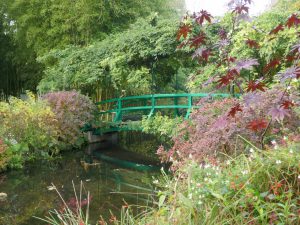
Few places bring you as close to an artist’s way of seeing as Giverny. Claude Monet lived and worked here from 1883…
Would you like to plan a similar experience? Request your personalized itinerary.