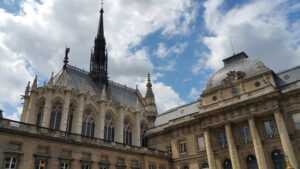
Sainte-Chapelle: Discover Paris’ Most Spectacular Gothic Masterpiece
Located on the historic Île de la Cité in the heart of Paris, Sainte-Chapelle is one of the most breathtaking monuments in…
Fill up on discoveries
We organize your transport by coach, train or plane
Explore a neighborhood, town, village, or region through a thoughtfully designed itinerary tailored to your interests.
Go alone or in a group to discover these places
You won't miss a single detail - they know their subject inside out.
Just south of Paris, while the city sleeps, the world’s largest fresh food market is already wide awake. Rungis International Market operates to a rhythm few travelers ever witness, supplying Paris, the surrounding region, and destinations far beyond.
With Suite Voyage Discovery, an early-morning guided visit takes you behind the scenes of this extraordinary professional ecosystem, revealing the places, professions, and carefully orchestrated organization that help make France’s celebrated food culture possible.
 Location: Rungis International Market, Val‑de‑Marne, about 7 km south of Paris
 Experience: Guided, behind‑the‑scenes visit of a professional wholesale fresh‑food market
 Visitor timing: Very early morning (pre‑dawn/at daybreak) when activity peaks; exact timing varies
 Access model: The site is ordinarily reserved for professionals; access for visits is organized and supervised
 Optional taste: Depending on the chosen formula, an optional breakfast or mâchon rungissois may be included (examples cited by the source: fine charcuterie, aged cheeses, seafood items, pastries or hot dishes)
 Scale: Approximately 234 hectares; more than 1,200 companies and around 12,000 on‑site employees (figures evolve over time)
Rungis is not a showpiece; it is a working city of food. Spread across about 234 hectares and home to more than 1,200 companies employing around 13,000 people (figures indicative), the market underpins daily life well beyond Paris. Its operator presents it as the world’s leading fresh‑produce market—a claim that aligns with the scale you perceive when you enter its expansive pavilions and specialized zones. From here, supply radiates across Île‑de‑France and, in many cases, to businesses across Europe and worldwide.
For travelers who love French cuisine, design, or urban history, a guided early‑morning visit reveals how an immense yet finely organized system turns perishable goods into everyday abundance. You’ll explore emblematic halls across multiple sectors and come away with a clearer sense of the distribution circuits, quality controls, and traceability that translate into the menus and markets you later enjoy in the city. The experience brings you close—at a human scale—to the professions that keep this complex organism running.
Rungis carries forward the legacy of central Paris’s former wholesale market, Les Halles. In a carefully planned transfer from February 28 to March 2, 1969, the professional heart of food distribution moved out of the city center to what would become this purpose‑built site. The relocation reflected a new era for logistics and urban planning: a dedicated campus near major roadways and Paris‑Orly Airport, with room to organize the trades and to scale.
That modern reconfiguration remains visible in Rungis’s layout today. Each sector has its own geography and specialized buildings, resulting in a market that is both vast and legible. The system’s coherence—grounded in French public policy as a Marché d’Intérêt National (National Interest Market)—is part of what you decode during a guided visit.
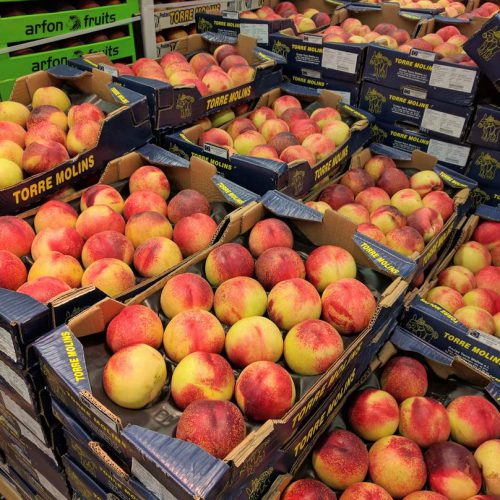
Fruits and Vegetables. A world of seasonal diversity, where produce circulates through dedicated halls organized for efficiency and preservation. This is one of the great engines of the site, channeling freshness to professionals across the Paris region and further afield.
Meat and Meat Products. Structured to handle a complex array of products, the meat sector operates to early rhythms and strict standards. The halls are specialized, and activity intensifies as the night progresses into morning.
Seafood and Freshwater Products. The seafood pavilion is emblematic of Rungis’s overnight life. Its operational timing is among the earliest on site, underscoring how time‑sensitive logistics underpin everything from a bistro’s chalkboard to a gastronomic menu.
Dairy and Gastronomy. From cheeses to fine grocery goods, this sector connects tradition and refinement with the daily reality of supply. For many visitors, it offers a tangible bridge between the specialties they know and the distribution systems that sustain them.
Horticulture and Decoration. Flowers, plants, and decorative items animate this universe. It’s a reminder that Rungis supports not only taste and nourishment but also the aesthetics of hospitality, events, and everyday life.
Across these universes, a common thread emerges: Rungis is a professional marketplace. Entry as a buyer typically requires accreditation, and the market’s operations are designed first and foremost for trade. That’s what makes an organized and supervised guided visit so distinctive—you are allowed to understand a living infrastructure at work, without disrupting it.
Rungis runs on the clock of freshness. Logistics unfold overnight, and by about 2:00 a.m., buyers begin entering to meet wholesalers and conduct their business. Sector activity then rolls forward in waves: seafood operations typically start around 2:00 a.m.; meat and meat products activity typically starts around 3:00 a.m.; and dairy, gastronomy, fruit, and vegetable sectors progressively animate from around 5:00 a.m. These are the venue’s working rhythms—not a visitor schedule—but they help explain why an early‑morning guided visit aligns with the market’s most animated hours.
In this compressed span between night and day, the market’s purpose is palpable: to move perishable products efficiently through specialized channels. Your guide helps translate that intensity into understanding—how space, time, and professional roles combine to create reliability for chefs, retailers, and institutions that count on the market’s cadence.
This is an immersive introduction to a professional world that most travelers never see. With guided accompaniment, you’ll explore a selection of large pavilions across several food sectors, as organized on the day. The itinerary often includes emblematic spaces such as the seafood pavilion; meat and meat‑products halls; dairy and gastronomy; fruit and vegetable sectors; and the flower and horticulture universe. Because the market is first and foremost a working environment, access and routing vary with on‑site conditions—your guide adapts to the day’s reality.
At each stop, the emphasis is on understanding. You gain a clearer view of how distribution circuits function, how quality is assessed and preserved, and how traceability supports confidence across the chain. Rather than a checklist of sights, the visit offers perspective: a sense of scale, specialization, and coordination—and a human‑scale encounter with the professions that keep this intricate mechanism running.
For travelers curious about the architecture of supply as much as about taste, the experience demystifies the backstage of French food. When you later sit down to a market‑fresh meal in Paris, you can connect it to the systems and people you encountered at Rungis.
If you wish, you can complement your visit with an add‑on tasting—such as a breakfast or a traditional mâchon rungissois—featuring market products. Depending on the chosen formula, this may bring together fine charcuterie, aged cheeses, seafood, pastries, or hot dishes, offering a flavorful counterpoint to the morning’s discoveries.
Thinking of tailoring a Paris stay around culinary discovery? Speak with Suite Voyage Discovery about weaving an early‑morning guided visit to the Rungis International Market into a custom itinerary. Request your bespoke quote.
Rungis is not only a logistical powerhouse; it is also a public‑interest marketplace shaped by French policy and governance. In legal terms, it is a Marché d’Intérêt National (MIN), a status defined in the country’s commercial code for national wholesale markets. This framework positions the site as an infrastructure of collective importance—one that serves professional buyers and, indirectly, the broader public through stable supply.
The market is operated and developed by SEMMARIS, a semi‑public company tasked with managing the site, supporting its evolution, and integrating stakeholders’ needs. Within this landscape, the Ministry of Agriculture’s RNM network monitors prices and publishes market notes for fresh products and horticulture. For visitors, these institutions may remain behind the curtain—but knowing they exist helps explain why Rungis feels orderly and purposeful, even at its busiest.
Part of the fascination of Rungis lies in its contrasts. The site is massive—about 234 hectares—yet carefully subdivided into concentrated worlds of expertise. You might step from a hall dedicated to one product family into another with distinct flows and priorities. Multiply that by the breadth of companies and workers on site, and you begin to see why the market can credibly sustain Paris’s appetite and more. Many buyers are based in Île‑de‑France, but the site also connects with businesses across Europe and worldwide.
Geographically, Rungis sits in a strategic position south of Paris, near the A6 motorway and Paris‑Orly Airport. That context helps explain the 1969 decision to relocate from Les Halles: proximity to major transport axes reduces friction for perishable goods while concentrating the trades in a campus that can evolve with demand.
Because Rungis is designed for professionals, its language is efficiency: the layout, the signage, the sequencing of activity. A guided visit is less about pointing at individual wares and more about decoding how the whole works. Across sectors, your guide helps you connect a few essential ideas:
Organization. The five‑universe structure minimizes confusion and supports specialization. Each pavilion or hall exists within a broader map that keeps flows clear and responsibilities well defined.
Timing. The market’s overnight start allows fresh products to pass through in a narrow window, helping them arrive with peak quality where they are needed. Knowing the operating rhythm clarifies why early morning is so revealing.
Quality and Traceability. Freshness is not a feeling; it is a standard supported by processes. Your guide explains how documentation, handling practices, and sector‑specific norms help build trust along the chain.
People. At Rungis, professions interlock—buyers, wholesalers, logistics coordinators, and many others. A “human‑scale encounter with the professions” doesn’t mean a staged meet‑and‑greet; instead, you perceive how skilled roles, working in concert, produce reliability the broader public rarely stops to consider.
While precise figures can evolve with time, several durable markers help frame the market’s significance. The site covers about 234 hectares, a footprint that reads like a dedicated district. It hosts more than 1,200 companies and around 13,000 workers (indicative), a reminder that wholesale is both commerce and community. The operator characterizes Rungis as the world’s leading fresh‑produce market, and public institutions track prices and conditions here because the site influences a wide network of businesses. All of that converges in those few hours each night and morning when Rungis becomes a nerve center for perishable goods.
Travelers sometimes ask whether a market like Rungis can be appreciated without a professional background. In practice, that is one of the visit’s strengths. Your guide curates the morning to focus on emblematic spaces across sectors—seafood, meat, dairy and gastronomy, fruits and vegetables, flowers and horticulture—while translating what might otherwise be opaque: why the seafood pavilion activates so early; how meat and meat products structure their morning; why dairy, gastronomy, fruits, and vegetables pick up a little later; how these timings, as operating rhythms, align to move vast quantities without chaos.
Because routing and access are adapted on the day, you experience the market as it is, not as a staged exhibit. That authenticity is the appeal. You come away with a clearer mental map of how abundance appears later in shops and on menus—and how a site just beyond Paris orchestrates it with precision.
Rungis occupies a unique place in modern food culture. It is both deeply local—grounded in the daily needs of Île‑de‑France—and expansively connected, with supply links that reach Europe and beyond. It is public‑interest infrastructure and a site of private enterprise. It is historical—born of the 1969 transfer from Les Halles—and forward‑looking, with governance and monitoring mechanisms designed to keep pace with change.
For cultural travelers, that blend is compelling. You sense the continuity between centuries of Parisian trade and a contemporary campus where sectors are crisply defined. You recognize that quality, in this context, is not a buzzword but a set of verifiable practices. And you witness how timing—down to the hour—remains a quiet but decisive protagonist in the story of food.
A guided visit to Rungis reframes how you experience Paris for the rest of your stay. Breakfast pastries, a market‑fresh lunch, or an elegant dinner take on new meaning when you understand the systems that make them possible. If culinary culture is central to your travels, consider building a day that contrasts the market’s early‑morning energy with the city’s daytime pleasures—museums, neighborhoods, and dining shaped by the very supply chains you have just explored. Without prescribing a timetable, that juxtaposition captures something essential about the Paris region: tradition and modernity working side by side.
And for those intrigued by urban history, the echo of Les Halles lingers even as Rungis has become the stage for contemporary distribution. The legacy is not about nostalgia; it is about understanding how cities evolve and how essential functions are relocated, reimagined, and sustained over time.
Because Rungis is a professional marketplace typically reserved for accredited buyers, public access is unusual. That is precisely why an organized and supervised guided visit can be so illuminating. It offers context and coherence, allowing you to read the market without interrupting its work or assuming a buyer’s role. Optional tastings—such as a breakfast or traditional mâchon rungissois with products from the market—can add an appetizing close to your morning, depending on the formula you prefer.
Suite Voyage Discovery helps you situate this encounter within a broader Paris itinerary, paced to your interests and aligned with the market’s early‑morning reality.
Start your tailor‑made Paris plan and ask us about a guided visit to the Rungis International Market.
Rungis is a vast wholesale market just south of Paris, presented by its operator as the world’s leading fresh‑produce market. Organized into five product universes—fruits and vegetables; meat and meat products; seafood and freshwater products; dairy and gastronomy; and horticulture and decoration—it supplies many buyers in Île‑de‑France and also connects to businesses across Europe and worldwide. Because Rungis is primarily reserved for professionals, a guided, organized and supervised visit is a rare opportunity to understand how this backstage system works without disrupting it.
The market operates overnight into early morning, which is when activity peaks; this is the venue’s working rhythm rather than a visitor schedule. Operationally, seafood activity typically starts around 2:00 a.m., meat and meat products around 3:00 a.m., and dairy, gastronomy, and fruit and vegetable sectors progressively animate from around 5:00 a.m. A guided early‑morning visit aligns with this cadence, offering a clear view of how fresh products move through specialized channels.
With guided accompaniment, you’ll explore a selection of large pavilions across multiple sectors as organized on the day. These may include emblematic spaces such as the seafood pavilion; meat and meat‑products halls; dairy and gastronomy; fruit and vegetable sectors; and the flower and horticulture universe. The focus is on understanding distribution circuits, quality and traceability, and the roles of different professions. An optional tasting—such as a breakfast or a traditional mâchon rungissois featuring market products like fine charcuterie, aged cheeses, seafood, pastries or hot dishes—can be added depending on the chosen formula.
Located on the historic Île de la Cité in the heart of Paris, Sainte-Chapelle is one of the most breathtaking monuments in…
Montmartre is one of those neighborhoods you feel you know before you ever arrive. The Sacré-Cœur, the painters on Place du Tertre,…
Eiffel Tower & Trocadéro – Monumental Paris A universal symbol of Paris, the Eiffel Tower is far more than its outline. Around…
Would you like to plan a similar experience? Request your personalized itinerary.