The Belly of Paris, Les Halles & an Investigation at the Palais-Royal
Step away from the polished boulevards into a quarter where Paris’s heartbeat quickens with layers of history and vibrant modernity. The air…
Stock up of discoveries
To help you to discover a region or a village, we propose to you pre-planned and pre-organised tours.
Go alone or in a group to discover these places
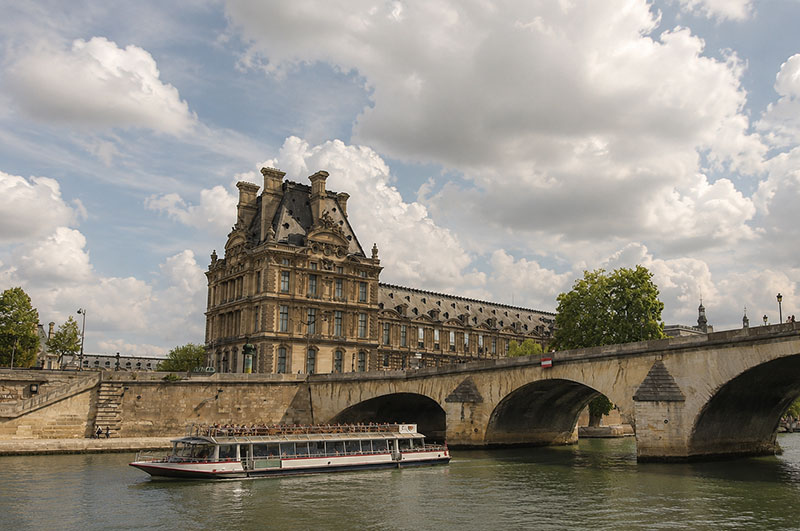
There is a reason the very heart of Paris is defined by its river. The historic banks of the Seine—bridges, quays and islands between the Pont de Sully and the Pont d’Iéna—are inscribed by UNESCO as a World Heritage property for their continuous procession of masterpieces and urban harmony. A panoramic cruise through this corridor gathers the city’s great landmarks into a single unfolding view, revealing how Paris has evolved from medieval island stronghold to capital of innovation and art. From the water, that story reads in bridges, façades and light—quietly, compellingly, and without the hurry of the streets.
Click a photo to enlarge
Seen from the Seine, Paris becomes a narrative drawn in stone, iron and water. UNESCO recognizes the Banks of the Seine (inscribed in 1991 under criteria i, ii and iv) as an exceptional ensemble where centuries of urban design and architecture align along the river’s bends. The core zone, which includes Île de la Cité and Île Saint‑Louis, concentrates an extraordinary density of monuments that face the water in dialogue—cathedrals and palaces, museums in repurposed stations, and bridges that mark revolutions in engineering and style.
What makes the view from a boat distinct is continuity. On land, it’s easy to focus on a single site at a time; from the river, relationships appear. You notice how the Louvre and the Institut de France oppose each other across the Pont des Arts, or how the grand axis from the Invalides sweeps toward the ornate Pont Alexandre III and the exhibition palaces. Even the islands sit differently in the mind, felt not as enclaves you enter, but as anchors in the current of the city’s history.
UNESCO’s description highlights a near‑continuous sequence of major monuments along these banks—among them Notre‑Dame and the Sainte‑Chapelle on the Île de la Cité; the Louvre and the Palais de l’Institut (Institut de France); the Invalides; Place de la Concorde; the Grand Palais and Petit Palais; the Eiffel Tower; and the Palais de Chaillot. A Seine cruise may bring many of these into view, depending on the route and navigation conditions, allowing the panorama to connect eras without the need to cross busy streets or consult maps.
The historic integrity of this setting has been strengthened in recent years: the lower quays through much of the property were permanently closed to automobile traffic on the Left Bank in 2014 and on the Right Bank in 2016. This policy—recorded in UNESCO’s management context—helps preserve the site’s authenticity and the legibility of its riverfront landscapes.
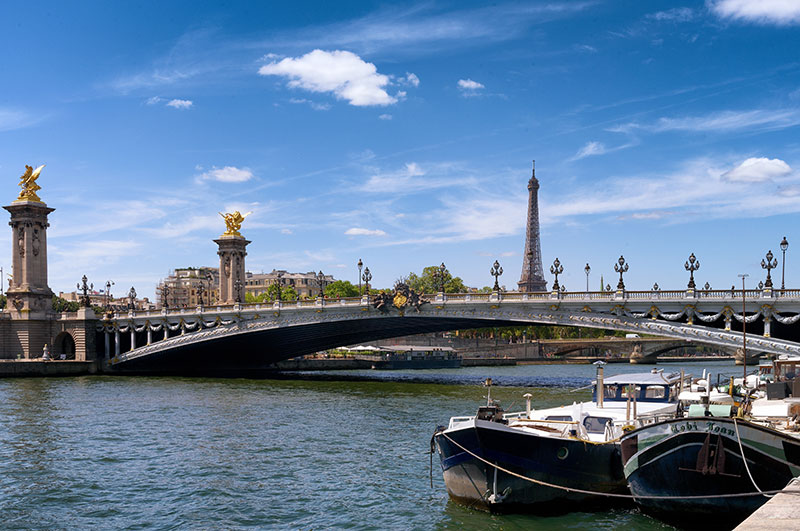
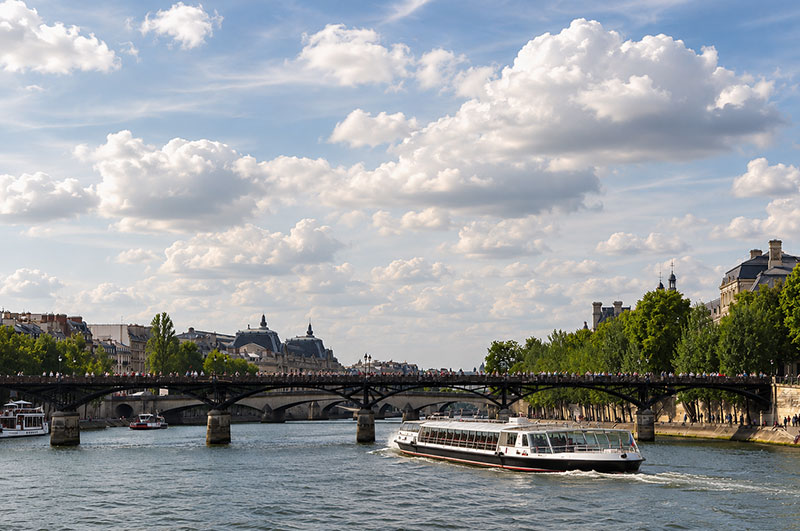
Parisian bridges are destinations in themselves, and a cruise sequences them like chapters. Pont‑Neuf, the oldest surviving bridge in Paris and a protected Monument Historique, stands as a stone ledger of the city’s resilience. A short way downstream, the Pont des Arts—Paris’s first metal bridge—links the Louvre with the Institut de France, its light structure signaling a nineteenth‑century turn toward new materials and forms. Farther along, Pont Alexandre III was built for the 1900 Universal Exposition, forming a spectacular axis between the Invalides and the Grand/Petit Palais. And Pont de Bir‑Hakeim, inaugurated in 1906, is a double‑deck metal bridge that carries Paris Métro Line 6 and is known for vistas toward the Eiffel Tower. Each bridge carries more than traffic: it carries a moment in the city’s technical and artistic imagination.
A river cruise is not simply a list of sights. It is a panoramic perspective that lets the banks compose themselves into a single experience, at a gentle pace and with almost no walking. It is also a practical way to keep different abilities together—ideal when some in your party want to continue cultural discovery while others prefer to sit back and let the city come to them.
Depending on the selected company and formula, commentary may be recorded or live. Themes can focus on history, architecture, bridges, urban transformations, or the Universal Expositions that reshaped the riverfront. The itinerary and what is visible on a given day vary with embarkation point, operator and navigation conditions, and sometimes with temporary constraints on the Seine. SVD accounts for these realities when building your program.
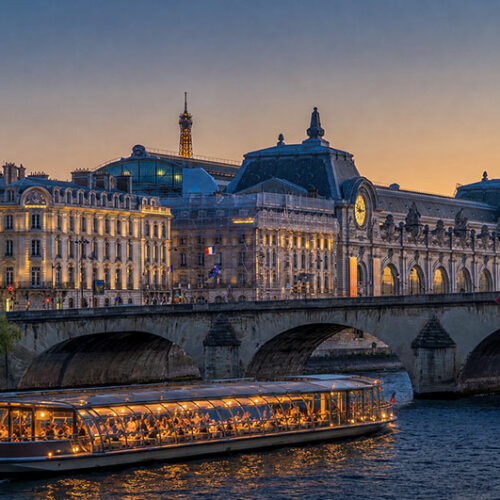
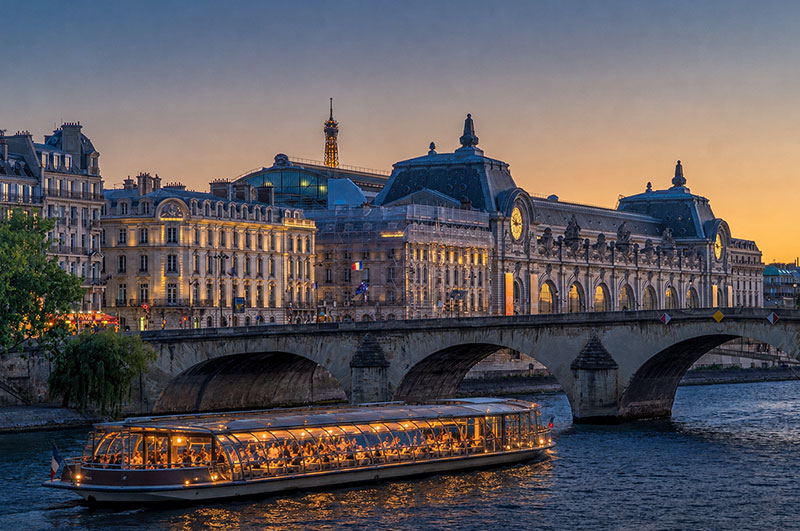
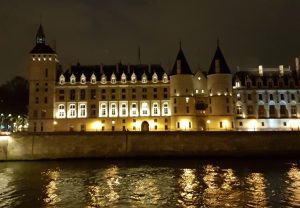
Time of day changes the tone of the river. Daytime often brings clarity and the crisp lines of façades. In the late afternoon, the light warms and the stone glows. After nightfall, landmarks switch to an evening register, and Paris’s silhouettes read as outlines of light across the water. A cruise can be designed with an evening/illuminations focus if night views appeal—an atmospheric counterpoint to daytime visits ashore.
Because everyone is comfortably seated onboard, this experience works well for mixed‑ability parties. It can slot into a day as a restful interlude between two site visits, as a stand‑alone moment on the water, or as the highlight of a lunch or evening within a broader Paris plan. Across all these formats, the river remains the constant, gathering the city into view without the needs of a long walk.
A commentary—when included, and in the format offered by the chosen operator—can sharpen the panorama into a richer story. Bridges might be the throughline, moving from masonry spans to metal advances. Architecture could structure the narrative, reading building types as they succeed one another along the quays. Or a Universal Expositions focus might foreground the late‑nineteenth and early‑twentieth‑century transformations that yielded icons like the Eiffel Tower and Pont Alexandre III. SVD helps align the thematic emphasis with your interests, subject to the commentary options available.
Ready to weave the river into your Paris day—whether as a serene pause, a panoramic introduction, or an evening centerpiece? Start a tailor‑made Paris plan with Suite Voyage Discovery, and we’ll design the Seine experience that fits your interests and pace.
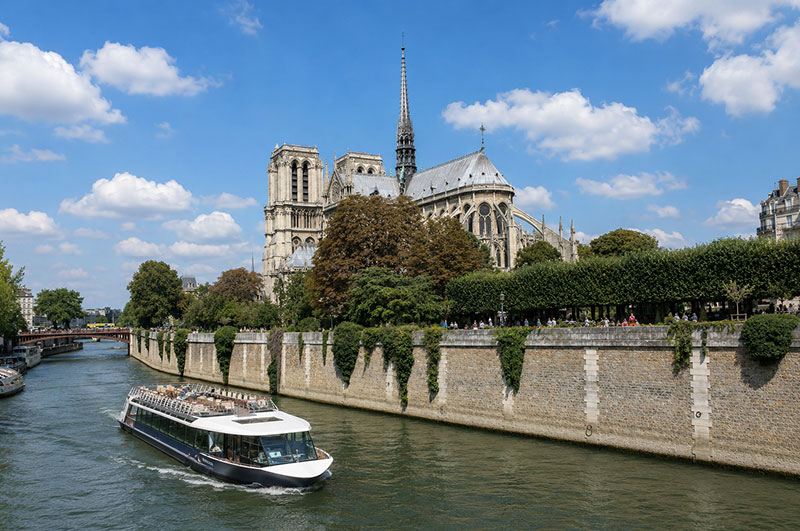
If Paris has a geographic core, it is the pair of islands that UNESCO includes in the Banks of the Seine property. Île de la Cité holds some of the city’s earliest and most emblematic monuments, notably Notre‑Dame and the Sainte‑Chapelle, which UNESCO lists among the near‑continuous sequence of riverfront landmarks. Île Saint‑Louis reads more as an island‑neighborhood, aligned with the quays around it. Seen from the water, the two form a hinge between the Right and Left Banks, turning the river from barrier into center.
From certain routes, the cruise may frame these islands in profile, emphasizing how their outlines and river‑edge façades have defined the city’s mental map for centuries. Rather than shuttling among streets and crossings, the boat’s path often allows these relationships to clarify themselves in a single glance—subject always to the itinerary and navigation conditions on the day.
Few episodes shaped the Paris riverfront as visibly as the Universal Expositions. The Eiffel Tower was constructed for the 1889 fair (held from May 15 to November 6 that year), its iron lattice rising beside the Seine to become a new kind of urban emblem. Just a decade later, the 1900 Exposition left a constellation of monuments: the Pont Alexandre III, a ceremonial link aligned with the Invalides and the Grand/Petit Palais, and the riverside Gare d’Orsay, a station built for that moment of accelerated exchange. Decades on, the station’s great hall would be adapted to house the Musée d’Orsay, opening as a museum in 1986—an act of continuity that keeps the story of innovation alive in a different key.
Considered from the boat, these episodes line up as a kind of open‑air exhibition of their own. The river reads like a time axis: medieval to classical to industrial to modern. The sites themselves carry the facts; the cruise lets you notice the connections without ever claiming a single decade as definitive. What you glimpse on a given route may vary, but the sense of layered time remains a constant virtue of the view.
It is possible to “read” Paris by watching its bridges go by. Pont‑Neuf suggests durability in stone, a city knit together above the current. The Pont des Arts introduces metal structure into the skyline, and with it a lighter visual rhythm. Pont Alexandre III stages an embraced ceremonial space between major institutions, conceived in the spirit of a world’s fair. And the Pont de Bir‑Hakeim carries a metro line over the water on its upper deck—a pragmatic and elegant negotiation between river, rail and road.
While some bridges are better known than others, a river cruise treats them as a collective heritage—a sequence rather than isolated objects. From this vantage, bridges cease to be mere crossings and become articulations of the city’s geography and ambition. The fact that many were built in periods of rapid change makes them especially eloquent of Paris’s constant evolution.
Because the Seine is both a place and a living waterway, no single route or view is guaranteed. Navigation and visibility depend on river conditions and occasional temporary constraints; operators may adjust routes accordingly. These are operational rhythms of the river, not a visitor timetable. That is precisely why an experienced hand is valuable when you want your cruise to complement the rest of your Paris day.
Suite Voyage Discovery builds each Seine experience to fit your preferences. Depending on the company and formula, options may include recorded or live commentary, a lunch or dinner format, an evening/illuminations focus, or, when feasible, a private charter (always subject to provider possibilities). We also verify, case by case during program design, practical elements such as embarkation conditions, accessibility, onboard equipment and commentary languages, so the cruise aligns with your party’s needs and interests.
Equally important is how the cruise fits into your day. It can serve as a stand‑alone highlight, as a restful interlude between more active visits, or as the centerpiece of a meal or an evening. Because the experience is seated and low‑walking, it often proves to be the shared thread that keeps everyone engaged—curious young travelers, architecture fans, and companions who want to relax while still taking in the city.
A cruise on the Seine places you within the UNESCO‑listed core of Paris. However you choose to shape the rest of your time, the river provides bearings: the islands at the center; the Left and Right Banks as complementary perspectives; and a constellation of museums, bridges and public spaces aligned to the water. From this vantage, moving ashore becomes less about checking sites and more about tracing relationships you first noticed from the boat—between palaces and academies, between exhibition halls and the bridges that framed them.
There is no single “right” way to pair the river with time on land. Some travelers gravitate toward the historic institutions along the quays; others prefer to linger in open spaces where the urban fabric touches the river more directly. The virtue of starting on the water is that the city’s plan comes into focus, so your choices feel less like guesses and more like a continuation of a story already unfolding.
Paris is not only a city of landmarks; it is a city of alignments—between eras, across bridges, along a river that holds its center. A Seine cruise gathers these alignments into a single, lucid experience. Depending on the route and conditions, you may see Gothic spires and Beaux‑Arts domes, iron bridges and glass pavilions, islands and palaces—a panorama whose continuity is the point. However you fit it into your day, the river has a way of returning the city to you as a whole.
Interested in a Seine panorama shaped around your interests—history, bridges, architecture, or an evening of lights? Request a custom quote for your Paris itinerary, and Suite Voyage Discovery will help you design the river experience that belongs in it.
A Seine cruise offers panoramic perspectives on emblematic landmarks and bridges, with what is visible varying by route, embarkation point and navigation conditions. Examples of landmarks that may come into view include the Eiffel Tower, the Louvre, Notre‑Dame, the Musée d’Orsay, the Invalides, the Grand Palais, the Palais de Chaillot and the Institut de France. Bridges that might be encountered include Pont‑Neuf (the oldest surviving bridge in Paris), Pont des Arts (the city’s first metal bridge), Pont Alexandre III (built for the 1900 Universal Exposition) and Pont de Bir‑Hakeim (a double‑deck bridge carrying Métro Line 6).
Each time of day offers a distinct atmosphere. Daytime can provide clear views of façades and urban alignments; late afternoon often brings warm light; and after dark Paris’s silhouettes are illuminated. An evening/illuminations focus is possible with certain formulas. The ideal choice depends on your preferences and the season.
Suite Voyage Discovery designs each Seine experience case by case. Depending on the company and formula, options may include recorded or live commentary, a lunch or dinner cruise, an evening/illuminations focus, or a private charter when feasible (subject to provider possibilities). SVD verifies embarkation conditions, accessibility, onboard equipment and commentary languages during program design so the cruise aligns with your party’s needs.
Step away from the polished boulevards into a quarter where Paris’s heartbeat quickens with layers of history and vibrant modernity. The air…
Step away from the frenetic buzz of Paris’s major boulevards, and a different city begins to unfold — one where centuries whisper…
As twilight slips into night, Paris undergoes a subtle, almost magical transformation. The city rhythms slow, and the cacophony of the day…
Would you like to plan a similar experience? Request your personalized itinerary.