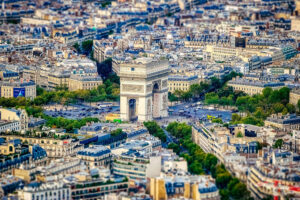
Arc de Triomphe and the Champs-Élysées: Discover Paris’ Most Famous Avenue
Standing proudly at the top of the Champs-Élysées, the Arc de Triomphe is one of the most recognizable monuments in France and…
Fill up on discoveries
We organize your transport by coach, train or plane
Discover the most beautiful historical monuments of our heritage
Go alone or in a group to discover these places
You won't miss a single detail - they know their subject inside out.
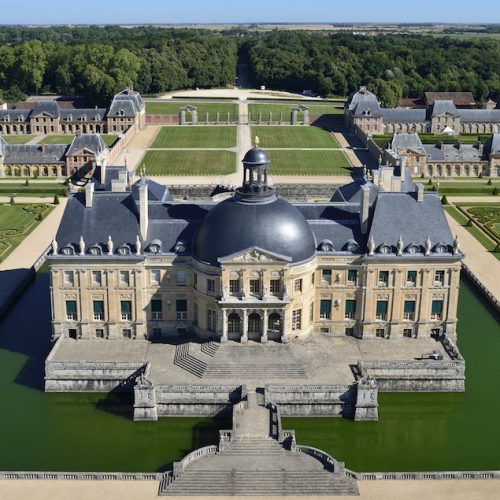
In the 1650s, one audacious idea changed how Europe imagined a country house: conceive the residence, its interiors, and the garden as a single work of art. At Vaux‑le‑Vicomte in Maincy, this vision took shape through an extraordinary collaboration—architect Louis Le Vau, garden designer André Le Nôtre, and painter‑decorator Charles Le Brun—whose unified composition became a touchstone for French classicism and a forerunner to Versailles. A guided interpretation here does more than recount episodes of the Grand Siècle: it teaches you how to read space—how measures, axes, and perspective forge meaning as architecture and landscape answer one another.
Click a photo to enlarge
Vaux‑le‑Vicomte rewards the curious traveler with a kind of literacy seldom taught: how to “read” a place where everything—walls, ceilings, parterres, water, sky—is part of one orchestrated thought. Rather than viewing rooms and gardens as separate attractions, the guided interpretation invites you to consider how each element—an axis, a vista, a painted ceiling—plays a role in a larger composition. That approach mirrors how the site was conceived in the 17th century and illuminates why Vaux resonated so powerfully in its own time and beyond.
Set in the gentle landscape of Seine‑et‑Marne, Vaux is also a milestone of cultural history. Commissioned by Nicolas Fouquet in 1653, it became the stage for a celebrated fête on August 17, 1661, attended by Louis XIV. Within weeks Fouquet fell from power and he was arrested in Nantes on the King’s orders by d’Artagnan, a trusted officer of the royal Musketeers who would later be immortalized by Alexandre Dumas in The Three Musketeers. Yet the design language honed at Vaux did not vanish with its patron’s downfall. The same creative trio—Le Vau, Le Nôtre, and Le Brun—would continue in the service of the crown, contributing to the development of Versailles. Experiencing Vaux today reveals the seed of an aesthetic that would soon define a royal age.
For travelers drawn to the grandeur of Versailles but hoping for a more intimate encounter with French history, Vaux-le-Vicomte offers a compelling alternative. The estate generally feels less overwhelming than France’s most visited royal palace, allowing more time to observe architectural details, appreciate the interiors, and experience Le Nôtre’s perspectives at a measured pace. Vaux does not replace Versailles—the two estates tell different stories—but it reveals the artistic ideas that helped shape Louis XIV’s great royal residence.
Its location about 50 kilometers from Paris also makes Vaux-le-Vicomte an appealing day trip for visitors who want to venture beyond the capital without committing to a long journey. Here, the relationship between château and garden can often be experienced with a greater sense of space, calm, and continuity.
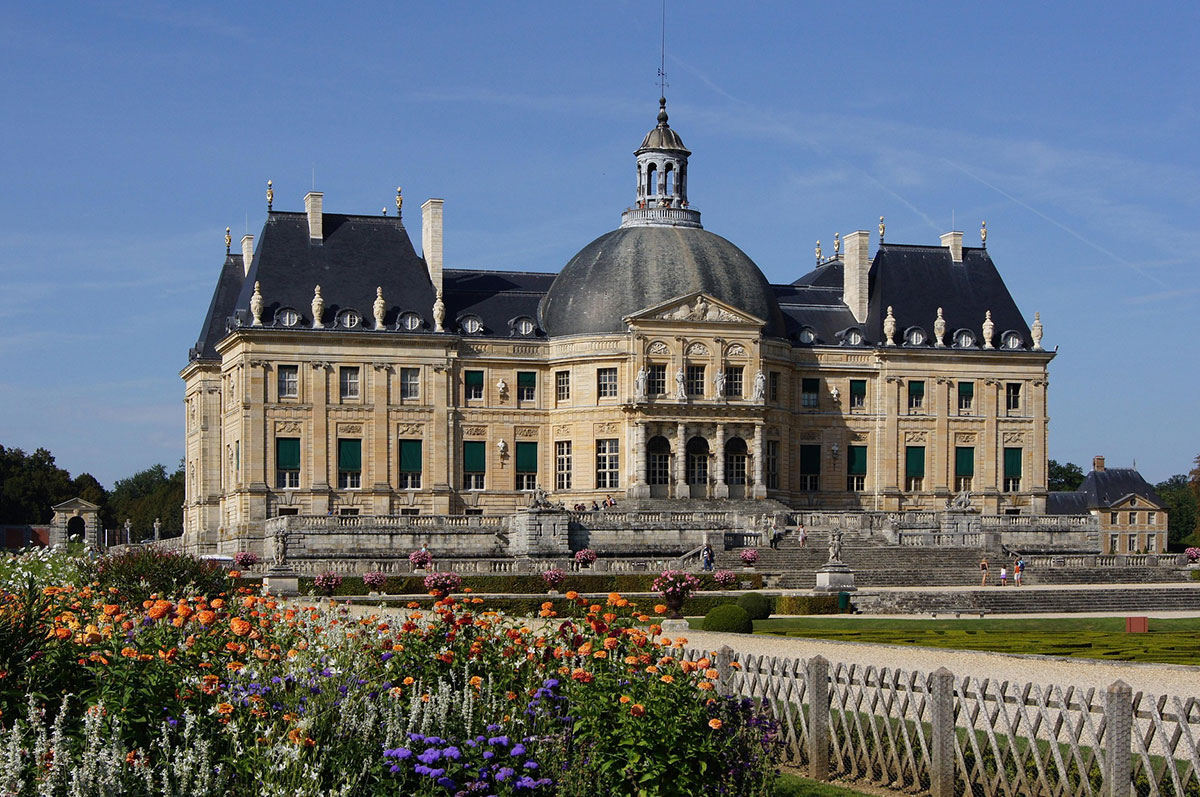
The essence of Vaux‑le‑Vicomte lies in its unity. Louis Le Vau’s architecture establishes a disciplined framework of volumes, axes, and alignments. Charles Le Brun’s decorative program extends those rhythms into painted and sculpted narratives that animate ceilings and walls. André Le Nôtre’s garden translates the same principles outdoors, laying down a primary axis whose measured stages—terraces, parterres, water—organize space and direct the gaze. The result is an ensemble in which the interior’s visual language flows into the landscape, and the garden’s measured sequences answer the château’s architecture.
Seen this way, Vaux is not a palace with an added garden; it is an idea made visible. The guided interpretation focuses on this relationship, helping you grasp how proportions inside echo the metrics outside, how a framed doorway aligns with a distant axis, and how the play of perspective enlivens the experience as you move. Understanding these connections transforms a beautiful visit into an illuminating one.
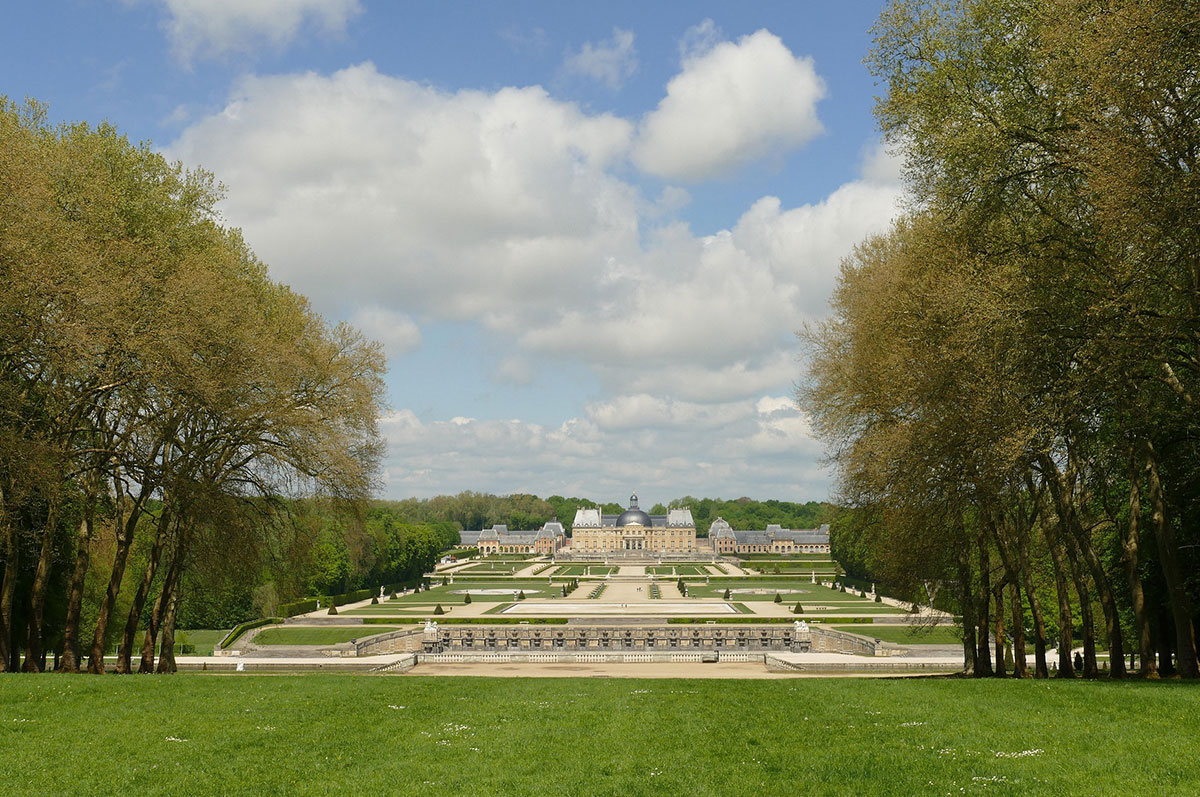
The French formal garden crystallized at Vaux into a language of clarity and control that later extended across Europe. Its “grammar,” exemplified here and elaborated at Versailles, rests on a few core principles:
Axes and symmetry. A principal line structures space, with balanced elements arranged to left and right. This discipline anchors the visitor’s path and cues a sense of order.
Measured sequences. Distinct stages—terrace, parterre, water—unfold with deliberate pacing. Distances and levels are calibrated to produce rhythm rather than monotony.
Perspective and optical effects. The garden manipulates perception as carefully as a painter. As you progress along the principal axis, proportions and apparent scales can seem to shift, an effect that heightens drama and clarity at once.
At Vaux, these principles are not abstractions. They are tools you can learn to perceive. The guided interpretation invites you to notice how a central line draws sightlines outward, how levels moderate the view, and how the apparent size of elements can transform with your position. Once you see the rules in action here, you begin to recognize them in other gardens and city plans shaped by the same tradition.
Charles Le Brun’s role at Vaux was to give the interiors a visual voice strong enough to converse with the garden. As the lead decorator, he developed a program whose painted and sculpted themes—expressed through ordered compositions and disciplined ornament—harmonize with the architecture’s geometry. The effect is not merely sumptuous; it is structural. Le Brun’s language of balance, measure, and hierarchy echoes the garden’s grammar and anchors the interior as an intellectual companion to the landscape just beyond the windows.
In this reading, a ceiling becomes more than decoration; it is a canopy that reinforces the spatial logic established by Le Vau and answered by Le Nôtre. The guided interpretation emphasizes such correspondences, encouraging you to link what you see inside with the controlled vistas outside, so that rooms and parterres are understood as movements within one score.
Vaux‑le‑Vicomte’s history turns on two closely spaced dates.
The evening itself unfolded as a remarkable display of French court culture. Guests explored the gardens, attended an elaborate dinner, and watched fireworks illuminate the estate. Molière presented Les Fâcheux, created with music by Jean-Baptiste Lully and choreography by Pierre Beauchamp, while Fouquet’s maître d’hôtel, François Vatel, helped orchestrate the celebration. Jean de La Fontaine later preserved the memory of the fête in a letter, contributing to the legend that still surrounds Vaux-le-Vicomte.
The fête of August 17, 1661—organized in honor of Louis XIV—announced Vaux’s ambitions to the courtly world. Soon after, Nicolas Fouquet’s fortunes collapsed; on September 5, 1661, he was arrested in Nantes by d’Artagnan, captain of the musketeers, on the King’s orders. While interpretations of these events have long animated historians and novelists alike, what remains clear is that the creative energy of Vaux carried forward. Le Vau, Le Nôtre, and Le Brun would henceforth work in the service of Louis XIV, and from 1661–1662 Le Nôtre was tasked with the gardens at Versailles. To walk Vaux with this context in mind is to see the outlines of a royal future already present in a private commission.
Vaux‑le‑Vicomte’s endurance owes much to careful guardianship. After changing hands, the estate was purchased at public auction by Alfred Sommier in July 1875. He undertook significant restorations described as faithful to the original spirit—an approach that set the tone for future care. In the 20th century, Vaux and its park received protection under France’s Monuments historiques, with classification orders issued across several decades. The estate was opened to the public in 1968 by Patrice de Vogüé, and today stewardship remains within his family, now in a fifth generation of involvement with the property.
This framework—private stewardship under public heritage protection—helps explain the site’s condition and the coherence you experience on the ground. In its own communications, the estate presents itself as the largest privately owned Historical Monument in France, a formulation that speaks to both scale and the responsibilities of long-term care.
The SVD program centers on guided interpretation that reads the château’s 17th‑century interiors and its formal gardens together. The itinerary focuses on the very questions that make Vaux singular: how Le Vau’s architecture orders movement and sightlines; how Le Brun’s décor articulates hierarchy and balance; and how Le Nôtre’s garden uses axes, symmetry, measured levels, and perspective to shape what you perceive as you walk the main axis.
That approach turns a visit into an act of looking with purpose. Moving from room to terrace to parterre, you are invited to connect interior motifs with exterior rhythms and to notice how optical effects enliven the garden’s composition. By the end, the ensemble reads almost like a text whose vocabulary—measure, axis, vista—you can now recognize.
Start a tailor‑made France journey centered on art, architecture, and landscape in Maincy’s landmark estate. Request a custom quote and let SVD shape a visit that connects château and garden in meaningful perspective.
Vaux’s garden asks you to move—physically and mentally. As you proceed along the main axis, distances and proportions appear to shift. Elements that seemed close from one vantage can seem to expand or contract from another. This is not accident; it is design. Le Nôtre applied the principles of the jardin à la française to choreograph your perception, using levels and alignments to draw the eye while creating moments where the scale appears to change. The guided interpretation equips you to notice this play of optics, heightening your awareness of how carefully planned geometry can produce sensation and drama without abandoning clarity.
Indoors, the same attention to perception is at work. Le Brun’s compositions use order, balance, and controlled ornament to create a sense of measure and hierarchy that mirrors the garden’s logic. When interior and exterior are read together, Vaux becomes a primer on how 17th‑century France thought about space: as something to be reasoned through as much as admired.
Vaux‑le‑Vicomte stands in Maincy, Seine‑et‑Marne, within the Île‑de‑France region. Its protected perimeter, as described in official notices, encompasses the château, gardens, waterworks, and defined avenues—an administrative outline that reflects the design’s coherence beyond the house’s walls. The estate’s legal classification under Monuments historiques, issued through several orders between 1929 and 1994, establishes durable recognition of its cultural value.
These facts are more than footnotes. They help you situate Vaux in France’s heritage landscape: a privately stewarded property subject to robust public protections and an exemplar of the classical ideal that shaped both gardens and political imagery in the age of Louis XIV.
Because Vaux teaches you how to see, it has a way of changing what you notice elsewhere—whether in another formal garden, a classically planned square, or a façade designed with measured symmetry. Many travelers weave a visit to Vaux into a broader exploration of Île‑de‑France’s art, architecture, and landscapes, using the estate as a lens for appreciating the region’s classical heritage. However you assemble your itinerary, the key is to preserve time to look—slowly and with intention—so the site’s integrated design can reveal itself.
For American travelers, Vaux-le-Vicomte offers something increasingly precious: the scale and beauty of a major French château combined with a more personal sense of discovery. It is an opportunity to understand the artistic origins of Versailles while enjoying a setting that often feels calmer, more intimate, and easier to absorb.
From a commission launched in 1653 to its role in the drama of 1661, from careful 19th‑century restorations to present‑day stewardship, Vaux‑le‑Vicomte has persisted as both a place and an idea. It is a work that instructs—quietly but decisively—about measure, perspective, and the art of making architecture and nature speak the same language. A guided interpretation brings that language into focus, turning a beautiful château and garden near Paris into a formative encounter with how 17th‑century France thought, built, and saw.
Shape a France itinerary that brings architecture, décor, and landscape into conversation at Maincy’s landmark estate. Request your custom quote and let SVD align château and garden into one illuminating experience.
Vaux‑le‑Vicomte exemplifies a 17th‑century ideal: conceiving the château, its interiors, and the garden as one integrated composition. The collaboration of Louis Le Vau (architecture), André Le Nôtre (gardens), and Charles Le Brun (decorative program) forged a unified language of measure, axes, symmetry, and perspective that became a reference point for the jardin à la française and influenced later developments at Versailles.
Nicolas Fouquet, Superintendent of Finances to Louis XIV, initiated the project in 1653. A celebrated fête in honor of the King took place at Vaux on August 17, 1661. Soon after, on September 5, 1661, Fouquet was arrested in Nantes by the historical d’Artagnan, later immortalized as a hero of Alexandre Dumas’s The Three Musketeers, on the King’s orders. Following Fouquet’s downfall, Le Vau, Le Nôtre, and Le Brun went on to play major roles in Louis XIV’s transformation of Versailles.
Vaux‑le‑Vicomte and its park are protected under France’s Monuments historiques, with classification orders issued over the 20th century. After Alfred Sommier acquired the estate in 1875, he undertook restorations faithful to the original spirit. The property was opened to the public in 1968 by Patrice de Vogüé and is managed today by his family. In its communications, the estate presents itself as the largest privately owned Historical Monument in France.
Standing proudly at the top of the Champs-Élysées, the Arc de Triomphe is one of the most recognizable monuments in France and…
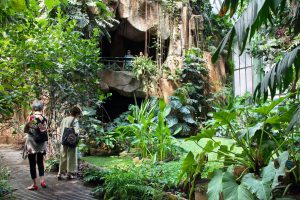
Step quietly away from the bustling city streets into a sanctuary where centuries-old oaks cast dappled shadows over winding paths, and the…
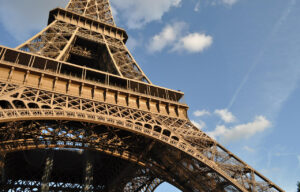
No visit to Paris feels complete without standing beneath the Eiffel Tower. Rising gracefully above the rooftops of the French capital, this…
Would you like to plan a similar experience? Request your personalized itinerary.