Château de Bonnemare and Guinguette at Domaine de la Chesnaie
An escapade of Norman elegance and festive ambience Less than two hours from Paris, this Normandy getaway offers a complete experience combining…
Fill up on discoveries
We organize your transport by coach, train or plane
Châteaux, grottes, parcs, jardins, villages, monuments historiques... Découvrez les plus beaux sites à visiter en France
Go alone or in a group to discover these places
You won't miss a single detail - they know their subject inside out.
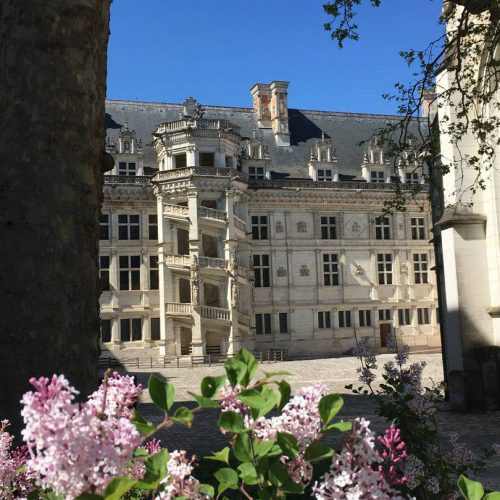
Stand in the main courtyard of the Royal Château of Blois and a rare panorama unfolds: four architectural languages—medieval, Flamboyant Gothic, Renaissance, and Classical—speak to one another across a single space. Few places in France condense so much power, taste, and political theater into one address. Within these walls, the kingdom’s Estates‑General convened, royal apartments blossomed into richly furnished settings, and a dramatic turning point of the Wars of Religion—the assassination of the Duke of Guise in 1588—played out. Blois is not simply another Loire château; it is a living anthology of how France built, ruled, argued, and imagined itself across the 13th to 17th centuries.
Blois concentrates four centuries of French architecture and political life in one coherent visit. Around the cour d’honneur, successive dynasties and patrons left distinct façades that mirror changing definitions of power and beauty—from fortified medieval forms to the ornamental confidence of the Renaissance and the measured harmony of the Classical age. This architectural conversation is not abstract: it frames the rooms where monarchs lived, where the Estates‑General met, and where high‑stakes decisions—and, at times, violence—shaped the fate of the realm. For travelers seeking a single site that explains the Loire Valley’s rise from fortress line to courtly heartland, Blois provides both the stage and the script.
The château’s genius lies in how it turns a courtyard into a timeline.
The medieval presence survives in 13th‑century elements such as the great hall and segments of the former ramparts, including the Tour du Foix. These remnants evoke the site’s origins as a power center where defense and authority were intertwined. The great hall would later be known as the Salle des États généraux, a name recalling the two assemblies of the Estates‑General held at Blois by order of Henry III.
The Louis XII wing (1498–1500) ushers in the Flamboyant Gothic, signaling a court confident enough to trade pure fortification for display. Its sculptural rhythms and late‑medieval ornament mark a stylistic hinge: the Middle Ages tapering into a new appetite for princely representation. Today, this wing also houses the city’s Musée des Beaux‑Arts, a reminder that Blois has long been a conduit for art and ideas.
The François I wing (1515–1518) proclaims the Renaissance with a boldness that feels almost theatrical. On the courtyard side, a monumental external spiral staircase rises like a ceremonial machine, its sculpted reliefs and openwork energizing the façade. The outer side presents stacked loggias inspired by Bramante’s Vatican models, evidence of how Italian ideas were recast in French stone. This is the architecture of a king who collected artists, welcomed Leonardo da Vinci to nearby Amboise in 1517, and made space for learning—the royal library would be established at Blois before later transfer to Fontainebleau in 1544.
The Gaston d’Orléans wing (begun 1635), designed by François Mansart, showcases the lucid grammar of French Classicism: measured proportions, clarity, and restrained ornament. Though the project halted in 1638, the wing remains a key document of early Classicism and of Mansart’s ambition. Inside, a celebrated cupola surmounts the main stair, placing geometry and light at the center of the visitor’s gaze.
Even in a valley famous for pastoral vistas, the story of Blois is not all idyll. In December 1588, amid the religious and political turmoil of the late 16th century, Henry I, Duke of Guise, was assassinated at the château during the Estates‑General convened by Henry III. Contemporary chronicles and later archives keep this event at the forefront of Blois’s memory. The château thus crystallizes a paradox: a place constructed to host magnificence also witnessed raw struggle for power. Learning this history before or during a visit changes how the rooms read—their elegance becomes a counterpoint to the intensity of what unfolded here.
The Royal Château of Blois invites a structured, progressive discovery—a natural rhythm that moves from open‑air architecture to interiors where political life and princely taste come into focus. In the main courtyard, the four façades set orientation and context. The François I staircase, an emblem of the French Renaissance, anchors interpretation: its external spirals, sculpted decoration, and theatrical presence illustrate how circulation itself became part of courtly spectacle.
As the route unfolds through the medieval wing, the atmosphere shifts toward origins and governance. The legacy of the great hall—later called the Salle des États généraux—suggests how the château functioned as a seat of deliberation and royal authority. The narrative then expands across the Louis XII and François I wings, where the architecture articulates a court developing its artistic language with increasing sophistication. Finally, the Gaston d’Orléans wing introduces a classical ideal that rebalances grandeur with rational clarity.
Within this architectural arc, royal apartments—richly furnished and decorated—encourage visitors to read interiors as instruments of representation. Fabrics, color, surface, and ceremonial layout work in concert to express rank and proximity to power. While the politics of Blois could be dramatic, the rooms also suggest quieter routines of rule: receiving councils, granting audiences, and embodying the crown’s presence.
On request, this visit can be accompanied by a guide, shaping the narrative to personal interests—architecture, court culture, or the high politics of the Wars of Religion—while respecting the château’s established visitor flow.
Design a cultural journey that pairs the Royal Château of Blois with the landscapes and towns that frame it. Share your interests, and Suite Voyage Discovery will craft a bespoke Loire Valley program around this icon.
It is easy to treat a staircase as a means to an end. At Blois, the opposite is true: the escalier dit François Ier is the destination. Seen from the courtyard, its external spirals perform movement in public, projecting visibility and prestige. The carvings reward close looking—layers of relief, rhythm, and light catch the eye from one turn to the next. Viewed from the outer façade, stacked loggias reveal how Italian innovations were naturalized into French court architecture. In an age when presentation was power, this staircase announced the modernity and ambition of a king who actively recruited talent and nurtured a culture of learning.
The medieval elements of Blois anchor the château in the realities of governance and defense. The great hall—later known as the Salle des États généraux—recalls the two meetings of the Estates‑General convened by Henry III, when estates of the realm were called upon for counsel. While configurations of that hall changed across centuries, its memory situates Blois at the intersection of crown, nobility, and nation. The surviving rampart segments and the Tour du Foix complete the picture of a site whose authority was, in its origins, as much about command and control as ceremony.
Blois excels at showing difference through proximity. The Louis XII wing synthesizes late‑medieval traditions into a princely Gothic statement, while the neighboring François I wing declares a new era. The switch from vertical emphasis and tracery to balanced proportions, open loggias, and sculpted classical references expresses a deeper transition: a court turning outward to European ideas and redefining how architecture could project authority. This is not a repudiation of the Gothic so much as a conversation with it—two languages spoken fluently within meters of each other.
Begun in 1635 and halted in 1638, the Gaston d’Orléans wing by François Mansart brings the measured rationality of Classicism to Blois. The exterior’s harmonious order suggests a governmentality of poise and control; inside, a celebrated cupola crowns the principal staircase, aligning movement with geometry and light. Even unfinished, the wing stands as an influential early expression of the classical ideal that would come to define French state architecture in the decades ahead.
Blois entered the modern era not as a picturesque ruin but as a touchstone for national heritage. Listed as a Monument historique in 1840, it quickly became a template for state‑led preservation. In 1845, architect Félix Duban undertook a major restoration campaign that codified how the château is read today. For travelers, this matters: much of what feels “timeless” at Blois also reflects 19th‑century choices about which periods to privilege and how to present them in dialogue.
At Blois, the royal apartments are not just rooms; they are arguments in wood, fabric, and color. Their rich furnishings and decoration articulate ritual and rank, translating political ideas into spatial experience. Even without cataloging individual objects, the interiors convey a grammar of courtly life: thresholds that regulate approach, chambers that stage reception, and private spaces calibrated for counsel. For many visitors, this is where the château’s scale becomes intimate, and where the past’s abstractions settle into pattern and texture.
The Royal Château of Blois stands within the UNESCO‑inscribed stretch of the Loire Valley, a property recognized not only for great monuments but for the wider cultural landscape that linked river, towns, and royal power. Understanding Blois in this context clarifies why so many châteaux concentrate here: navigable water, agricultural wealth, and the gravitational pull of the court created a corridor where architecture and administration could flourish. Blois, with its layered styles and political memories, functions as a keystone in this larger mosaic.
Because it assembles four centuries of change around one courtyard, Blois can sharpen the themes of a wider Loire journey. The medieval ramparts establish the region’s defensive roots. The Flamboyant Gothic and Renaissance wings reveal how refinement and representation emerged from that matrix. The Classical façade by Mansart signals the state’s consolidation into rule by order and ideal proportion. Taken together, these layers provide a framework for interpreting other sites across the valley—architecture becomes a lens, not just a backdrop.
Tell us what draws you—architecture, royal history, or Renaissance art—and Suite Voyage Discovery will design a tailor‑made Loire Valley plan with the Royal Château of Blois as a touchstone.
After Blois, the Loire Valley’s architectural dialogue comes into clearer focus. Knowing that the double‑helix staircase belongs to Chambord while Blois’s emblem is the external Renaissance stair helps distinguish two of the valley’s most storied residences. Recognizing Mansart’s classical vocabulary at Blois sharpens the eye for the ideals that would later shape French public architecture. And remembering that François I welcomed Leonardo da Vinci to nearby Amboise sets Blois within a network of places where ideas traveled as dynamically as people.
Travelers often come to the Loire seeking variety. Blois delivers it in one place, without sacrificing coherence. Here, the stones truly speak—of defense and deliberation, of Renaissance ambition and classical clarity, of rooms staged for rule and a morning in 1588 that still reverberates through French memory. Whether you are drawn by architecture, by courtly life, or by the drama of statecraft, the Royal Château of Blois offers a complete story told in chapters you can read across façades and rooms.
When you are ready to turn that story into your own itinerary, Suite Voyage Discovery is here to help.
Blois uniquely brings four major architectural periods together around a single courtyard: medieval remains (including the great hall and ramparts), the Flamboyant Gothic Louis XII wing, the Renaissance François I wing, and the Classical Gaston d’Orléans wing by François Mansart. It was also a stage for national politics—the Estates‑General met here, and in 1588 the Duke of Guise was assassinated at the château—so architecture and history intertwine in a particularly vivid way.
No. The well‑known double‑helix staircase is at the Château de Chambord. At Blois, the celebrated feature is the monumental external spiral staircase of the François I wing, whose courtyard façade and outer loggias reflect French Renaissance design influenced by Italy.
Yes. Accompaniment by a guide can be arranged on request. A guided visit can deepen focus on architecture, court culture, or political history while following the château’s established visitor flow. Guidance is optional and not included by default.
An escapade of Norman elegance and festive ambience Less than two hours from Paris, this Normandy getaway offers a complete experience combining…
Less than an hour from Paris, this getaway offers a unique blend of industrial history and architectural heritage. Between a visit to…

Traditions, know-how and authentic immersion This day at the heart of local life in Picardy offers a unique immersion in the traditions…
Would you like to plan a similar experience? Request your personalized itinerary.